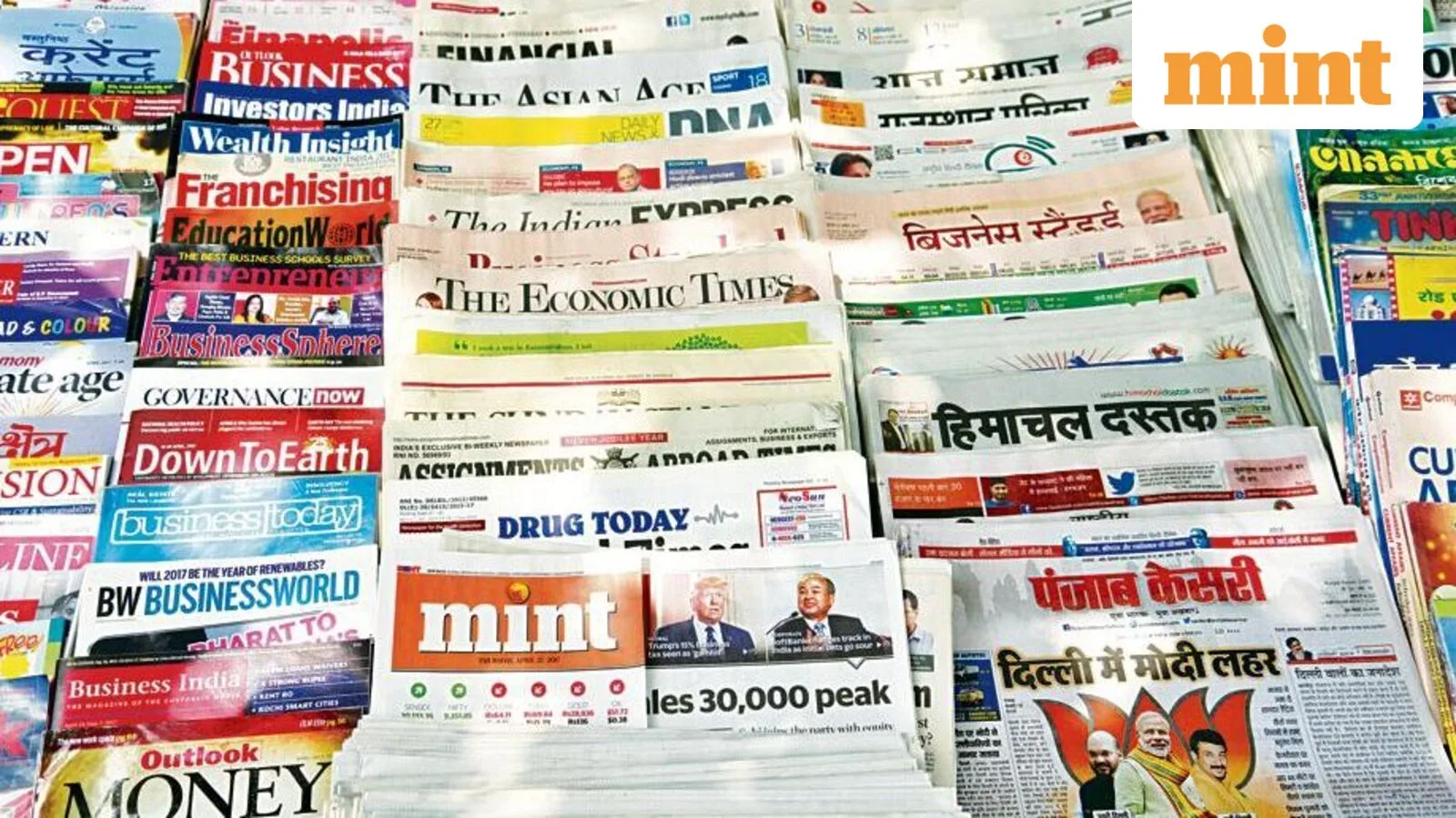
Despite the pervasive narrative suggesting print media’s inevitable decline in the face of burgeoning internet penetration and the ubiquitous nature of digital platforms, recent comprehensive research from a leading advisory firm reveals a compelling counter-trend, particularly within dynamic emerging economies. A significant survey encompassing over 12,000 urban households across India’s metropolitan hubs and Hindi-speaking heartlands indicates that newspapers continue to serve as a pivotal source for deeply engaged readers seeking credible news, often surpassing television and purely digital channels in critical metrics of trust and attention. This finding challenges conventional wisdom and underscores the nuanced evolution of media consumption habits in a rapidly digitizing world.
The advisory firm’s detailed analysis highlighted that print news marginally outscored television on its proprietary Net Attention Index, a metric designed to quantify the depth and quality of audience engagement. In stark contrast, social media and generic online news platforms lagged significantly, struggling to foster comparable levels of focused attention. Beyond mere engagement, print media also garnered the highest trust score from respondents, a crucial differentiator in an era increasingly plagued by misinformation and superficial content. The report elucidated a direct correlation between high trust and sustained engagement, noting that "high-trust media environments drive disproportionately positive outcomes, correlating with approximately 30% higher engagement, as measured by time spent, within such contexts." This suggests that advertisers and content creators alike stand to gain substantially from associating with platforms that command inherent reader confidence.
This resilience of print is even more pronounced in India’s smaller cities and its eastern states, such as Bihar and Jharkhand, where the tangible experience of a physical newspaper remains deeply ingrained in daily routines. The survey data revealed that a substantial 60% of respondents reported reading a newspaper during the study period, a figure nearly on par with online news consumption. Crucially, among these newspaper readers, over two-thirds dedicated between 15 to 30 minutes to their daily read, with a remarkable 14% spending more than half an hour engaging with the day’s headlines and features. Such sustained attention stands in stark contrast to the often fleeting interactions characteristic of social media feeds or fragmented online browsing sessions, where users typically skim headlines rather than delve into detailed analyses. This deep engagement points to a fundamental difference in how audiences approach print versus digital news, perceiving the former as a curated, authoritative source deserving of dedicated time and reflection.
The enduring appeal of print also manifests in its economic viability, even as the broader advertising landscape undergoes a seismic shift towards digital. While the share of traditional media, including television, in advertisers’ overall expenditure has seen a noticeable contraction – plummeting from 77% in 2019 to 54% in 2025 – digital advertising has concurrently surged to command 46% of the market. Despite this aggressive digital encroachment, print media’s advertising revenue has shown remarkable stability and even growth. In 2024, print garnered an impressive ₹20,0272 crore in advertising expenditure, effectively matching its 2019 levels and registering a robust 5% year-on-year increase. This financial performance underscores the confidence advertisers continue to place in print, likely due to its demonstrable ability to reach an engaged, affluent, and trustworthy audience segment, offering a premium environment for brand messaging that often transcends the transient nature of digital impressions.

Industry experts interpret this trend as a recalibration rather than an outright displacement of traditional mediums. A senior media analyst from a global consulting firm observed, "The narrative of print’s demise is often oversimplified. What we are witnessing is not a failure of the medium itself, but a profound fragmentation of audience attention across an expanding array of screens and moments. Print’s sustained engagement and trust scores indicate its unique value proposition remains undiminished for specific demographics and content types." This perspective posits that while the reach of news across all traditional mediums has seen some adjustments post-COVID-19 due to accelerated internet penetration and lifestyle changes, the decline in newspaper reach has been less severe compared to television and radio. This relative resilience can be attributed to several factors, including the habitual nature of newspaper consumption, particularly among older demographics, and the continued reliance on print for in-depth, locally relevant content in regions where digital access may still be inconsistent or less preferred.
The continued strength of print is deeply rooted in several socio-economic and psychological factors unique to markets like India. The tactile experience of reading a newspaper, the ritualistic aspect of daily delivery, and the perceived authority stemming from established editorial processes all contribute to a heightened sense of trust. In an environment saturated with user-generated content and the rapid spread of unverified information, print newspapers often stand as bastions of journalistic integrity and reliability. Furthermore, regional language newspapers play a crucial role in fostering community identity and providing hyper-local news that digital platforms, with their often global or national focus, struggle to replicate effectively. This localized content is particularly vital in smaller cities and rural areas, where it serves as a primary source of information on local governance, community events, and economic opportunities.
Globally, while print circulations have faced headwinds in many developed markets, the trends observed in India offer valuable insights into the potential for traditional media to adapt and thrive. In parts of Asia, Africa, and Latin America, print continues to command significant readership, often acting as a bridge for populations gradually transitioning into the digital age. The Indian experience suggests that rather than a monolithic shift, media consumption is evolving into a complex ecosystem where different platforms fulfill distinct informational and emotional needs. For instance, while social media might serve for instant updates and casual browsing, print is reserved for deeper understanding, critical analysis, and verification. This differentiated utility allows print to maintain its relevance and attract a dedicated readership seeking quality over quantity.
Looking ahead, the strategic imperatives for print media publishers are clear: leverage their inherent strengths in trust and engagement while judiciously integrating digital strategies. This involves investing in high-quality journalism that reinforces credibility, developing hybrid subscription models that offer both print and digital access, and exploring innovative advertising solutions that capitalize on print’s engaged audience. The future of print is not one of isolation but of intelligent integration within a multi-platform media landscape. By focusing on niche content, hyperlocal coverage, and fostering a strong sense of community, print media can continue to demonstrate its unique value proposition, ensuring its enduring presence as a trusted source of information and a potent advertising channel in the evolving global economy. The narrative of print’s decline is indeed overstated; its continued vitality is a testament to its fundamental role in providing a reliable, deeply engaging news experience that few other mediums can genuinely replicate.