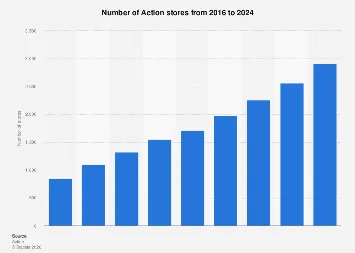
The retail landscape has experienced a dynamic period of transformation between 2016 and 2024, marked by both aggressive expansion and strategic retrenchment in the number of physical store locations across the globe. This eight-year span has seen established retail giants adapt to evolving consumer behaviors, the relentless rise of e-commerce, and macroeconomic shifts, leading to a complex and often contradictory evolution of their brick-and-mortar presence. While some sectors and brands have embraced digital-first strategies, leading to significant store closures, others have leveraged physical retail as a critical component of their omnichannel approach, driving new openings and store network enhancements.
The period began with a generally optimistic outlook for physical retail, with many companies still viewing store expansion as a primary growth lever. However, the accelerating adoption of online shopping, fueled by technological advancements and increasing consumer comfort with digital transactions, began to exert significant pressure. E-commerce platforms, unburdened by the overheads of physical locations, offered greater convenience and often lower prices, forcing traditional retailers to re-evaluate their store strategies. This led to a wave of "retailpocalypse" headlines, particularly in the United States, as numerous apparel chains, department stores, and specialty retailers announced significant downsizing or outright closures. Brands that had overextended themselves in previous decades, often in less desirable mall locations, found themselves particularly vulnerable.
By contrast, the narrative for physical retail has not been uniformly negative. The concept of the "experience economy" gained traction, with consumers increasingly seeking more than just transactional exchanges from their shopping trips. Retailers that successfully integrated engaging in-store experiences, such as workshops, personalized services, and curated product assortments, often saw their physical locations become valuable assets rather than liabilities. This trend has been particularly evident in sectors like beauty, wellness, and high-end fashion, where tactile product interaction and expert advice remain paramount.
Furthermore, the rise of omnichannel retail has fundamentally reshaped the role of the physical store. For many companies, stores have transitioned from mere points of sale to critical hubs for order fulfillment, customer service, and brand engagement. "Click and collect" services, where online orders are picked up in-store, have become commonplace, driving foot traffic and providing opportunities for impulse purchases. Similarly, stores are increasingly used for returns, repairs, and as showrooms for products that can then be ordered online. This integrated approach has allowed some retailers to maintain or even expand their store networks by reconfiguring them to serve these dual purposes.
Market data from the period illustrates this bifurcation. While aggregate numbers might show net store closures in certain regions or sectors, a deeper dive often reveals a simultaneous closure of underperforming stores and the opening of new, strategically located, or reimagined retail spaces. For instance, reports from industry analytics firms have indicated a steady decline in the number of traditional department stores, while conversely, the proliferation of smaller format stores by brands like Starbucks, Sephora, and various tech companies has continued. This suggests a strategic pruning and repositioning rather than a complete abandonment of physical retail.
The economic impact of these shifts is multifaceted. For landlords and shopping mall operators, the decline of anchor tenants has led to significant challenges, forcing them to adapt by diversifying their tenant mix, incorporating entertainment, dining, and even residential components. For consumers, the increased competition and omnichannel offerings have generally led to greater choice and convenience, although concerns about the future of local high streets and the potential for retail deserts in some communities have also emerged.
Looking at global comparisons, the United States has often been cited as being at the forefront of these retail transformations, partly due to its historically high store density. However, similar trends are observable across Europe, Asia, and other developed markets. In Asia, particularly in countries with rapidly growing middle classes and high mobile penetration, the adoption of e-commerce has been swift, but physical retail remains robust, often blending traditional formats with innovative digital integrations. Chinese e-commerce giants, for example, have invested heavily in physical store concepts to enhance brand visibility and customer engagement.
Analyzing the period from 2016 to 2024, we can observe distinct phases. The initial years were characterized by a growing awareness of the e-commerce threat and the commencement of significant store rationalization by many legacy retailers. The mid-period saw the acceleration of omnichannel strategies and a greater emphasis on experiential retail as a countermeasure. The latter part of this timeframe has been further influenced by the global pandemic, which dramatically accelerated digital adoption and, paradoxically, highlighted the resilience and evolving role of physical stores as safe and convenient pickup points, as well as spaces for essential services.
The data, when granularly examined, reveals a complex picture of adaptation rather than outright decline for the retail sector as a whole. The number of physical stores is not merely a static metric; it represents a strategic decision by businesses to invest in physical real estate as part of a broader customer engagement strategy. The evolution of these networks reflects a profound understanding that in the digital age, physical stores must offer something more than just a place to buy goods – they must be destinations, service centers, and integral components of a seamless brand experience.
Moving forward, the trend of data-driven store network management is likely to intensify. Retailers will continue to leverage analytics to optimize store locations, formats, and functionalities, ensuring that their physical footprint aligns with evolving consumer preferences and technological advancements. The distinction between pure-play e-commerce and brick-and-mortar retail will continue to blur, with success hinging on the ability to create cohesive and compelling customer journeys that transcend channel boundaries. The period between 2016 and 2024 has therefore served as a critical inflection point, forcing a fundamental rethinking of the purpose and potential of the physical retail space in the 21st century.