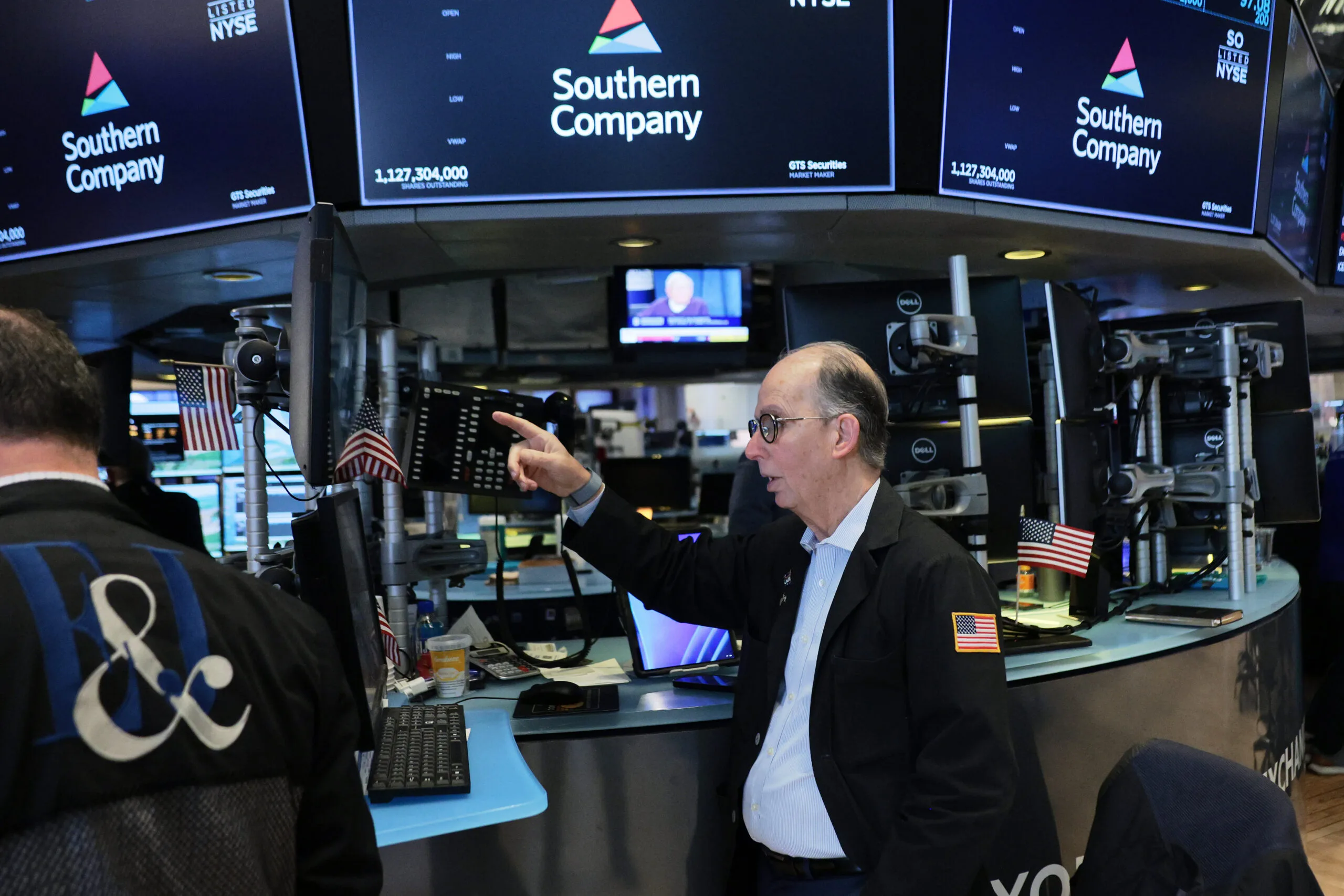
In the high-stakes arena of global finance, the term "Teflon market" is often reserved for periods of irrational exuberance, yet the current trajectory of the S&P 500 suggests something more structurally resilient. As of early May 2026, the benchmark index has performed a feat that many seasoned analysts thought impossible: it has completely decoupled from escalating geopolitical volatility in the Middle East to carve out new all-time highs. After crossing the 7,400 threshold for the first time in history, the market is no longer merely "climbing a wall of worry"—it appears to be ignoring the wall entirely.
The most striking evidence of this resilience came during the first week of May, when the U.S. and Iran engaged in a series of kinetic exchanges in the Strait of Hormuz. Traditionally, any disruption to this critical maritime artery—through which roughly 20% of the world’s petroleum passes—would trigger an immediate "risk-off" environment, characterized by a flight to safe-haven assets like gold and Treasuries. Instead, the S&P 500 brushed off the headlines, closing Friday with renewed vigor. This defiance is not merely a statistical anomaly; it represents a fundamental shift in investor priorities, where the transformative potential of artificial intelligence and robust private investment are outweighing the traditional anxieties of energy security and regional warfare.
The New Frontiers of Market Sentiment
While traditional analysts look to price-to-earnings ratios and dividend yields, a new breed of sentiment indicator is gaining prominence: the prediction market. On platforms like Kalshi, where traders bet on real-world outcomes, the conviction regarding the S&P 500’s upward path is palpable. Current data shows that prediction market participants assign a 59% probability to the index breaching the 8,000 mark before the end of the year. This would represent an additional 8% gain from current levels, an ambitious target considering the index only cleared the 7,000 milestone in January 2026.
This bullishness is not confined to retail speculators or prediction platforms. Institutional heavyweights are rapidly recalibrating their models to account for the market’s unexpected velocity. RBC Capital Markets recently made waves by hiking its 12-month forward price target for the S&P 500 to 7,900. Lori Calvasina, RBC’s head of U.S. equity strategy, noted that the internal models used by the bank—which factor in everything from earnings revisions to macroeconomic stability—actually suggest a median target of 8,100. This implies that even the current "aggressive" forecasts may be conservative if the underlying drivers of growth remain intact.
The AI Engine and the Capex Supercycle
To understand why a potential war in the Persian Gulf hasn’t derailed the rally, one must look at the composition of the current economic expansion. The global economy is currently in the midst of an unprecedented capital expenditure (Capex) supercycle driven by the buildout of artificial intelligence infrastructure. Unlike the speculative "dot-com" bubble of the late 1990s, the current AI boom is characterized by massive, tangible investments in data centers, specialized semiconductors, and energy grid modernization.
This "AI tech trade" has become a self-sustaining ecosystem. The companies providing the hardware are reporting record-breaking earnings, while the companies implementing the software are beginning to show significant productivity gains. This cycle has pushed private investment to a larger share of U.S. GDP than seen in previous decades. When a market is fueled by a structural technological revolution, traditional geopolitical "shocks" often fail to penetrate the narrative. For many investors, the risk of missing out on the next leg of the AI expansion—often referred to as "FOMO"—is perceived as a greater threat to their portfolios than the fluctuations of crude oil prices.
Furthermore, the "momentum" factor has taken on a life of its own. Peter Boockvar, chief investment officer at OnePoint BFG Wealth Partners, suggests that the market is currently operating on a "peace dividend" that hasn’t even arrived yet. Investors are so eager to capitalize on a potential ceasefire or peace agreement between the U.S. and Iran that they are buying in anticipation, creating a paradox where stocks rally on the hope of stability while simultaneously ignoring current instability.
Contextualizing the Rally: From Stagnation to Surge
While the recent gains seem meteoric, some analysts argue they should be viewed through a wider lens. Keith Lerner, chief investment officer at Truist Wealth, points out that the S&P 500 spent much of the period between October 2025 and March 2026 in a remarkably tight trading range. During those five months, the market was essentially "coiling," absorbing various macroeconomic data points without making a definitive move.
When viewed from the perspective of the October highs, the current level of 7,400 represents a more modest 7% increase. This suggests that the "Teflon" rally is, in part, a release of pent-up demand following a half-year of consolidation. The market isn’t just reacting to current news; it is catching up to the earnings growth that occurred while prices remained flat. However, the speed of the 16% recovery from the March 30 lows cannot be ignored—it signals a market that has found its footing and is now sprinting.
The Shadow of the Strait: Risks Beneath the Surface
Despite the prevailing optimism, the closure of the Strait of Hormuz remains a "black swan" risk that could eventually force a market correction. The reason the market has been able to shrug off the closure so far is likely due to the current global supply-demand balance in the oil market. If the disruption remains localized and short-term, the global economy can compensate. However, there is a "pain threshold" for energy prices that has not yet been breached.
Lerner notes that for the Middle East conflict to truly "ruin the rally," oil prices would likely need to exceed their previous peaks from late March. Until energy costs begin to meaningfully impact corporate margins or consumer spending power, Wall Street is likely to treat the conflict as a secondary concern. But the risk is not zero. A prolonged closure would eventually trickle down into logistics costs, manufacturing expenses, and ultimately, inflation—forcing the Federal Reserve to reconsider its interest rate path.
The Consumer Divergence
Perhaps the most significant internal risk to this bull market is the growing divergence between the tech-heavy indexes and the broader consumer economy. While the S&P 500 hits record highs, some consumer-facing sectors are showing signs of strain. Weakness in retail names and discretionary spending stocks suggests that the "isolated pain" Peter Boockvar mentions could be a harbinger of a cooling labor market or exhausted pandemic-era savings.
If the "AI trade" is the engine of the market, the American consumer is the chassis. If the consumer-facing economy begins to buckle under the weight of sustained high interest rates or energy-driven inflation, the S&P 500 may find that its tech-driven armor isn’t as thick as it appears. The current market is heavily weighted toward a handful of "mega-cap" technology stocks; while these companies are cash-rich and resilient, they do not exist in a vacuum. A broader economic slowdown would eventually weigh on the very enterprise spending that fuels the AI buildout.
A Global Comparison: The American Exception
On a global scale, the U.S. equity market continues to outperform its peers in Europe and Asia. The Euro Stoxx 50 and the Nikkei 225 have seen respectable gains, but they lack the concentrated exposure to the generative AI sector that has propelled the S&P 500. This "American Exception" is further bolstered by the U.S. status as a net exporter of energy, which provides a psychological cushion against Middle Eastern instability that European markets do not enjoy.
As the S&P 500 eyes the 8,000 level, the narrative remains one of overwhelming momentum. The combination of a generational technological shift, robust institutional backing, and a "coiled spring" price action has created a market that is currently impervious to the traditional rules of geopolitical risk. Whether this Teflon coating holds will depend on two factors: the continued delivery of AI-driven earnings and the ability of the global energy market to withstand a prolonged disruption in the Strait of Hormuz. For now, the traders have spoken, and their eyes are firmly fixed on the next thousand-point milestone.