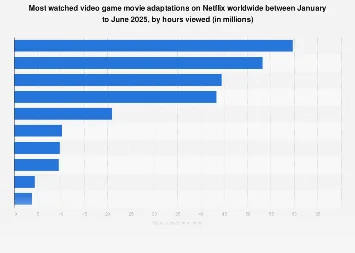
In the first half of 2025, the digital landscape of Netflix played host to a remarkable surge in viewership for video game movie adaptations, with animated features, particularly those stemming from iconic Nintendo and Sega franchises, leading the charge. "The Super Mario Bros. Movie," released in 2023, emerged as the undisputed champion, captivating audiences worldwide and accumulating an impressive 59.7 million hours viewed during the January to June period. This performance not only solidifies the enduring appeal of the beloved plumber and his universe but also underscores a significant trend in the streaming giant’s most popular content.
Following closely behind, and demonstrating the continued strength of live-action video game narratives, was the 2022 adaptation of "Uncharted." This action-adventure film, based on the popular PlayStation franchise, garnered 53.3 million hours of viewing time, indicating a robust appetite for translating interactive adventures into cinematic experiences. The competitive spirit of the gaming world seems to translate seamlessly to the streaming platform, with these adaptations drawing significant engagement from both dedicated fans and a broader audience drawn by compelling storytelling and star power.
The blue blur of Sega’s "Sonic the Hedgehog" franchise also made a significant impact on Netflix’s viewership charts. The original "Sonic the Hedgehog" film, released in 2020, secured the third spot with 44.5 million hours viewed, a testament to its successful blend of humor, action, and faithful character representation. Its sequel, "Sonic the Hedgehog 2," released in 2022, further reinforced the franchise’s popularity, landing in fourth place with 43.4 million hours viewed. The proximity of these two Sonic films highlights a successful multi-film strategy and the ability to build upon initial success, offering consistent entertainment value to subscribers.
The broader market for video game adaptations is experiencing a renaissance, fueled by a combination of nostalgia, advanced visual effects, and a growing understanding of how to translate complex game narratives for a film audience. The success of these titles on Netflix reflects a global phenomenon, where major streaming services are increasingly looking to established intellectual property from the gaming industry as a reliable source of engaging content. This trend is particularly pronounced in markets where video games have a deeply embedded cultural presence, driving demand for related media.
Beyond the top contenders, other video game adaptations also found their audience on Netflix. "The Angry Birds Movie 2," a vibrant animated sequel, captured 21 million hours of viewing, showcasing the continued appeal of animated adaptations of mobile game phenomena. Its predecessor, "The Angry Birds Movie," also contributed to the franchise’s presence with 9.8 million hours viewed, demonstrating a sustained interest in the quirky avian characters. These figures suggest that even adaptations of games with simpler narratives can find a significant audience when presented with engaging animation and family-friendly humor.
The Pokémon franchise, a global entertainment powerhouse, also made its mark, albeit with more modest viewing figures compared to the top performers. "Pokémon: Mewtwo Strikes Back – Evolution," a CGI remake of the original Pokémon film, garnered 10.3 million hours viewed. While this number is lower than the top-tier animated features, it still represents a substantial audience for a franchise with a decades-long history and a dedicated global fanbase. "Pokémon Detective Pikachu," a live-action take on the popular detective spin-off, recorded 3.8 million hours viewed, indicating that while the franchise has broad appeal, different stylistic approaches to adaptation can yield varying levels of engagement.
Further down the list, established titles like "Warcraft," with 9.6 million hours viewed, and "Monster Hunter," with 4.4 million hours viewed, highlight the ongoing efforts to adapt more mature and complex fantasy game worlds. While these films may not have reached the same viewership heights as the animated blockbusters, their presence on the chart signifies a continued investment in diverse video game IPs. The challenges in translating the intricate lore and gameplay mechanics of these titles into a compelling cinematic format are evident, but the continued attempts suggest a belief in their long-term potential.
The economic implications of these viewership numbers are substantial. For Netflix, successful video game adaptations can be a key differentiator in a highly competitive streaming market, attracting and retaining subscribers. The cost of acquiring or producing these titles is significant, but the potential return on investment, measured in subscriber engagement and growth, can be immense. Furthermore, the success of these films can also have a ripple effect on the underlying video game franchises, potentially boosting sales of the games themselves and related merchandise.
Globally, the trend of video game adaptations is not confined to Netflix. Other major streaming platforms and traditional film studios are actively investing in this lucrative market. Studios are recognizing that video games represent a rich source of established narratives, passionate fanbases, and visually dynamic worlds that can translate into compelling cinematic content. This has led to a pipeline of upcoming projects based on a wide array of video game IPs, from historical epics to science fiction adventures.
The data from the first half of 2025 clearly illustrates that animated franchises, particularly those with a strong existing brand recognition and a history of broad appeal, are currently dominating the video game movie adaptation landscape on Netflix. The success of "The Super Mario Bros. Movie" and the "Sonic the Hedgehog" films underscores the power of nostalgia combined with modern filmmaking techniques. As the industry continues to explore the vast potential of video game IPs, the future of streaming entertainment is likely to be heavily influenced by these interactive worlds brought to life on the silver screen. The challenge for studios and platforms will be to continue to find the right balance of fan service, narrative coherence, and cinematic quality to capture the imagination of a diverse and discerning global audience. The ongoing evolution of this genre suggests a dynamic and promising future for gamers and moviegoers alike.