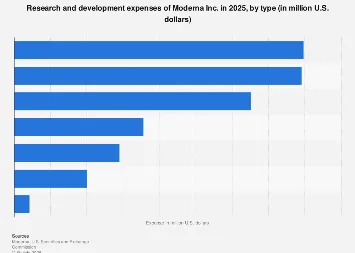
Moderna, a pioneer in mRNA technology, is poised to continue its significant investment in research and development, projecting substantial expenditures across various categories through 2025. This strategic allocation of capital is crucial for the biotechnology giant as it seeks to broaden its therapeutic pipeline beyond its foundational COVID-19 vaccine and solidify its position as a leader in the rapidly evolving landscape of genetic medicine. The company’s R&D blueprint reflects a multifaceted approach, encompassing the discovery of novel drug candidates, the refinement of existing platforms, clinical trial execution, and the expansion of manufacturing capabilities to support its ambitious growth trajectory.
The core of Moderna’s R&D strategy lies in the relentless pursuit of new mRNA-based therapeutics. This involves substantial investment in basic research, aimed at uncovering the fundamental mechanisms of mRNA function and exploring its potential applications across a wider array of diseases. This foundational work is critical for identifying novel drug targets and designing sophisticated mRNA constructs capable of eliciting specific biological responses. Early-stage research activities, though often carrying higher risk, are the bedrock of future innovation. These investments fuel the exploration of uncharted scientific territory, seeking to unlock the full therapeutic potential of mRNA for conditions ranging from infectious diseases and rare genetic disorders to oncology and autoimmune diseases. The company’s commitment to basic research underscores its long-term vision of mRNA as a versatile platform technology with the potential to revolutionize healthcare.
A significant portion of Moderna’s R&D budget is dedicated to the preclinical development of promising drug candidates. This stage involves rigorous laboratory testing and animal studies to assess the safety and efficacy of potential new therapies before they advance to human trials. Investments here are directed towards optimizing mRNA sequences, developing effective delivery systems (such as lipid nanoparticles), and conducting comprehensive pharmacology and toxicology studies. The transition from basic research to preclinical development represents a critical inflection point, where scientific concepts begin to take tangible form as potential medicines. Success at this stage is vital for building a robust pipeline and de-risking future clinical investments.
The most resource-intensive aspect of Moderna’s R&D efforts is undeniably its clinical trial program. As the company advances multiple candidates across various therapeutic areas, the financial demands of Phase 1, Phase 2, and Phase 3 trials escalate considerably. These trials require extensive patient recruitment, data collection and analysis, regulatory submissions, and post-market surveillance. Moderna’s investment in clinical development reflects a commitment to rigorously testing its innovative therapies in human subjects, aiming to demonstrate their safety, tolerability, and therapeutic benefit. The success of these trials is paramount, as they are the ultimate gatekeepers to regulatory approval and commercialization. The sheer scale and complexity of global clinical trials necessitate significant financial outlay, including the costs associated with research sites, clinical investigators, and specialized personnel.
Beyond the direct development of drug candidates, Moderna is also investing heavily in advancing its mRNA platform technology itself. This includes research into novel delivery mechanisms, such as improved lipid nanoparticle formulations that can enhance targeting and reduce potential side effects, or exploring alternative delivery routes beyond intramuscular injection. Furthermore, the company is dedicated to refining its manufacturing processes for mRNA therapies. This involves scaling up production capabilities, optimizing manufacturing yields, and ensuring the consistent quality and purity of its mRNA drug substances. Investment in manufacturing R&D is crucial for enabling the efficient and cost-effective production of therapies, particularly as the company aims to bring multiple products to market.
Moderna’s R&D expenditures are not confined to internal efforts. Strategic partnerships and collaborations with academic institutions, research organizations, and other biotechnology firms play a vital role in accelerating discovery and development. These collaborations allow Moderna to leverage external expertise, access cutting-edge research, and share the financial burden of high-risk, high-reward projects. Investments in such alliances can range from joint research initiatives to licensing agreements and co-development deals, all aimed at expanding the company’s innovation ecosystem and diversifying its therapeutic portfolio.
The financial implications of these R&D commitments are substantial. While specific figures for 2025 remain proprietary and subject to ongoing strategic adjustments, industry analysts project continued high levels of investment by leading biotechnology firms like Moderna. Companies in this sector often allocate a significant percentage of their revenue – sometimes upwards of 20-30% or even more in growth phases – to R&D, recognizing it as the engine of future growth and competitive advantage. For Moderna, whose market capitalization has surged following the success of its COVID-19 vaccine, the ability to reinvest profits into its pipeline is a critical differentiator.
Globally, the biotechnology sector is experiencing unprecedented growth, driven by advancements in genomics, immunology, and gene editing technologies. This creates a dynamic and competitive environment where sustained R&D investment is not just a strategic choice but a necessity for survival and leadership. Competitors are also making significant inroads in mRNA technology and other novel therapeutic modalities, necessitating that Moderna maintain its pace of innovation and scientific advancement. The company’s ability to successfully navigate the complex regulatory pathways and demonstrate the long-term value of its mRNA therapies will be critical to its sustained success in the global pharmaceutical market.
The economic impact of Moderna’s R&D investments extends beyond its own balance sheet. The company’s activities generate employment opportunities for highly skilled scientists, researchers, clinicians, and manufacturing professionals. Furthermore, its partnerships with contract research organizations (CROs) and contract manufacturing organizations (CMOs) stimulate growth within the broader life sciences ecosystem. The development of new therapies also holds the promise of improving public health outcomes, reducing the burden of disease, and potentially lowering long-term healthcare costs by offering more effective and targeted treatments.
Looking ahead, Moderna’s commitment to R&D is a testament to its belief in the transformative power of mRNA technology. The company’s strategic allocation of resources across discovery, preclinical development, clinical trials, platform enhancement, and external collaborations positions it to address a wide spectrum of unmet medical needs. The projected expenditures through 2025 underscore a deliberate strategy to diversify its pipeline, strengthen its technological foundation, and ultimately, to translate scientific breakthroughs into life-changing medicines for patients worldwide. The success of this ambitious R&D agenda will be a key determinant of Moderna’s long-term valuation and its enduring impact on the future of healthcare.