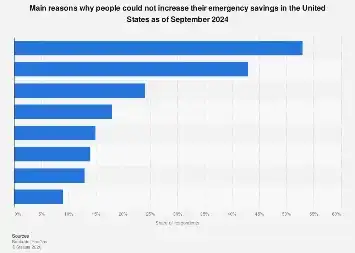
Inflation emerged as a dominant impediment for U.S. adults attempting to bolster their emergency savings throughout 2024, according to recent survey data. This pervasive economic pressure, coupled with a host of other significant financial headwinds, has created a challenging environment for individuals seeking to build financial resilience. Beyond the corrosive effects of rising prices, a substantial portion of respondents cited an overwhelming volume of expenses as a primary barrier, preventing them from allocating any surplus funds towards critical emergency reserves. Furthermore, a significant percentage of Americans identified burdensome debt levels as a direct constraint on their ability to save, underscoring a complex interplay of financial obligations that deplete disposable income.
The challenge of maintaining or increasing emergency savings is not a monolithic issue; it is a multifaceted problem influenced by a confluence of macroeconomic trends and personal financial circumstances. The sustained inflationary environment of 2024 has acted as a relentless drain on household budgets. As the cost of essential goods and services, from groceries and energy to housing and transportation, continues to climb, a larger proportion of income is necessarily diverted to cover these rising expenditures. This leaves less discretionary income available for saving, particularly for those living paycheck to paycheck. The erosion of purchasing power means that even with the same nominal income, households are able to afford less, making the accumulation of savings a more arduous task. This dynamic is particularly acute for lower and middle-income households, who spend a greater percentage of their income on necessities and have less financial flexibility.
Beyond the broad impact of inflation, the sheer volume of daily and monthly expenses presents a formidable obstacle. For many Americans, the gap between income and essential outgoings has narrowed significantly. This includes not only the direct costs of living but also recurring bills such as rent or mortgage payments, utilities, healthcare expenses, insurance premiums, and childcare costs. When these obligations consume the majority of an individual’s earnings, the concept of setting aside funds for unexpected events becomes a luxury rather than an attainable goal. This situation is exacerbated by wage growth that has, in many sectors, failed to keep pace with the rate of inflation, creating a real-terms decline in living standards for a significant segment of the population.
The burden of debt further compounds the savings challenge. High levels of consumer debt, including credit card balances, auto loans, and student loans, impose significant financial obligations in the form of monthly payments and interest charges. These debt servicing costs directly reduce the amount of money available for saving. For individuals struggling with substantial debt, the immediate priority often becomes managing these payments to avoid default and further financial penalties, leaving little room for proactive savings strategies. The psychological toll of managing high debt levels can also contribute to financial stress, potentially impacting financial decision-making and long-term planning.
The data, though specific to 2024, reflects broader trends in personal finance that have been developing over recent years. The COVID-19 pandemic, while initially leading to a surge in savings for some due to reduced spending opportunities, has also created lasting economic disruptions. Supply chain issues, labor market volatility, and the subsequent inflationary pressures have created a precarious financial landscape. This has led to a divergence in savings outcomes, with higher-income households often able to maintain or increase their savings, while those with fewer financial resources have struggled to do so.
Economists and financial planners have long emphasized the importance of emergency savings as a crucial buffer against unforeseen events such as job loss, medical emergencies, or unexpected home repairs. These savings provide a safety net, preventing individuals from falling into more precarious financial situations, such as taking out high-interest loans or depleting retirement accounts prematurely. The inability of a significant portion of the population to build or maintain these reserves has wider economic implications, potentially leading to increased reliance on social safety nets, greater financial instability, and reduced consumer spending in the long term.
Globally, the challenges faced by American savers are not unique. Many developed economies are grappling with similar inflationary pressures and the impact of rising interest rates on household budgets. However, the specific composition of expenses and debt burdens can vary significantly by country, influenced by national economic policies, social welfare systems, and cultural attitudes towards debt and savings. For instance, countries with more robust social safety nets or universal healthcare systems might experience less pressure on individual emergency savings for medical-related expenses. Conversely, economies with higher rates of homeownership and associated mortgage burdens might see debt play an even larger role in limiting savings capacity.
The survey’s methodology, which allowed for multiple responses, highlights the interconnected nature of these financial obstacles. It is often not a single factor but a combination of inflation, high expenses, and debt that collectively prevents individuals from saving. For example, an individual might be struggling with high inflation on necessities, which increases their overall expenses, and simultaneously be carrying significant credit card debt, making it virtually impossible to allocate any funds to an emergency fund.
The implications for financial institutions and policymakers are considerable. For banks and credit unions, understanding these barriers is crucial for developing relevant financial products and advisory services. This could include offering more accessible savings accounts with higher interest rates, debt management counseling, or financial literacy programs tailored to address the specific challenges faced by different income brackets. Policymakers, meanwhile, face the challenge of addressing the root causes of these savings shortfalls. This could involve measures to curb inflation, initiatives to promote wage growth, policies aimed at reducing the cost of essential services like healthcare and education, and reforms to address the student loan debt crisis.
Ultimately, the struggle to save is a stark indicator of the financial strain many Americans are experiencing. The data from 2024 paints a picture of a population battling persistent economic headwinds, where the fundamental act of building financial security is becoming increasingly difficult. Addressing these challenges requires a comprehensive approach that tackles inflation, alleviates debt burdens, and fosters an economic environment where building an emergency savings cushion is a realistic aspiration for a broader segment of the population, thereby enhancing individual and collective economic resilience.