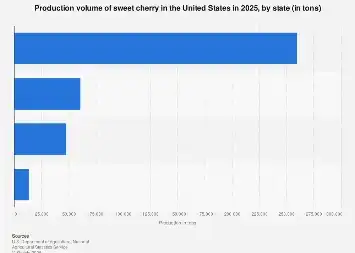
The United States agricultural sector, a bedrock of global food supply chains, is poised for a significant season in sweet cherry production. As forecasts for 2025 begin to solidify, understanding the intricate state-by-state contributions to the national yield offers critical insights into market stability, export potential, and the economic vitality of key agricultural regions. While precise figures for the upcoming year are still in flux, historical data and emerging trends provide a robust framework for anticipating the performance of this highly sought-after fruit.
The U.S. is a major player in the global sweet cherry market, with production concentrated in a few key states that benefit from specific climatic conditions and agricultural expertise. Washington State consistently stands as the nation’s leading producer, a position it has held for many years. Its fertile valleys, abundant sunshine, and ideal chilling hours create a perfect environment for cultivating high-quality sweet cherries. In typical years, Washington accounts for a substantial majority of the U.S. sweet cherry harvest, often exceeding 50% of the total output. This dominance is not merely a matter of volume; Washington cherries are renowned for their size, firmness, and exceptional flavor, commanding premium prices in both domestic and international markets.
Following Washington, California emerges as the second-largest producer. The Central Valley of California, with its diverse microclimates, allows for a staggered harvest season, extending the availability of fresh cherries. While its total volume may be less than Washington’s, California’s contribution is vital, particularly in supplying the early-season market and catering to specific varietal demands. Oregon, with its Willamette Valley also boasting favorable growing conditions, ranks as the third most significant producer. The Pacific Northwest trio – Washington, California, and Oregon – collectively represent the heartland of American sweet cherry cultivation, driving the bulk of the nation’s supply.
Beyond these dominant states, other regions contribute to the national sweet cherry mosaic. Michigan, situated in the Great Lakes region, has a long history of fruit cultivation and plays a notable role, particularly in the eastern half of the country. Its production, though smaller in scale compared to the West Coast giants, is crucial for regional supply chains and supports local economies. States like Utah, Idaho, and even some in the Northeast, such as New York, also cultivate sweet cherries, albeit on a more limited scale. These smaller-scale operations often focus on niche markets, direct-to-consumer sales, or artisanal food products, adding diversity to the overall market.
The economic implications of sweet cherry production are far-reaching. For the leading states, the industry is a significant employer, providing seasonal jobs in orchards, packing facilities, and transportation networks. The revenue generated from sweet cherry sales directly impacts the livelihoods of farmers, processors, and distributors. Furthermore, the export market represents a substantial economic driver. U.S. sweet cherries are highly valued in countries across Asia, Europe, and Canada, contributing positively to the nation’s trade balance. In 2023, for instance, U.S. cherry exports were valued at hundreds of millions of dollars, underscoring the global demand for American-grown fruit.
Several factors influence the annual sweet cherry yield, making year-to-year fluctuations common. Weather patterns are arguably the most critical determinant. Spring frosts can damage blossoms, significantly reducing fruit set. Extreme heat during the growing season can lead to smaller fruit size or sunscald. Conversely, adequate sunshine and moderate temperatures are conducive to healthy growth and optimal sugar development. Water availability is also paramount, especially in the drier Western states, where irrigation systems are essential for maintaining orchard health and fruit quality.
Pest and disease management represent another ongoing challenge. Cherry fruit fly, spotted wing drosophila, and various fungal diseases can threaten harvests if not meticulously managed. Growers invest heavily in integrated pest management strategies, including netting, biological controls, and targeted pesticide applications, to protect their crops. The cost of these inputs, coupled with labor expenses and fluctuating market prices, contributes to the complex economic equation for cherry producers.
Market dynamics play a crucial role in shaping the profitability of sweet cherry farming. Consumer demand, influenced by health trends, seasonal availability, and marketing efforts, dictates the price point. The rise of e-commerce and direct-to-consumer models has opened new avenues for growers, allowing them to capture a larger share of the retail price and build direct relationships with consumers. However, the reliance on wholesale markets and the volatility of international trade agreements can also present significant challenges.
Looking ahead to 2025, several trends are likely to shape the sweet cherry landscape. Advances in agricultural technology, such as precision irrigation, drone-based monitoring, and improved harvesting equipment, are expected to enhance efficiency and sustainability. The development of new cherry varieties with enhanced disease resistance, improved shelf life, and desirable flavor profiles will also be a key focus for breeders and growers. Furthermore, the increasing consumer awareness of food origins and sustainable farming practices is likely to drive demand for cherries grown using environmentally friendly methods.
The global context is also important. While the U.S. is a major producer, countries like Turkey, Chile, and Canada are also significant players in the international sweet cherry market. Competition from these regions, particularly during overlapping harvest seasons, can influence pricing and market access for U.S. growers. Shifts in global economic conditions, currency exchange rates, and trade policies can all impact the competitiveness of U.S. sweet cherries on the world stage.
In conclusion, the forthcoming sweet cherry season in the U.S. promises to be a dynamic interplay of agricultural prowess, climatic influences, and evolving market forces. The established dominance of states like Washington, California, and Oregon will undoubtedly continue to shape the national output. However, the resilience and adaptability of the American agricultural sector, coupled with technological advancements and a growing global appetite for high-quality produce, suggest that sweet cherry production will remain a vital and economically significant component of the U.S. agricultural economy for years to come. The ability of growers to navigate challenges, embrace innovation, and respond to consumer preferences will be paramount in determining the ultimate success of the 2025 harvest.