The scheduled diplomatic mission of United States President Donald Trump to Beijing, once viewed as the definitive moment for a lasting trade reconciliation between the world’s two largest economies, now hangs in a precarious balance. Following the weekend announcement of joint U.S.-Israeli military strikes that resulted in the death of Iran’s Supreme Leader Ayatollah Ali Khamenei, the geopolitical landscape has undergone a seismic shift. This development, occurring just weeks before the President’s planned visit from March 31 to April 2, 2026, has introduced a layer of strategic ambiguity that threatens to derail years of delicate bilateral negotiations.
The elimination of Khamenei marks the second time in less than sixty days that the Trump administration has moved decisively against a foreign head of state, following the January capture of Venezuelan President Nicolas Maduro and his wife. For Beijing, these actions represent a jarring departure from traditional diplomatic norms and a direct challenge to the "Westphalian" principles of state sovereignty that China holds as the bedrock of international relations. As the White House prepares for what would be the first visit by a sitting U.S. president to China since 2017, the shadow of "regime change" politics looms large over the Great Hall of the People.
Analysts and regional experts suggest that the optics of the visit have shifted from a celebration of economic synergy to a potential diplomatic minefield. George Chen, a partner at The Asia Group, notes that the personal and political discomfort for Chinese President Xi Jinping cannot be overstated. Beijing has maintained robust, if complex, economic and energy-security ties with both Tehran and Caracas. The sudden removal of these leaders via American military and intelligence operations places Xi in a difficult position. Welcoming the architect of these disruptions for a high-profile state visit requires a level of diplomatic flexibility that may be currently out of reach for the Chinese Communist Party leadership.
The economic stakes are monumental. The planned summit was intended to solidify a fragile trade truce reached in October 2025, which aimed to prevent the re-escalation of a tariff war that has periodically crippled global supply chains over the last decade. Investors had been pricing in a period of relative stability, hoping that a "Phase Three" trade agreement might address structural issues such as intellectual property rights and state subsidies. However, the prospect of a canceled or delayed trip has sent ripples through global markets.

Market data reflects this growing skepticism. Prediction markets, which often serve as a bellwether for political risk, have seen a dramatic recalibration of expectations. On Polymarket, the probability of Trump visiting China by the end of March plummeted from a high of nearly 84% in late February to just 42% following the news from Tehran. While wagers for a visit by the end of April remain relatively high at 81%, the immediate confidence in the March timeline has evaporated. Similarly, the platform Kalshi has recorded a dip in long-term confidence regarding U.S.-China engagement, suggesting that while a meeting may eventually occur, the "trust deficit" between the two nations has reached a critical threshold.
The reaction from the Chinese Ministry of Foreign Affairs has been one of calculated condemnation. Beijing’s official statement described the killing of Khamenei as a "grave violation of Iran’s sovereignty and security," calling for an immediate cessation of hostilities. Interestingly, observers have noted that the rhetoric, while firm, was somewhat more restrained than the fiery denouncements that followed the capture of Maduro in January. This "unusually softer tone," according to Jack Lee of the China Macro Group, could indicate that Beijing is still holding the door open for negotiations, provided the U.S. offers concessions in other sensitive areas—most notably regarding arms sales and diplomatic support for Taiwan.
The business community is perhaps the most anxious stakeholder in this unfolding drama. Traditionally, U.S. presidential visits to China are accompanied by a "blue-chip" delegation of CEOs from the aerospace, technology, and agricultural sectors, often resulting in billions of dollars in signed memorandums of understanding. However, the current climate of "targeted strikes" and "maximum pressure" has made American executives increasingly wary. The risk of being caught in the crossfire of a sudden diplomatic rupture is high. Members of the American Chamber of Commerce in China have privately expressed concerns that participating in the delegation could be seen as an endorsement of a foreign policy that their Chinese counterparts find abhorrent, potentially damaging long-term corporate relationships in the mainland.
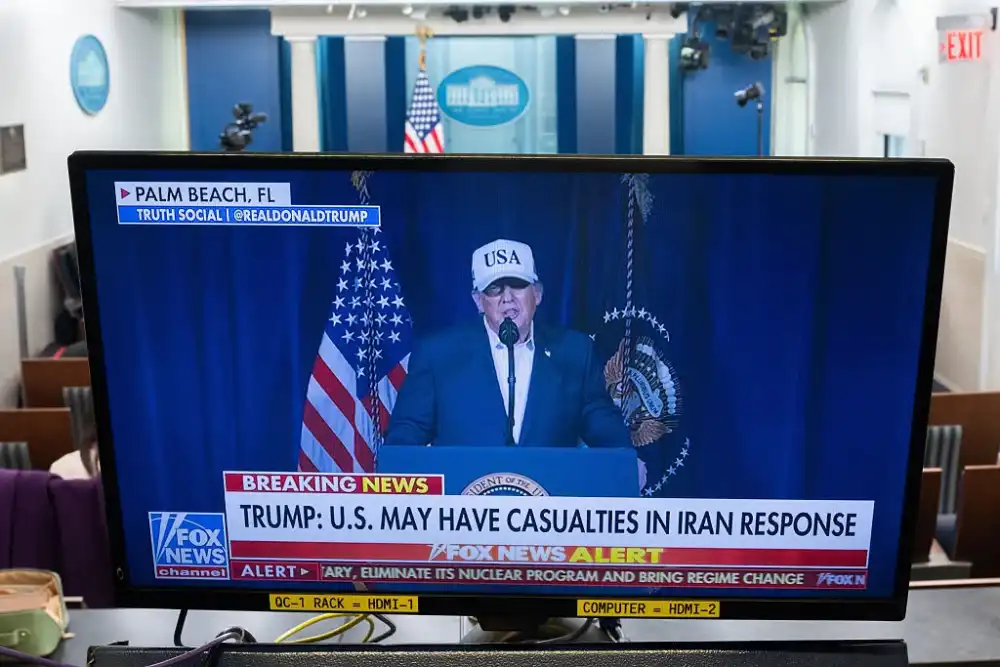
Furthermore, the duration of the conflict in the Middle East remains a wildcard. President Trump recently indicated in an interview that U.S. military operations in Iran could persist for at least four weeks. If this timeline holds, the peak of the military campaign would coincide exactly with the start of the Beijing summit. It is historically rare for a U.S. president to conduct a major state visit to a strategic rival while simultaneously managing a high-intensity kinetic conflict in a third theater. The logistical and cognitive demands of a potential regional war in the Middle East could easily force a postponement of the China trip, as the administration’s focus shifts to energy security and the prevention of a broader global oil shock.
From a Chinese domestic perspective, the timing is equally sensitive. The "Two Sessions," China’s annual parliamentary meetings, are currently underway. During this period, the Chinese leadership is hyper-focused on projecting an image of stability and global leadership. State-affiliated commentators have already begun framing the Iran conflict as a cautionary tale. Columnists in state media have pointed to the death of Khamenei as evidence that "traitors" can emerge from within and that diplomatic negotiations may often serve as a "smoke screen" for more aggressive American intentions. This narrative complicates Xi Jinping’s ability to sell a "grand bargain" with Trump to his own domestic audience.

Despite these headwinds, some economists argue that the very intensity of the crisis makes the meeting more necessary than ever. Gary Dvorchak, managing director at Blueshirt Group, argues that the issues at the heart of the U.S.-China relationship—trade, technology, and regional security—are too critical to be sidelined by the chaos in the Middle East. In this view, the summit could serve as a vital de-escalation mechanism, providing a platform for the two superpowers to coordinate their responses to global instability and prevent a broader systemic collapse of the international order.
The potential for a "phone call" diplomacy to bridge the gap has been suggested by Yue Su of the Economist Intelligence Unit. A direct conversation between Trump and Xi could allow both leaders to "save face" while adjusting the timeline of the visit. However, if the U.S. military engagement in Iran expands into a broader regional conflict involving other Middle Eastern powers, the pressure on China to pivot toward a more adversarial stance will grow. China’s "Global Security Initiative" explicitly opposes the use of unilateral sanctions and targeted strikes, positioning Beijing as the champion of the "Global South" against what it characterizes as American hegemonic overreach.
As the March 31 deadline approaches, the global community is left to watch a high-stakes game of geopolitical chess. The outcome will determine not only the trajectory of U.S.-China trade but also the future of international law and the limits of executive power in a multipolar world. For now, the "fragile truce" of October remains the only thing preventing a return to all-out economic warfare, but that truce is being tested by the realities of a world where the lines between diplomacy and combat are increasingly blurred. Whether Trump’s plane eventually touches down in Beijing or remains grounded in Washington will be the ultimate indicator of whether the world’s two most powerful nations can still find a path to coexistence amidst the flames of global upheaval.