A comprehensive survey conducted in mid-2025 has illuminated significant challenges facing Italy’s national healthcare system, with over half of the population identifying critical issues related to treatment accessibility and prolonged waiting times as the most pressing concerns. The findings paint a stark picture of a system under considerable strain, revealing a deep-seated dissatisfaction among citizens regarding the delivery of essential health services. Beyond the immediate barriers to care, respondents also pointed to systemic weaknesses including insufficient staffing levels, burdensome bureaucracy, and a perceived lack of investment as key contributors to the system’s current difficulties.
The survey, which polled approximately 1,000 individuals between July 25 and August 8, 2025, utilized an online panel methodology to gather insights into public perception of the healthcare landscape. The results underscore a widespread sentiment that the Italian healthcare system, while a cornerstone of the nation’s social welfare, is struggling to meet the evolving demands of its population.
Access and Waiting Times: The Foremost Obstacles
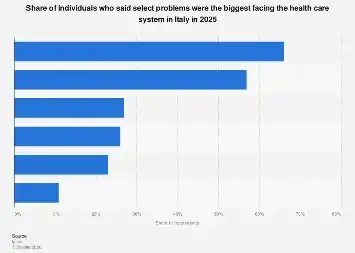
The most alarming statistic revealed by the survey is that a substantial 66% of respondents cited "Access to treatment and/or long waiting times" as the primary problem confronting the national healthcare system. This figure suggests that for a significant majority of Italians, the ability to receive timely and appropriate medical attention is a daily struggle. This could manifest in various forms, from lengthy delays for specialist appointments and elective surgeries to extended periods in emergency rooms, impacting patient outcomes and overall public trust.
Globally, Italy’s healthcare system, managed by the Servizio Sanitario Nazionale (SSN), has historically been praised for its universal coverage and high quality of care, often ranking among the best in the world in terms of health outcomes and efficiency. However, these recent findings suggest a divergence between its established reputation and the lived experiences of its citizens. Compared to some other European nations with similar universal healthcare models, such as the United Kingdom’s NHS or Germany’s statutory health insurance system, Italy appears to be facing particularly acute challenges in ensuring prompt access to services. While all these systems grapple with aging populations and increasing healthcare demands, the scale of the access and waiting time issue in Italy, as indicated by this survey, warrants urgent attention.
Staffing Shortages: A Critical Bottleneck
Compounding the access issue is the pervasive problem of insufficient staffing. A considerable 57% of respondents identified "Not enough staff" as a major deficiency. This indicates a critical shortage of healthcare professionals, including doctors, nurses, and support staff, across various specializations and regions. Such shortages can lead to increased workloads for existing personnel, burnout, reduced capacity to treat patients, and ultimately, longer waiting lists.
The phenomenon of healthcare worker shortages is not unique to Italy; it is a growing concern across many developed nations. Factors contributing to this include an aging workforce, insufficient training program capacity, emigration of skilled professionals to countries offering better remuneration and working conditions, and an increasing demand for healthcare services driven by demographic shifts and medical advancements. Italy’s demographic profile, with one of the oldest populations globally, exacerbates this issue, as an aging populace typically requires more extensive and complex medical care. The economic implications of such shortages are also significant, potentially leading to increased costs associated with agency staff, reduced productivity within the system, and a negative impact on the broader economy due to a less healthy workforce.
Bureaucracy and Investment Gaps
Beyond the frontline issues of access and staffing, systemic inefficiencies also play a role. "Bureaucracy" was identified as a significant problem by 27% of respondents, suggesting that administrative hurdles, complex procedures, and inefficient organizational structures hinder the smooth operation of the healthcare system. This can create unnecessary delays, frustration for both patients and providers, and divert resources that could be better utilized for direct patient care.
Furthermore, the survey data hints at a perceived "lack of investment" indirectly, through the prevalence of other issues. While not explicitly stated as a top-tier problem by a majority, the underlying causes of staffing shortages and access issues often stem from inadequate funding. The "Cost of accessing treatment" was noted by 26% of respondents, which, in a universal healthcare system, might reflect out-of-pocket expenses for certain services, medications, or private consultations sought to bypass waiting lists.
Broader Systemic Concerns
The survey also touched upon other underlying factors impacting the healthcare system. The "Ageing population" was cited by 23% of respondents. This demographic trend, while a testament to Italy’s successful public health interventions over decades, places an escalating demand on healthcare resources, particularly for chronic disease management and long-term care. Proactive policy adjustments and increased resource allocation are crucial to sustainably manage the healthcare needs of an increasingly elderly population.
A smaller, but still significant, proportion of respondents (11%) expressed concerns about the "Poor quality treatment." While this is a lower percentage compared to access or staffing issues, it points to potential variations in the standard of care across different regions or facilities, or specific instances where patient expectations were not met. Addressing such concerns requires a focus on continuous quality improvement, standardized protocols, and robust patient feedback mechanisms.
The findings from this 2025 survey serve as a critical barometer of public sentiment regarding Italy’s healthcare system. They highlight an urgent need for strategic interventions aimed at improving patient access, bolstering the healthcare workforce, streamlining administrative processes, and ensuring adequate and targeted investment. Without decisive action, the challenges identified by the Italian populace risk eroding the foundational principles of its esteemed national health service and diminishing its capacity to provide equitable and effective care for all. The economic implications are far-reaching, impacting workforce productivity, national well-being, and the country’s overall attractiveness as a stable and functional European nation.