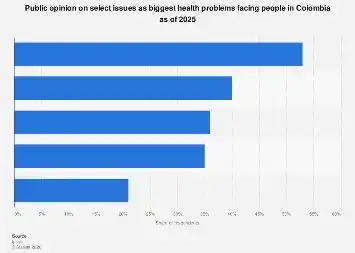
The burgeoning healthcare challenges facing Colombia in 2025 are increasingly dominated by concerns over mental well-being, according to recent public opinion data. A significant percentage of the surveyed Colombian population identified mental health as the preeminent sanitary problem within the nation, underscoring a growing awareness and prioritization of psychological well-being in the country’s public health discourse. This sentiment positions mental health at the forefront of national health priorities, eclipsing other pressing issues.
Following closely behind mental health in the public’s perception of critical health issues are the pervasive challenges of stress and drug abuse. Stress emerged as the second most significant health concern, reflecting the pressures of modern life and its impact on the populace. Drug abuse, a persistent societal issue with far-reaching health implications, ranked third, indicating its continued prominence as a major public health challenge requiring robust intervention strategies. These findings paint a nuanced picture of the multifaceted health concerns that Colombians are grappling with as the nation looks towards the near future.
The data suggests a broader regional and global trend where mental health is gaining recognition as a critical determinant of overall public health. In 2023, Colombia was already positioned among a group of 34 nations where a substantial portion of the adult population cited mental health as one of the most significant health problems affecting their country. This earlier indicator foreshadowed the current, more pronounced focus on mental well-being, suggesting a trajectory of escalating concern and a potential shift in healthcare policy and resource allocation. The consistent emphasis on mental health across different time points indicates that this is not a transient issue but a deeply embedded societal concern that requires sustained attention and proactive measures.
The survey, conducted between July 25 and August 8, 2025, polled approximately 500 respondents. It’s important to note the demographic characteristics of the surveyed group, which consisted of individuals who are more urban, more educated, and potentially more affluent than the general Colombian population. This segment of the population may have a heightened awareness of mental health issues due to greater access to information and resources, as well as potentially experiencing different types of societal pressures. While this demographic offers valuable insights, it is crucial to consider how these perceptions might translate or differ across broader socio-economic strata within Colombia. The online survey methodology also implies a degree of digital literacy among participants.
The phrasing of the survey question, "Thinking generally, which are in your opinion the biggest health problems facing people in your country today?", allowed for a broad interpretation of health issues. The potential for responses to exceed 100 percent in cumulative figures highlights the possibility of respondents identifying multiple significant health problems, reflecting the complex and interconnected nature of public health challenges. This complexity necessitates a holistic approach to healthcare policy, one that recognizes the interplay between physical, mental, and social determinants of health.
The prominence of stress as a leading concern is indicative of the broader economic and social environments. Colombia, like many nations, is navigating economic volatility, social inequalities, and the lingering effects of global events, all of which can contribute to elevated stress levels. These stressors can, in turn, exacerbate existing mental health conditions or contribute to the onset of new ones. The economic implications of widespread stress are substantial, affecting productivity, healthcare costs, and overall societal well-being. Addressing stress requires a multi-pronged approach, encompassing workplace interventions, community support systems, and accessible mental health services.
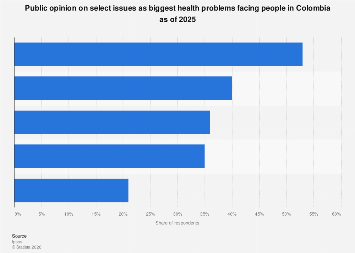
The persistent issue of drug abuse also points to complex socio-economic factors, including poverty, lack of opportunity, and access to illicit substances. The health consequences of drug abuse are severe, ranging from infectious diseases and overdose deaths to long-term physical and mental health deterioration. The economic burden associated with drug abuse includes healthcare expenditures, law enforcement costs, and lost productivity. Effective strategies to combat drug abuse often involve a combination of prevention programs, treatment services, harm reduction initiatives, and addressing the underlying socio-economic drivers.
The data’s emphasis on mental health as the leading concern suggests a potential paradigm shift in how healthcare is perceived and prioritized in Colombia. Historically, there has often been a greater focus and investment in physical health services. However, the growing recognition of mental health’s impact on overall well-being and its contribution to various physical ailments indicates a need for greater parity in resource allocation and public health strategies. This shift could necessitate increased funding for mental health services, expansion of access to therapy and counseling, integration of mental health support within primary care settings, and public awareness campaigns to destigmatize mental health issues.
Globally, the conversation around mental health has been gaining momentum. The COVID-19 pandemic, in particular, brought mental health challenges to the forefront worldwide, highlighting the vulnerability of populations to psychological distress during times of crisis. This global context likely influences perceptions within Colombia, reinforcing the importance of prioritizing mental well-being. Countries that have made significant strides in mental healthcare often demonstrate a commitment to early intervention, destigmatization efforts, and the development of comprehensive support networks. Colombia’s current trajectory suggests an increasing alignment with these global best practices.
The economic impact of untreated mental health conditions is significant. Globally, mental health conditions are estimated to cost the global economy trillions of dollars annually in lost productivity. In Colombia, addressing mental health proactively could lead to substantial economic benefits, including a more engaged and productive workforce, reduced healthcare expenditures on related physical ailments, and improved social cohesion. Investing in mental health is not merely a social imperative but also a sound economic strategy.
The survey’s methodology, while providing valuable insights, also points to areas for further exploration. Understanding the specific nuances of these concerns across different regions of Colombia, varying age groups, and diverse socio-economic backgrounds would offer a more comprehensive picture. Future research could delve into the perceived barriers to accessing mental healthcare, the effectiveness of current interventions, and the specific types of mental health challenges that are most prevalent.
In conclusion, the 2025 outlook for Colombian healthcare is marked by a strong public mandate to address mental well-being as a primary concern. The interconnected issues of stress and drug abuse further underscore the complex health challenges the nation faces. This growing awareness presents an opportunity for policymakers to re-evaluate and strengthen the nation’s mental healthcare infrastructure, fostering a healthier, more resilient, and economically vibrant Colombia. The global trend towards prioritizing mental health provides a framework and an impetus for Colombia to develop and implement innovative and effective solutions to meet these critical public health demands.