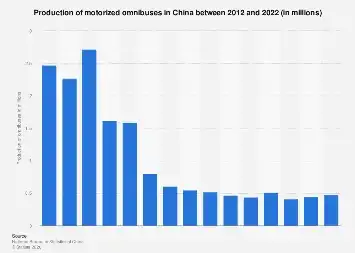
China has firmly established itself as a global powerhouse in the manufacturing of omnibuses, a segment of the commercial vehicle industry encompassing buses and coaches designed for passenger transport. This dominance is not merely a matter of scale but reflects a sophisticated industrial ecosystem, driven by robust domestic demand, significant government support, and a relentless pursuit of technological advancement. The nation’s production capacity for these vehicles plays a critical role in its own extensive public transportation network and contributes substantially to the global supply chain for bus and coach manufacturers.
The sheer volume of omnibuses produced in China is a testament to its industrial prowess. While specific, up-to-the-minute production figures are often proprietary and subject to dynamic market fluctuations, industry analyses consistently point to China as the world’s largest producer. This production encompasses a wide spectrum of vehicles, from smaller shuttle buses and city transit buses to large, long-distance coaches and specialized tourist vehicles. The industry serves a dual purpose: meeting the immense transportation needs of China’s rapidly urbanizing population and catering to export markets seeking cost-effective and increasingly technologically advanced solutions.
Several factors underpin China’s formidable position in omnibus manufacturing. Firstly, the sheer size of the domestic market provides a constant and substantial base demand. China’s vast network of cities, expanding suburban areas, and the ongoing development of its intercity transport infrastructure necessitate a continuous supply of new buses and coaches. Government initiatives aimed at modernizing public transport fleets, improving air quality through the adoption of cleaner technologies, and supporting domestic industries have further amplified this demand. This consistent offtake allows manufacturers to achieve economies of scale, driving down production costs and enhancing their competitiveness.
Secondly, strategic government policies have been instrumental. Beijing has long prioritized the development of its automotive sector, including the commercial vehicle segment. This has translated into various forms of support, including subsidies for research and development, preferential loan rates, and incentives for adopting advanced manufacturing techniques. Crucially, China has been at the forefront of promoting new energy vehicles (NEVs), and this extends to the omnibus sector. Significant investment and policy support have propelled the widespread adoption and production of electric buses, which are now a common sight in many Chinese cities. This focus on electrification not only aligns with global sustainability trends but has also allowed Chinese manufacturers to gain a significant lead in a rapidly growing market segment.
Technological innovation is another key driver. While historically Chinese manufacturers may have been known for mass production at lower costs, there has been a discernible shift towards higher quality, advanced features, and technological sophistication. Chinese omnibus manufacturers are increasingly investing in R&D, focusing on areas such as intelligent transportation systems, advanced driver-assistance systems (ADAS), improved passenger comfort and safety features, and, of course, the development of more efficient and reliable powertrains, particularly for electric and hybrid models. The integration of connectivity and digital solutions is also becoming a standard feature, reflecting the broader trend towards smart mobility.
The global impact of China’s omnibus production is profound. Chinese manufacturers are not only supplying vehicles for domestic use but are also significant players in international markets. They export a wide range of vehicles to countries across Asia, Africa, Latin America, and even to some developed economies, often competing on price and increasingly on technological merit. This global reach influences pricing dynamics, competition, and the pace of technological adoption worldwide. For many developing nations, Chinese-made omnibuses offer a viable and affordable solution for expanding public transportation services, contributing to economic development and social mobility.
However, the industry is not without its challenges and evolving dynamics. The global push for decarbonization is a significant factor, accelerating the transition towards electric and hydrogen-powered omnibuses. Chinese manufacturers are well-positioned to capitalize on this trend due to their early investment in NEV technology. Yet, the development of robust charging infrastructure, battery technology improvements, and the long-term operational costs of these new energy vehicles remain critical considerations.
Furthermore, the competitive landscape is intensifying. While Chinese domestic brands dominate production, international manufacturers also have a presence in China, often through joint ventures. These collaborations can bring advanced technology and management practices to the Chinese market while also providing international players with access to China’s vast manufacturing capabilities and market. The ongoing trade relations and geopolitical considerations between China and other major economic blocs can also influence export strategies and market access for Chinese-made omnibuses.
Market data, where accessible, often highlights the significant market share held by leading Chinese manufacturers in both domestic and international sales of buses and coaches. These companies are not only expanding their production lines but also investing in global sales and service networks to better support their international clientele. The aftermarket services, including parts supply and maintenance, are also becoming increasingly important as fleets of Chinese-made omnibuses grow globally.
The economic implications of China’s omnibus production are far-reaching. The industry generates significant employment, supports a vast network of suppliers for components and raw materials, and contributes to the country’s export earnings. Moreover, the availability of efficient and affordable public transportation, facilitated by this production capacity, is a key enabler of economic activity and urban development. It reduces reliance on private vehicles, eases traffic congestion, and improves the overall quality of urban life, thereby fostering a more productive and sustainable economy.
In conclusion, China’s position as a leading global producer of omnibuses is a multifaceted phenomenon driven by strong domestic demand, strategic government backing, and a commitment to technological advancement, particularly in the realm of new energy vehicles. The industry’s scale and sophistication not only cater to the immense transportation needs within China but also exert a significant influence on global markets. As the world navigates the transition towards more sustainable transportation solutions, China’s omnibus manufacturing sector is poised to remain a pivotal player, shaping the future of passenger mobility on a global scale. The continuous evolution of manufacturing processes, the integration of smart technologies, and the ongoing shift towards cleaner energy will undoubtedly define the next chapter for this critical industrial segment.