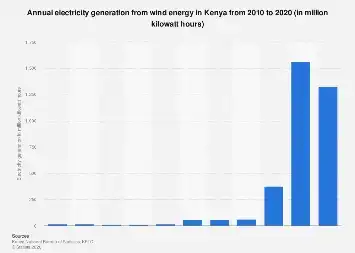
Kenya’s electricity generation from wind power experienced a notable dip in 2020, a year marked by the inauguration of Africa’s largest wind energy project, the Lake Turkana Wind Plant. While provisional data indicates a decrease to an undisclosed amount of million kilowatt hours in 2020, down from a similar undisclosed figure in 2019, the broader trend for wind energy in the East African nation signals a significant upswing over the preceding decade. This decline, however, warrants a deeper examination of the factors influencing Kenya’s renewable energy landscape and its ambitious targets.
The decade preceding 2020 witnessed a substantial expansion of wind power capacity in Kenya. In 2010, the contribution of wind energy to the national grid was a modest, undisclosed number of million kilowatt hours. By 2019, this figure had surged dramatically, underscoring the country’s commitment to diversifying its energy mix and leveraging its abundant wind resources. The commissioning of the Lake Turkana Wind Plant, a monumental undertaking supported by a consortium of African and European financial institutions and developers, represented a pivotal moment. This project alone has the capacity to generate approximately 1.5 terawatt-hours of clean electricity annually, significantly boosting Kenya’s renewable energy portfolio and contributing to its goal of achieving 100% clean energy.
The fluctuations observed in 2020, despite the significant investment in wind infrastructure, highlight the inherent complexities and potential volatilities within large-scale renewable energy projects. Factors such as grid integration challenges, transmission constraints, and operational adjustments following the ramp-up of a massive new facility can all contribute to year-on-year variations in output. Furthermore, external factors like weather patterns, which directly impact wind speed and consistency, can play a crucial role in short-term generation figures.
Kenya’s strategic focus on renewable energy, particularly wind and solar, is driven by a confluence of economic, environmental, and developmental imperatives. The nation aims to achieve middle-income status by 2030 and recognizes that reliable and affordable energy is fundamental to this aspiration. Renewable sources offer a pathway to reduce reliance on volatile fossil fuel imports, thereby enhancing energy security and improving the balance of payments. Moreover, transitioning to cleaner energy aligns with global efforts to combat climate change and reduce carbon emissions. Kenya has consistently ranked among the top African nations in renewable energy adoption, with geothermal and hydropower also forming significant pillars of its energy matrix.
The development of wind energy in Kenya is not merely a matter of capacity expansion; it is intrinsically linked to broader economic development. The construction and operation of wind farms create direct and indirect employment opportunities, foster local economic development through supply chains, and can lead to improved infrastructure in surrounding areas. The Lake Turkana Wind Project, for instance, involved substantial investments in road networks and transmission infrastructure, benefiting the local communities.
Globally, the wind energy sector has experienced exponential growth over the past decade. Countries like China, the United States, and Germany lead in installed wind capacity, but emerging economies, particularly in Africa, are rapidly increasing their share. Kenya’s experience is part of this larger narrative of the growing importance of wind power in the global energy transition. The International Energy Agency (IEA) has consistently highlighted wind power as a critical component in achieving net-zero emissions targets, projecting substantial growth in both onshore and offshore wind capacity in the coming decades.
However, the successful integration of variable renewable energy sources like wind presents unique challenges. Grid stability, the need for advanced grid management systems, and the development of energy storage solutions are critical areas that require continuous investment and innovation. For Kenya, ensuring that the generated wind power can be effectively transmitted and utilized by industries and households is paramount to maximizing its economic and developmental benefits. The country’s ongoing investments in expanding and modernizing its transmission infrastructure are therefore crucial to supporting the continued growth of its wind energy sector.
Looking ahead, Kenya’s commitment to renewable energy remains strong. While the 2020 figures might reflect a temporary recalibration, the underlying trajectory of wind energy growth is expected to continue. The nation’s policy framework, which includes incentives for renewable energy development and a clear vision for a low-carbon future, provides a supportive environment for further investment. Continued technological advancements in wind turbine efficiency and energy storage will also play a vital role in enhancing the reliability and cost-effectiveness of wind power. The economic impact of sustained investment in this sector extends beyond direct energy generation, contributing to Kenya’s reputation as a leader in sustainable development and a hub for clean energy innovation in Africa. The journey of wind energy in Kenya, marked by ambitious projects and evolving output, is a compelling case study in the opportunities and challenges of embracing renewable energy in a developing economy.