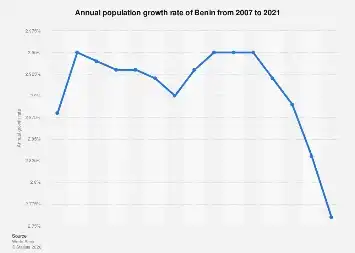
Benin has experienced a significant demographic expansion between 2007 and 2021, reflecting broader trends across West Africa and presenting a complex interplay of opportunities and challenges for its economic development. Over this 15-year period, the nation’s population grew substantially, a testament to factors including relatively high birth rates, declining mortality rates due to improved healthcare access, and a youthful demographic structure. This sustained growth has profound implications for the country’s labor force, consumption patterns, infrastructure demands, and overall economic trajectory.
The period from 2007 to 2021 witnessed Benin’s population climb from approximately 9.2 million to over 12.9 million individuals, marking an increase of nearly 40%. This growth rate significantly outpaces many developed economies and even a number of its regional peers. Such rapid population increases, while indicative of a vibrant and growing society, necessitate careful planning and strategic investment to harness the demographic dividend and mitigate potential strains on resources and services. Understanding the nuances of this population expansion is crucial for policymakers, international organizations, and investors seeking to engage with Benin’s evolving economic landscape.
A key driver of Benin’s population growth is its fertility rate, which, while showing some signs of decline, remains above the replacement level. This contributes to a young population, with a large proportion of the populace under the age of 25. This youthful demographic presents a dual-edged sword: it represents a vast potential workforce and consumer base, but also poses significant challenges in terms of job creation, education, and healthcare provision. Ensuring that this burgeoning youth population is equipped with the necessary skills and opportunities will be paramount to unlocking Benin’s full economic potential. Failure to do so could lead to increased unemployment, social unrest, and a missed demographic dividend.
The economic consequences of Benin’s population growth are multifaceted. On the one hand, a larger population naturally translates to a larger domestic market. This can stimulate demand for goods and services, encouraging local production and investment. As incomes rise and the middle class expands, consumer spending power increases, creating opportunities for businesses across various sectors, from retail and telecommunications to agriculture and construction. Furthermore, a growing workforce can contribute to increased productivity and economic output, provided that individuals are adequately educated and employed. The potential for a "demographic dividend"—where a large working-age population fuels economic growth—is a significant prospect for Benin.
However, the sheer scale and pace of population increase also place considerable pressure on public services and infrastructure. The demand for education, healthcare, clean water, sanitation, and housing escalates rapidly. Governments must invest heavily to expand and improve these essential services to meet the needs of a growing populace. Inadequate provision can lead to reduced quality of life, increased disease burden, and hinder human capital development. For instance, the education system must be able to absorb a growing number of students, ensuring quality instruction and relevant curricula to prepare them for the job market. Similarly, healthcare facilities need to expand their capacity to cater to a larger and younger population, which may also present specific health challenges.
Infrastructure development is another critical area impacted by population growth. Transportation networks, energy grids, and urban planning must keep pace with the expanding population and increasing urbanization. Cities, in particular, are often centers of population growth, and without adequate planning, they can face challenges such as congestion, strain on utilities, and informal settlements. Investments in sustainable urban development and robust infrastructure are therefore essential to support economic activity and ensure a reasonable quality of life for citizens.
Globally, Benin’s demographic trajectory is not unique. Many countries in sub-Saharan Africa are experiencing similar rapid population growth, driven by a combination of high fertility rates and declining mortality. This trend has significant implications for regional development, migration patterns, and the global balance of economic power. As populations grow and economies develop, these regions are increasingly becoming key drivers of global economic growth. However, the challenges of poverty, inequality, and sustainable development remain pressing.
Comparative analysis with other West African nations reveals a shared demographic landscape. Countries like Nigeria, with its much larger population, face similar challenges of scale in providing services and creating employment. However, Benin’s smaller size, if managed strategically, could allow for more agile policy responses and targeted interventions. The nation’s economic diversification efforts, particularly in sectors like agriculture, manufacturing, and services, will be crucial in creating the necessary jobs to absorb its growing workforce. The World Bank and other international financial institutions often highlight the importance of investing in human capital and promoting inclusive growth to capitalize on demographic trends in developing nations.
Statistics from organizations like the United Nations and national statistical agencies provide crucial data for understanding these trends. For example, projections often indicate continued population growth in Benin for decades to come, underscoring the long-term nature of these demographic shifts. The economic impact of this growth can be quantified through metrics such as GDP per capita, labor force participation rates, and consumption expenditures. The challenge for Benin lies in translating population growth into sustainable economic prosperity rather than demographic pressure.
The agricultural sector, a cornerstone of Benin’s economy, will need to adapt to feed a growing population and potentially increase exports. This requires advancements in agricultural productivity, sustainable land management, and efficient supply chains. The burgeoning youth population could also represent a significant opportunity for innovation and entrepreneurship within this sector. Similarly, the manufacturing and services sectors will need to expand to provide employment beyond traditional agriculture. Government policies that foster a conducive business environment, encourage foreign direct investment, and support small and medium-sized enterprises (SMEs) are vital.
Ultimately, Benin’s demographic expansion is a powerful force shaping its future. While it presents considerable challenges, it also offers immense potential for economic advancement. Strategic investments in education, healthcare, infrastructure, and job creation, coupled with sound economic policies, will be critical in ensuring that Benin can effectively harness its growing population to achieve sustainable development and improve the livelihoods of its citizens. The coming years will be a crucial period for the nation to navigate these demographic currents and lay the foundation for long-term prosperity.