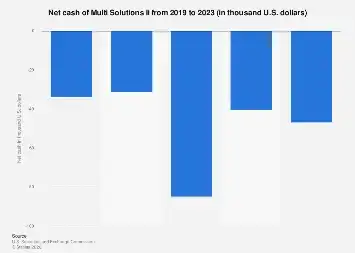
In the evolving landscape of business intelligence and market data, understanding the financial underpinnings of key data providers is crucial for stakeholders ranging from corporate strategists to academic researchers. Statista, a prominent global data and business intelligence platform, reported its net cash position for 2023. While specific figures are often proprietary, the company’s operational model and pricing structures offer significant insights into its financial health and its strategy for providing access to its vast repository of statistics and market insights. This analysis aims to contextualize Statista’s financial standing within the broader economic environment, exploring the implications of its revenue streams and its tiered access model for its premium content.
Statista operates on a subscription-based revenue model, a standard practice for many digital content and data providers. The company offers several account tiers, each designed to cater to different user needs and budgets. The "Basic Account," for instance, provides access to free statistics, acting as an entry point for casual users or those with limited research requirements. This tier is instrumental in building brand awareness and attracting a wide audience, even if it doesn’t directly contribute significant revenue. The primary revenue drivers are the "Starter Account" and the "Professional Account." The Starter Account, priced at $199 USD per month, billed annually, is targeted at individual users requiring more in-depth access. This suggests a significant portion of Statista’s user base consists of single researchers, analysts, or small business owners.
The Professional Account, a more substantial investment at $1,399 USD per month, billed annually, is designed for teams of up to five people. This tier signifies a strategic focus on corporate clients and larger research departments that require collaborative access to premium statistics. The substantial price difference between these tiers reflects the perceived value of comprehensive data access and the operational costs associated with maintaining and expanding Statista’s extensive database. The annual billing structure for these premium accounts is a common financial strategy, ensuring a more predictable revenue stream and improving cash flow management for the company. This model allows Statista to forecast revenue with greater accuracy, which is essential for long-term planning, investment in data acquisition, and technological infrastructure development.
Beyond these tiered subscriptions, Statista also offers broader access packages, such as the option to access all statistics starting from $2,388 USD yearly. This indicates a premium, all-encompassing solution for organizations with extensive and varied data needs, likely including market research firms, consulting agencies, and large enterprises. The pricing for these higher-tier packages is not merely a reflection of the volume of data accessible but also encompasses the analytical tools, support services, and the assurance of data quality and timeliness that Statista strives to provide. It is important to note that these prices typically do not include sales tax, a common exclusion in international business transactions, and that annual contracts are standard, with automatic renewal at the regular list price after the initial term. This auto-renewal feature further solidifies revenue predictability.
The concept of "net cash" refers to a company’s total cash and cash equivalents minus its total liabilities. A positive net cash position indicates that a company has more liquid assets than short-term and long-term debts, suggesting financial stability and the capacity to meet its obligations, invest in growth, and potentially return value to shareholders. For a data-driven company like Statista, maintaining a healthy net cash position is vital. It underpins its ability to:
-
Invest in Data Acquisition and Curation: The value of a data platform lies in the breadth, depth, and accuracy of its content. A strong cash position allows Statista to continuously invest in sourcing new datasets, partnering with statistical offices worldwide, and employing data scientists to clean, verify, and present information effectively. This includes licensing data, developing proprietary research, and ensuring compliance with data privacy regulations.
-
Enhance Technological Infrastructure: To manage and deliver vast amounts of data efficiently, Statista requires robust IT infrastructure. This includes servers, cloud computing resources, database management systems, and advanced analytical software. A healthy cash reserve enables regular upgrades and maintenance of this infrastructure, ensuring a seamless user experience and the ability to handle increasing data volumes and user traffic.
-
Fund Research and Development: Innovation is key in the competitive data analytics market. Statista likely invests in R&D to develop new features, improve its search algorithms, create more intuitive data visualization tools, and explore emerging data sources and analytical techniques. A strong financial footing provides the necessary capital for these forward-looking initiatives.
-
Support Marketing and Sales Efforts: Reaching a global audience and acquiring new subscribers requires significant investment in marketing and sales. A robust net cash position allows for sustained campaigns, participation in industry events, and the development of a strong sales team to target corporate clients.
-
Weather Economic Downturns: Businesses across all sectors are susceptible to economic fluctuations. A strong net cash balance provides a buffer against unforeseen market downturns, allowing the company to maintain operations and continue serving its clients even during challenging economic periods. This is particularly relevant in the current global economic climate, marked by inflation and geopolitical uncertainties.
Comparing Statista’s business model to its global peers, the subscription-based access to aggregated statistical data is a well-established paradigm. Companies like Bloomberg Terminal, Refinitiv (now LSEG), and various specialized market research firms operate on similar principles, albeit often with higher price points and more tailored enterprise solutions. Bloomberg’s terminal, for example, is famously expensive, reflecting its comprehensive financial data, trading capabilities, and extensive news services, catering primarily to high-frequency trading firms and investment banks. Statista’s approach appears to democratize access to statistical data, offering a range of options from free to premium, thereby broadening its market reach beyond just the most exclusive financial institutions.
The specific financial performance, including the net cash position for 2023, is not publicly disclosed in the provided context. However, the company’s evident growth and expansion over the years, coupled with its diversified revenue streams from individual and team subscriptions, suggest a generally positive financial trajectory. The emphasis on annual contracts and tiered pricing indicates a strategic focus on recurring revenue and customer retention. The "premium statistic" designation for certain data points, available only through paid accounts, is a clear indicator of how Statista differentiates its offerings and drives revenue. This strategy aligns with the broader trend in the digital information economy, where value is increasingly derived from curated, verified, and easily accessible data.
In conclusion, while precise net cash figures for Statista in 2023 are not available, the company’s operational framework—its tiered subscription model, annual billing, and focus on providing access to premium statistics—points towards a business designed for sustainable revenue generation and financial stability. Its ability to maintain and expand its vast data repository, invest in technology, and serve a global clientele hinges on its financial strength. The strategic pricing and account structures are not just revenue-generating mechanisms but also indicators of Statista’s commitment to delivering a valuable service in the competitive data and business intelligence market, ensuring its continued relevance and growth in the years to come.