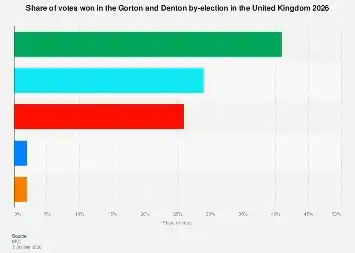
The electoral landscape of the Gorton and Denton constituencies, long-standing Labour strongholds in Greater Manchester, has been subject to intense scrutiny as the United Kingdom navigates a period of significant political and economic recalibration. While specific election results for 2026 have not yet been formally released and are subject to future electoral cycles, an examination of historical voting patterns, demographic shifts, and the prevailing socio-economic climate provides crucial insights into the potential trajectory of these historically Labour-dominated seats. These constituencies, situated in areas that have experienced profound industrial transformation and varying degrees of economic regeneration, serve as bellwethers for broader national trends impacting working-class communities and urban fringe areas across the country.
Historically, both Gorton and Denton have demonstrated a remarkable degree of loyalty to the Labour Party, reflecting the region’s industrial heritage and the party’s foundational links to trade unionism and social welfare. These constituencies have consistently returned Labour MPs with substantial majorities, underscoring a deep-seated political alignment. However, recent general elections have indicated a subtle, yet significant, erosion of this traditional dominance, mirroring a national trend where established party affiliations are increasingly being tested by evolving voter concerns. Factors such as Brexit, austerity measures, and concerns over public services have contributed to a more fragmented political discourse, leading to a re-evaluation of traditional voting blocs.
The economic underpinnings of Gorton and Denton are crucial to understanding their political dynamics. While Manchester as a whole has seen significant investment and growth in sectors like digital technology and creative industries, the specific areas within these constituencies have faced challenges related to deindustrialisation. The legacy of manufacturing decline has left some communities grappling with unemployment, lower average incomes, and a perceived disconnect from the benefits of urban regeneration. This economic disparity can fuel political disaffection, making voters more susceptible to alternative political narratives that promise tangible improvements in their daily lives. Data from the Office for National Statistics (ONS) consistently shows variations in employment rates and median household incomes across different local authority districts within Greater Manchester, with areas more heavily reliant on traditional industries often exhibiting lower economic indicators.
Furthermore, the demographic composition of Gorton and Denton plays a pivotal role. These constituencies typically feature a significant proportion of working-class families, older voters, and a growing diversity of ethnic backgrounds. Each of these groups may hold distinct political priorities. For instance, older demographics might place a higher emphasis on pension security and the National Health Service (NHS), while younger and more diverse populations may be more focused on issues such as affordable housing, climate change, and social justice. The ability of any political party to effectively address the multifaceted concerns of these diverse demographic segments will be a key determinant of electoral success. The 2021 Census data for the North West region provides granular detail on population age, ethnicity, and socio-economic status, offering a baseline for understanding these demographic influences.
The broader national political context also exerts a powerful influence. The current Conservative government, while having secured a significant majority in the last general election, faces ongoing challenges related to inflation, the cost of living crisis, and public sector reform. Conversely, the Labour Party, under new leadership, has been working to regain public trust and present a compelling alternative vision for the country. The performance of these national parties, their policy platforms, and the perceived effectiveness of their leaders will inevitably filter down to the local level, impacting voter sentiment in constituencies like Gorton and Denton. Comparisons with similar urban and semi-urban constituencies across the UK, particularly in the North of England and the Midlands, reveal a pattern of swing voting and a heightened sensitivity to national economic performance. For example, constituencies that previously voted Labour but shifted to Conservative in recent elections are often characterized by similar industrial legacies and economic challenges.
The potential impact of future electoral reforms or shifts in voter engagement strategies by political parties cannot be understated. The rise of social media and digital campaigning has fundamentally altered how political messages are disseminated and consumed. Parties that can effectively leverage these platforms to connect with voters on local issues, while also articulating a coherent national strategy, will be better positioned to gain traction. The increasing political apathy observed in some segments of the electorate, coupled with a growing distrust in traditional political institutions, presents a significant hurdle for all parties. Strategies aimed at increasing voter turnout, particularly among younger demographics, could significantly alter electoral outcomes.
In the absence of specific 2026 results, analysing the trends observed in recent parliamentary and local elections provides a valuable proxy. Any significant decline in Labour’s vote share, even if not resulting in a loss of the seat, would signal a weakening of their traditional support base. Conversely, an increase in the Conservative or other parties’ vote share would indicate a successful appeal to voters within these constituencies. The performance of smaller parties, such as the Liberal Democrats or Reform UK, also provides an indicator of the broader fragmentation of the political landscape and the extent to which traditional loyalties are being challenged. Market research firms and political polling organisations regularly publish regional and national data that can be used to infer potential voting intentions, though these are subject to margins of error and can fluctuate.
The economic outlook for the North of England remains a critical factor. Government investment in infrastructure, skills development, and regional levelling-up initiatives will have a direct bearing on the economic prospects of communities within Gorton and Denton. The success or failure of these policies will undoubtedly be a key talking point for candidates and a significant consideration for voters. Global economic trends, such as supply chain disruptions, energy price volatility, and international trade agreements, also have a ripple effect, impacting local businesses and employment opportunities. The interconnectedness of the global economy means that even seemingly local electoral contests are influenced by broader international forces.
Ultimately, the electoral future of the Gorton and Denton constituencies will be shaped by a complex interplay of historical loyalties, evolving economic realities, demographic shifts, and the prevailing national political climate. While past results offer a guide, the dynamic nature of contemporary politics suggests that voter behaviour is increasingly fluid. The ability of political parties to adapt to these changes, address the pressing concerns of their constituents, and offer credible solutions to the economic and social challenges facing the region will determine who ultimately holds sway in these historically significant seats. The ongoing evolution of the political discourse, coupled with the tangible impact of economic policies on everyday lives, will ensure that these constituencies remain closely watched indicators of Britain’s broader political sentiment.