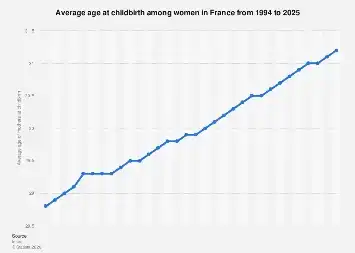
The average age of mothers at childbirth in France in 2025 is projected to be a significant indicator of broader societal and economic shifts, reflecting a sustained trend of women delaying parenthood. This evolving demographic pattern, characterized by an increasing mean age at childbirth, has been a discernible trajectory since the 1990s, signaling a profound transformation in family formation within the nation. This phenomenon is not isolated to France; it mirrors a global trend, albeit with unique national characteristics and implications.
The data indicates a clear upward movement in the age at which French women are becoming mothers. Looking back to 1990, the proportion of newborns born to mothers aged 40 or older was considerably lower, representing a mere fraction of total births. By 2014, this figure had seen a notable escalation, illustrating a gradual but persistent increase over two decades. This shift suggests that biological considerations, career aspirations, educational pursuits, and evolving societal expectations regarding readiness for parenthood are playing increasingly prominent roles in the timing of childbearing. Furthermore, the data reveals that for mothers aged 40 and above, a significant proportion of these births were their first child. This highlights not only the delayed entry into motherhood but also a greater willingness among older women to embark on their reproductive journeys later in life.
While the trend of delayed childbearing is widespread across Western nations, France presents a compelling case study within the European context. Despite the overall increase in the mean age of mothers at first birth across the continent, French women, on average, still tend to have their children at a younger age compared to many of their European counterparts. This relative youthfulness at childbirth, when juxtaposed with the observable increase in the average maternal age within France itself, points to a unique demographic resilience. Moreover, France has consistently maintained a position as one of the most fertile countries in Europe. In 2018, the nation recorded a total fertility rate that placed it at the forefront of European nations, a figure that has remained relatively stable over several years. This sustained fertility rate, even as women are having children later, suggests a complex interplay of factors, possibly including robust family support policies and a cultural emphasis on larger families.
Understanding the drivers behind these evolving trends requires a multifaceted economic and social lens. Globally, increased access to higher education and professional opportunities for women has been a significant factor. As women invest more years in education and career development, the timeline for establishing financial stability and personal fulfillment often precedes or coincides with decisions about starting a family. This can lead to a later entry into motherhood. In France, government policies aimed at supporting families, such as extensive parental leave, subsidized childcare, and financial incentives for having children, may mitigate some of the economic anxieties associated with later parenthood, potentially contributing to the nation’s relatively higher fertility rate.
The economic implications of a maturing maternal age are substantial. For individuals, later childbearing can mean greater financial resources and career stability by the time children arrive. This can lead to improved outcomes for children, including better access to healthcare, education, and enriched childhood experiences. However, it also presents challenges, such as potential increased risks during pregnancy and childbirth, and a shorter reproductive window for those desiring multiple children.
From a societal perspective, an aging maternal population can influence labor force dynamics, healthcare demands, and social welfare systems. As women delay childbirth, their peak earning years may align more closely with their child-rearing years, potentially boosting household incomes. However, it can also lead to a shrinking younger workforce in the future if fertility rates do not compensate. The healthcare sector may see increased demand for specialized obstetric and gynecological care for older mothers, as well as a greater need for services catering to an aging population in the long term. Furthermore, the composition of families may shift, with more single-child households or families where parents are older when their children reach adulthood.
The comparison with other European countries further illuminates France’s unique position. While many nations grapple with declining fertility rates and an aging population, France’s ability to maintain a relatively higher fertility rate, even with delayed childbearing, suggests a successful integration of social support systems and cultural norms that encourage family formation. This resilience could offer valuable lessons for other countries seeking to address similar demographic challenges. For instance, nations with lower fertility rates and a more pronounced trend of delayed childbirth might examine France’s family-friendly policies, such as affordable childcare and generous parental leave, as potential models for fostering higher birth rates.
The increasing average age of mothers at childbirth in France is not merely a demographic statistic; it is a reflection of profound societal evolution. It underscores the changing priorities, opportunities, and realities for women in contemporary France and, by extension, across much of the developed world. The nation’s ability to navigate this demographic shift while maintaining a relatively robust fertility rate highlights the intricate balance between individual aspirations and societal structures. As this trend continues, ongoing analysis of its long-term economic, social, and healthcare implications will be crucial for effective policy-making and ensuring the continued well-being of French society. The data suggests a France where women are increasingly empowered to make deliberate choices about when and how they build their families, a testament to the evolving landscape of gender roles and socioeconomic progress.