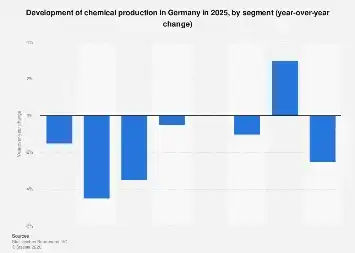
The German chemical industry, a cornerstone of the nation’s industrial might and a significant contributor to global supply chains, is navigating a period of considerable flux, with year-on-year production figures revealing a complex and evolving picture across its diverse segments. While specific granular data is often proprietary, broader trends indicate a mixed performance, influenced by a confluence of factors including soaring energy costs, global demand fluctuations, and the ongoing transition towards more sustainable manufacturing practices. This dynamic environment presents both formidable challenges and strategic opportunities for one of Europe’s most vital economic engines.
For years, Germany’s chemical sector has been synonymous with innovation, precision, and high-quality output, underpinning industries ranging from automotive and pharmaceuticals to agriculture and consumer goods. However, recent economic headwinds have placed unprecedented pressure on this established order. The surge in energy prices, particularly natural gas, has been a critical concern. As energy-intensive producers, chemical manufacturers have seen their operational costs escalate dramatically, impacting profitability and, in some cases, necessitating production curtailments or shifts. This is not an isolated German phenomenon; chemical producers globally are contending with similar inflationary pressures, but Germany’s reliance on imported energy sources has amplified the impact.
Examining the production trends by segment, it becomes apparent that the impact is not uniform. Segments focused on basic chemicals, often characterized by large-scale, energy-intensive processes, have likely experienced the most direct and immediate pressure. These foundational materials, crucial for countless downstream industries, are highly sensitive to input costs. A year-on-year decline in production for these segments could signal a reduction in output due to economic viability challenges or a strategic pivot by manufacturers to more specialized, higher-value products. Conversely, segments involved in specialty chemicals, which often command higher margins and are less susceptible to raw material price volatility, may have demonstrated greater resilience or even growth. These products, tailored for specific applications and often driven by innovation in areas like advanced materials, sustainable solutions, or life sciences, can buffer companies against broader economic downturns.
The automotive sector, a major consumer of German chemical products such as plastics, coatings, and adhesives, has itself been undergoing a significant transformation. The shift towards electric vehicles, while promising long-term, has led to interim disruptions in demand for certain traditional chemical components. Simultaneously, the increasing focus on lightweight materials and advanced composites for both internal combustion engine and electric vehicles presents an opportunity for chemical companies capable of innovating in these areas. The year-on-year production figures for chemical segments serving the automotive industry would therefore reflect this complex interplay of declining demand for legacy products and nascent growth in new material applications.
Furthermore, the global competitive landscape is constantly shifting. While Germany has historically held a strong position, emerging economies, particularly in Asia, have rapidly expanded their chemical production capacities. This increased global supply, coupled with varying regulatory environments and labor costs, exerts continuous pressure on German producers to maintain their competitive edge. The year-on-year production data would implicitly reflect the success or challenges German companies face in competing on a global scale, factoring in export volumes and import penetration. Statistics from organizations like the European Chemical Industry Council (Cefic) often highlight Germany’s leading role within Europe, but also underscore the intensifying competition from other regions.
The imperative for sustainability is another powerful driver reshaping the chemical industry, and consequently, its production figures. Growing consumer and regulatory demand for eco-friendly products, circular economy principles, and reduced carbon footprints are compelling chemical companies to invest heavily in research and development. This includes exploring bio-based feedstocks, developing recyclable materials, and implementing cleaner production processes. While these investments are crucial for long-term viability, they can also lead to short-term adjustments in production. For instance, a segment might see a temporary dip in output of conventional products as resources are reallocated to pilot new sustainable alternatives. Conversely, segments focused on green chemistry, renewable energy solutions, or materials for the circular economy may be experiencing robust growth, potentially offsetting declines elsewhere.
Market data from industry analysis firms often provides a more detailed breakdown, indicating that while overall chemical sales might show a modest decline year-on-year, the value of production in specific high-growth areas, such as chemicals for renewable energy technologies, advanced batteries, or biodegradable plastics, could be on an upward trajectory. This divergence in performance underscores the nuanced reality behind aggregate production statistics.
Economists and industry analysts point to a number of key indicators that influence these year-on-year changes. Industrial production indices, manufacturing purchasing managers’ indices (PMIs), and export/import data for chemical products all serve as vital thermometers for the sector’s health. A sustained decline in Germany’s manufacturing PMI, for example, often correlates with reduced demand for intermediate goods produced by the chemical industry. Similarly, trade balance figures for chemical goods can reveal whether German producers are gaining or losing market share internationally.
The geopolitical landscape also plays a crucial role. Disruptions to global trade routes, trade disputes, and regional conflicts can all impact the availability and cost of raw materials, as well as the demand for finished chemical products in key export markets. The chemical industry’s complex and often globalized supply chains make it particularly vulnerable to such external shocks.
Looking ahead, the trajectory of Germany’s chemical production will likely be shaped by its ability to adapt to these multifaceted challenges. Strategic investments in energy efficiency and diversification, a continued commitment to innovation in specialty and sustainable chemicals, and a proactive approach to navigating global trade dynamics will be paramount. The year-on-year production figures, while presenting a snapshot of the present, are ultimately a reflection of the industry’s ongoing strategic adjustments in response to a rapidly evolving economic and environmental landscape. The resilience and adaptability demonstrated by German chemical companies in the coming years will be critical in determining their continued prominence on the global stage.