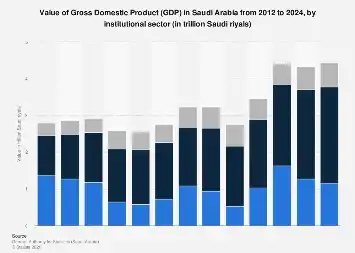
The economic trajectory of Saudi Arabia in 2024 is poised at a critical juncture, characterized by the ongoing diversification efforts aimed at reducing its historical reliance on crude oil. While oil revenues continue to form a substantial pillar of the Kingdom’s Gross Domestic Product (GDP), projections for the current year underscore a determined push towards a more robust and multifaceted economic structure. Preliminary estimates for 2024 indicate that the oil sector will contribute significantly to the nation’s economic output, though the precise figures remain subject to market volatility and official revision. Concurrently, the non-oil sector is projected to account for a substantial portion of the GDP, reflecting the tangible impact of Vision 2030 reforms.
This dynamic interplay between the traditional energy sector and burgeoning new industries is central to understanding Saudi Arabia’s economic performance. The Kingdom’s ambitious Vision 2030 initiative, launched in 2016, has placed economic diversification at its core, seeking to develop sectors such as tourism, entertainment, technology, and manufacturing. The success of these endeavors is increasingly visible in the composition of the national GDP, with the non-oil sector steadily gaining ground. This strategic shift is not merely an economic imperative but also a geopolitical necessity, aiming to insulate the Kingdom from the cyclical nature of global energy markets and to create sustainable employment opportunities for its young and growing population.
The global energy landscape itself is undergoing a profound transformation, with increasing pressure to transition towards renewable energy sources and a growing emphasis on environmental sustainability. Saudi Arabia, as one of the world’s largest oil producers, is acutely aware of these global shifts. Its economic planning must therefore balance the immediate revenue generation from oil exports with the long-term vision of an economy that is less susceptible to external shocks and more aligned with future global demands. The projected contribution of the oil sector to the 2024 GDP, while significant, is increasingly being contextualized within this broader narrative of economic transformation.
Conversely, the growth of the non-oil sector represents a testament to the effectiveness of the reform agenda. Investments are flowing into infrastructure, technology, and human capital development, fostering an environment conducive to the growth of new industries. This diversification strategy encompasses a wide array of sub-sectors, including mining, manufacturing, wholesale and retail trade, construction, transportation, storage, and communications, as well as hospitality and financial services. The expansion of these areas is crucial for creating a more resilient and dynamic economy, capable of weathering global economic downturns and generating consistent growth.
The public sector also plays a pivotal role in Saudi Arabia’s economic architecture. Government spending, particularly on large-scale infrastructure projects and social development programs, is a significant driver of economic activity. The effective management of public finances and the strategic allocation of resources are therefore critical for supporting the growth of both the oil and non-oil sectors. As the Kingdom diversifies its revenue streams, the efficiency and impact of public expenditure become even more important in fostering private sector growth and ensuring equitable economic development.
Looking at global comparisons, many resource-rich nations are grappling with similar challenges of economic diversification. Countries in the Middle East and North Africa region, as well as other parts of the world that have historically depended on commodity exports, are increasingly investing in new economic engines. Saudi Arabia’s approach, characterized by a top-down reform program backed by substantial sovereign wealth fund investments, is a prominent example of this global trend. The success of its diversification efforts will not only shape its own economic future but also offer valuable lessons for other nations undertaking similar transformations.
The economic impact of this diversification extends beyond mere GDP figures. It involves creating a more competitive business environment, attracting foreign direct investment, and fostering innovation. The development of specialized economic zones, the simplification of regulatory processes, and the promotion of entrepreneurship are all integral components of this strategy. The Kingdom’s commitment to these reforms signals a long-term vision for sustained economic prosperity and global competitiveness.
The data on GDP composition by sector provides a crucial barometer for the progress of these reforms. By tracking the relative contributions of oil versus non-oil activities, policymakers and analysts can gauge the effectiveness of various initiatives and identify areas that require further attention. The projected figures for 2024 offer an early glimpse into the ongoing evolution of Saudi Arabia’s economic landscape, highlighting the strategic importance of continued investment and policy implementation in achieving a balanced and sustainable growth model. The Kingdom’s journey towards a post-oil economy is complex and multifaceted, but the commitment to diversification remains unwavering, promising a future where economic strength is derived from a broader and more resilient foundation.