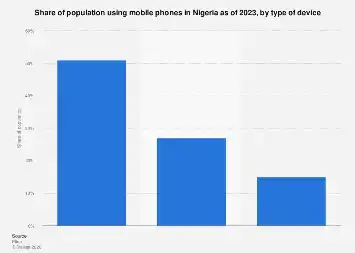
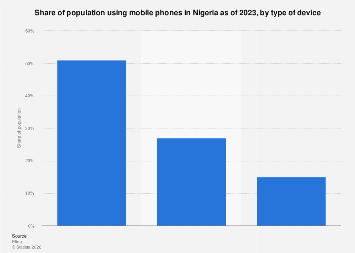
In 2023, a significant portion of Nigeria’s population, estimated at [Redacted for premium content] percent, possessed some form of mobile phone. However, a closer examination of device types reveals a striking dominance of basic mobile phones, which accounted for [Redacted for premium content] percent of all mobile users. This indicates that while mobile phone ownership is widespread, the sophistication of these devices is, on average, still geared towards fundamental communication needs. In contrast, the adoption of more advanced devices, namely smartphones and feature phones, registered at [Redacted for premium content] percent and [Redacted for premium content] percent, respectively, for the same year. This data, collected from a survey of 26,930 respondents aged 18 and older across all 36 states and the Federal Capital Territory (FCT) Abuja, provides a granular view of Nigeria’s dynamic telecommunications sector.
The persistent strength of basic mobile phones in Nigeria is a phenomenon with deep socio-economic roots. These devices, often referred to as "dumb phones," are typically more affordable, possess longer battery life, and are more durable than their smartphone counterparts. For a large segment of the Nigerian population, particularly those in rural areas or with lower disposable incomes, these characteristics make basic phones the practical and economical choice for essential communication. This preference is further reinforced by the lower cost of associated call and text plans compared to data-intensive smartphone services. The high penetration of basic phones suggests a market segment that is still largely underserved by the advanced digital economy, relying on mobile technology primarily for voice calls and SMS messaging.
The figures for smart and feature phone users, while representing a smaller share, are crucial indicators of evolving consumer behavior and market trends. Feature phones, which bridge the gap between basic phones and smartphones by offering some advanced functionalities like internet browsing and app usage without the full capabilities of a smartphone, also hold a notable position. Their presence suggests a consumer group that seeks a balance between affordability and enhanced functionality. The [Redacted for premium content] percent share of feature phones indicates a segment of the market that is gradually embracing more digital interaction but may still be price-sensitive or not yet ready for the full commitment of a smartphone.
The [Redacted for premium content] percent of smartphone users, though a minority, represents the vanguard of Nigeria’s digital transformation. This segment is likely concentrated in urban centers and among a younger, more affluent demographic with greater access to higher disposable incomes and a stronger demand for data-intensive services like social media, online banking, video streaming, and e-commerce. The growth of this segment is intrinsically linked to the expansion of mobile internet infrastructure, the affordability of data plans, and the increasing availability of relevant digital content and services tailored to the Nigerian market. As the digital economy matures in Nigeria, the share of smartphone users is expected to grow, driving innovation and new business models.
From a broader economic perspective, the composition of mobile phone usage in Nigeria has significant implications. The high prevalence of basic phones suggests that mobile money services, which have seen tremendous growth in Africa, may primarily be accessed through USSD codes and basic SMS interfaces rather than sophisticated mobile apps. This reliance on simpler technologies can influence the types of financial inclusion initiatives that are most effective. For businesses, understanding this user segmentation is vital for targeted marketing, product development, and service delivery. Companies aiming to leverage mobile platforms for e-commerce, digital advertising, or customer engagement must tailor their strategies to the capabilities and preferences of each user segment.
Globally, Nigeria’s mobile phone usage pattern presents an interesting case study. While many developed nations have near-universal smartphone penetration, emerging markets often exhibit a more diverse landscape, with basic and feature phones coexisting alongside smartphones for extended periods. This multi-tiered adoption is driven by varying levels of economic development, infrastructure, and digital literacy. In comparison to other African nations, Nigeria’s data aligns with broader trends where basic phones remain critical for connectivity, especially in regions with limited infrastructure and lower purchasing power. However, the pace of smartphone adoption in Nigeria will be a key determinant of its progress in areas like digital payments, online education, and telemedicine.
The growth of the telecommunications sector in Nigeria has been a major driver of economic development. The availability of mobile phones, regardless of type, has facilitated communication, information dissemination, and access to services, thereby boosting productivity and creating employment opportunities. The increasing number of mobile subscriptions, driven by factors such as population growth and the expansion of network coverage, continues to underpin the country’s economic aspirations. However, the disparity in device types highlights the challenges and opportunities in bridging the digital divide. Ensuring that a larger segment of the population can access and benefit from the opportunities presented by smartphones and the broader digital economy remains a critical objective for policymakers and industry stakeholders.
The [Redacted for premium content] percent of the population using mobile phones is a testament to the rapid expansion of telecommunications infrastructure in Nigeria over the past two decades. This has been supported by significant investments from both local and international players in expanding network coverage and improving service quality. The introduction of 4G and, increasingly, 5G networks in urban areas is paving the way for richer digital experiences. However, the substantial number of basic phone users underscores the need for continued efforts to extend affordable internet access and digital literacy programs to underserved populations.
The survey methodology, involving a questionnaire administered to a large and representative sample, lends credibility to these findings. The focus on adults aged 18 and older ensures that the data reflects the purchasing power and digital engagement of the primary consumer base. The inclusion of all 36 states and FCT Abuja provides a comprehensive national picture, minimizing regional biases and offering insights into the diverse mobile landscape across Nigeria.
Looking ahead, the trend towards increasing smartphone adoption is likely to continue, propelled by factors such as declining device costs, the proliferation of affordable data plans, and a growing ecosystem of relevant mobile applications and digital services. Government initiatives aimed at promoting digital inclusion and fostering a conducive environment for technological innovation will play a crucial role. As Nigeria continues its journey towards becoming a more digitally integrated economy, understanding and catering to the distinct needs and preferences of its diverse mobile user base will be paramount to unlocking its full digital potential. The dominance of basic phones, while indicative of current realities, also represents a significant opportunity for future growth and development in the digital sphere.