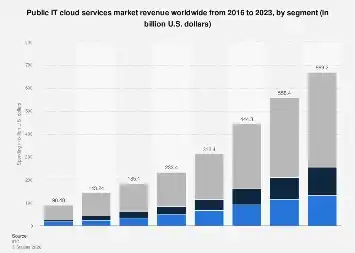
The worldwide expenditure on public IT cloud services has reached a significant milestone, estimated to be in the hundreds of billions of U.S. dollars for 2023. This expansive market is characterized by a clear hierarchy of service models, with Software as a Service (SaaS) emerging as the undisputed leader in terms of revenue generation. Projections indicate that SaaS alone accounted for nearly [insert estimated SaaS revenue figure, e.g., $200 billion] U.S. dollars, underscoring its pervasive influence across global enterprises. This robust growth trajectory in SaaS is largely attributable to a widespread organizational imperative to migrate away from outdated, on-premises legacy business applications. Companies are increasingly recognizing the strategic advantage of adopting SaaS solutions, which are inherently more data-centric and demonstrably better aligned with the flexible, scalable, and dynamic architectures demanded by modern cloud environments.
Understanding the Pillars of Cloud Computing: SaaS, PaaS, and IaaS.
The public cloud landscape is fundamentally built upon three distinct, yet interconnected, service models: Software as a Service (SaaS), Platform as a Service (PaaS), and Infrastructure as a Service (IaaS). The selection of one or a combination of these models is a strategic decision for organizations, directly correlating with the degree of control they wish to retain over their internal information technology (IT) infrastructure. SaaS represents the most commonly adopted model, encompassing fully developed applications delivered directly to end-users over the internet. Examples include customer relationship management (CRM) systems, enterprise resource planning (ERP) software, and collaborative productivity suites. PaaS, on the other hand, provides a foundational framework and development environment for software engineers. It offers tools, libraries, and middleware, enabling developers to build, test, and deploy applications without the burden of managing the underlying infrastructure. IaaS, the most granular of the three, offers a self-service model for accessing and managing fundamental IT resources such as servers, storage, and networking capabilities. It provides the building blocks upon which organizations can construct their own IT environments, offering maximum flexibility and control but also requiring a higher level of technical expertise for management.
The Strategic Advantages Driving Cloud Adoption Across Service Models.
Regardless of the specific service model chosen, a common thread binds SaaS, PaaS, and IaaS: their delivery over the internet and management, to varying degrees, by third-party vendors. This fundamental shift from on-premises IT operations to cloud-based solutions offers a compelling suite of advantages for businesses worldwide. A primary economic benefit is the significant reduction in capital expenditure on hardware and software. By leveraging cloud services, organizations can reallocate resources previously tied up in purchasing, maintaining, and upgrading physical infrastructure. This operational efficiency translates directly into cost savings, allowing businesses to invest more strategically in core competencies and innovation.
Beyond cost optimization, cloud service models imbue organizations with enhanced flexibility and agility. The ability to scale resources up or down rapidly in response to fluctuating demand is a critical differentiator in today’s fast-paced business environment. This elasticity ensures that companies are neither over-provisioned during periods of low activity nor constrained by inadequate resources during peak times. Furthermore, the collaborative and distributed nature of cloud platforms fosters greater speed in application deployment and management, accelerating time-to-market for new products and services. Crucially, the adoption of cloud models can also mitigate the risks associated with vendor lock-in. While reliance on a cloud provider is inherent, the modularity of services and the availability of open standards and APIs allow organizations to retain a degree of strategic independence, facilitating smoother transitions and interoperability with other systems.
Market Dynamics and Growth Projections in the Public Cloud Ecosystem.
The explosive growth in public cloud spending is not merely a trend but a fundamental reshaping of the global IT landscape. Industry analysts project continued robust expansion in the coming years, driven by factors such as digital transformation initiatives, the increasing demand for data analytics and artificial intelligence (AI) capabilities, and the ongoing need for remote work infrastructure. North America currently represents the largest market for public cloud services, fueled by a mature technology sector and a high concentration of enterprises embracing cloud adoption. However, the Asia-Pacific region is experiencing the most rapid growth, propelled by increasing digital penetration, government investments in cloud infrastructure, and a burgeoning startup ecosystem.
Within the broader cloud market, the dominance of SaaS is projected to persist. Its accessibility, ease of use, and subscription-based pricing model make it an attractive proposition for businesses of all sizes, from small and medium-sized enterprises (SMEs) to large multinational corporations. The continuous innovation within the SaaS space, with vendors constantly introducing new features and functionalities, further solidifies its market position. PaaS is also expected to witness substantial growth as organizations increasingly seek to streamline their application development processes and leverage advanced tools for building sophisticated cloud-native applications. The rise of microservices architectures and containerization technologies has further amplified the importance of PaaS.
IaaS, while representing the most infrastructure-centric model, continues to be a critical component of the cloud ecosystem. It provides the foundational power and flexibility for organizations that require extensive customization and control over their IT environments, particularly those in highly regulated industries or with unique performance demands. The growing adoption of hybrid and multi-cloud strategies, where organizations utilize a combination of public and private cloud resources, also underscores the enduring relevance of IaaS.
Economic Impact and Future Implications of Cloud Dominance.
The widespread adoption of public cloud services has profound economic implications. It is a significant driver of innovation, enabling startups and established businesses alike to access powerful computing resources without substantial upfront investment. This democratization of technology fosters a more competitive business environment and accelerates the development of new digital products and services. The cloud also plays a crucial role in enhancing business resilience and disaster recovery capabilities, ensuring continuity of operations in the face of unforeseen events.
Looking ahead, the evolution of cloud technology is expected to be shaped by emerging trends such as edge computing, serverless computing, and the increasing integration of AI and machine learning capabilities directly into cloud platforms. These advancements promise to further enhance performance, reduce latency, and unlock new possibilities for data processing and analysis. As organizations continue to navigate the complexities of the digital age, the public cloud will undoubtedly remain a cornerstone of their IT strategies, facilitating agility, innovation, and sustainable growth on a global scale. The ongoing shift towards cloud-native architectures and the continuous evolution of service models suggest that the public cloud market will continue its upward trajectory, becoming an even more integral part of the global economic infrastructure.