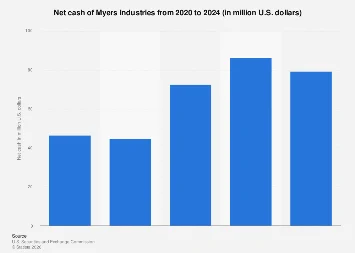
The financial trajectory of Myers Industries, a prominent player in the polymer products and services sector, is under increasing scrutiny as the company navigates a complex economic landscape. While precise, up-to-the-minute net cash figures for 2024 are often proprietary and accessible only through specialized financial data platforms, an analysis of the company’s historical performance, industry trends, and broader economic indicators provides a robust understanding of its potential cash generation and management strategies. Understanding a company’s net cash position is crucial, as it reflects its liquidity, financial flexibility, and capacity for investment, debt repayment, and shareholder returns.
Myers Industries operates within segments that are inherently sensitive to economic cycles. The company’s primary divisions, which include the manufacturing of plastic storage and handling products and the provision of material handling systems, cater to a diverse range of end markets. These include industrial, commercial, agricultural, and consumer sectors. Consequently, shifts in consumer spending, industrial production levels, and infrastructure development projects directly influence demand for Myers’ offerings, thereby impacting its revenue streams and, by extension, its cash flow.
In recent years, the global economy has been characterized by volatility, marked by supply chain disruptions, inflationary pressures, and fluctuating interest rates. These macroeconomic forces have presented both challenges and opportunities for manufacturers like Myers Industries. Supply chain bottlenecks, for instance, can lead to increased input costs for raw materials, such as polymers, and can also delay production, potentially affecting sales and cash realization. Conversely, periods of robust demand, often fueled by government stimulus or resurgent consumer confidence, can lead to accelerated sales and improved cash inflows.
The company’s reported financial statements, typically released quarterly and annually, offer insights into its cash flow from operations, investing, and financing activities. Cash flow from operations is a critical metric, representing the cash generated from the company’s core business activities. A consistently positive and growing operating cash flow is a strong indicator of a healthy business model and efficient operational management. Myers Industries, like other publicly traded companies, must balance reinvestment in its operations, capital expenditures for growth and maintenance, and the management of its debt obligations, all of which draw upon its available cash.
Examining the broader market for polymer-based products reveals a landscape of both consolidation and innovation. Competitors within the industry are constantly seeking to optimize their cost structures, enhance product portfolios, and expand their geographical reach. Myers Industries’ strategic decisions regarding mergers, acquisitions, or divestitures can significantly alter its cash position. For example, a strategic acquisition could require substantial cash outlay or the assumption of debt, while the sale of non-core assets could bolster its cash reserves.
The current economic environment also necessitates a keen focus on working capital management. Effective management of inventory levels, accounts receivable, and accounts payable is paramount to optimizing cash conversion cycles. Companies that can efficiently convert raw materials into finished goods, sell those goods, and collect payments promptly, while strategically managing their own payment obligations to suppliers, will exhibit stronger net cash positions. For Myers Industries, this involves sophisticated inventory forecasting, robust credit control policies, and strong relationships with its supply chain partners.
Furthermore, the global push towards sustainability and circular economy principles is increasingly influencing the polymer industry. Companies that can adapt by incorporating recycled content, developing more environmentally friendly products, or offering product lifecycle management services may gain a competitive advantage, potentially leading to new revenue streams and improved cash generation. Investors and financial analysts closely monitor a company’s commitment to environmental, social, and governance (ESG) factors, as these are increasingly linked to long-term financial performance and access to capital.
While specific 2024 net cash figures for Myers Industries require access to premium financial data services, an understanding of its business segments, the prevailing economic conditions, and industry dynamics allows for an informed perspective. The company’s ability to generate strong operating cash flow, manage its capital expenditures prudently, and maintain a healthy balance sheet will be key determinants of its financial strength and flexibility throughout the year. The ongoing evolution of the polymer products market, coupled with macroeconomic uncertainties, means that Myers Industries, like its peers, will need to remain agile and strategic in its financial management to ensure sustained growth and value creation. The company’s historical performance in profitability, balance sheet strength, and cash flow generation, along with its strategic responses to market shifts, will ultimately shape its net cash position in the current fiscal year.