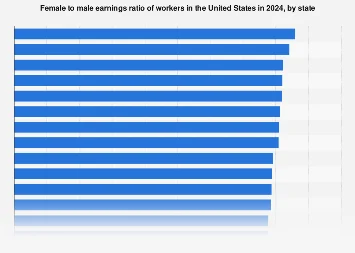
In 2024, the persistent gender pay gap across the United States reveals a complex and varied landscape, with significant disparities evident at the state level. While aggregate national figures often mask the nuances, a closer examination of state-by-state data underscores the uneven progress in achieving pay equity. At the forefront of this analysis, the District of Columbia stands out, showcasing the most favorable earnings ratio for women, where female workers, on average, earn a significantly higher percentage of their male counterparts’ income. Conversely, the state of Utah presents a starkly different picture, reporting the lowest earnings ratio, indicating that women in Utah earn a considerably smaller fraction of what men earn.
This divergence highlights that the pursuit of equal pay is not a monolithic endeavor but rather a patchwork of varying economic realities, policy implementations, and societal norms that differ dramatically from one jurisdiction to another. The underlying factors contributing to these state-level discrepancies are multifaceted, encompassing industry composition, occupational segregation, educational attainment, labor force participation rates, and the effectiveness of state-specific legislation aimed at promoting pay equity. Understanding these differences is crucial for policymakers, businesses, and advocates striving to close the economic divide.
The economic implications of the gender pay gap are substantial, impacting not only individual women and their families but also the broader economy. When women earn less, their purchasing power is diminished, affecting consumer spending and overall economic growth. Furthermore, a persistent pay gap can discourage women from entering or remaining in certain high-paying fields, leading to a loss of talent and innovation. Research consistently shows that greater gender equality in the workplace correlates with stronger economic performance and increased productivity. For instance, a study by the International Monetary Fund (IMF) suggested that closing the gender gap in labor force participation could significantly boost global GDP.
Analyzing the data from the District of Columbia, its leading position can be attributed to several factors. As a hub for government, professional services, and non-profit organizations, it often boasts higher average salaries and a more educated workforce. The presence of robust anti-discrimination laws and a generally higher awareness of pay equity issues within its unique governmental structure may also contribute to a more equitable pay environment. However, even in the District, the gap, though smaller, likely still exists, and continuous efforts are needed to ensure true parity.
In contrast, Utah’s position at the lower end of the spectrum warrants deeper investigation. The state’s economic landscape is characterized by a strong presence of certain industries that may have historically exhibited larger pay disparities, alongside cultural factors that can influence women’s career trajectories and earning potential. Factors such as lower female labor force participation rates in certain age groups, or a higher concentration of women in lower-paying sectors, could contribute to the observed gap. Examining the specific occupational breakdown and industry wages within Utah would provide more granular insights into the root causes.
Globally, the United States’ performance on gender pay equity is a subject of ongoing debate. While the U.S. has made strides, it often lags behind many developed nations in closing the gender wage gap. Countries like Iceland, which has enacted stringent laws mandating equal pay for equal work and has achieved significant progress, offer benchmarks for comparison. The European Union has also implemented various directives and initiatives to address gender pay disparities, reflecting a continental commitment to economic fairness. The varying state-level data within the U.S. can be seen as a microcosm of these broader national and international trends, demonstrating that localized approaches and legislative frameworks play a critical role.
The methodology used to calculate these earnings ratios, typically focusing on median annual earnings for full-time, year-round workers, provides a standardized yet simplified view. It’s important to acknowledge that this calculation captures a significant portion of the workforce but doesn’t encompass all forms of employment, such as part-time work, contract labor, or self-employment, where pay disparities might manifest differently. Furthermore, the "earnings ratio" is a ratio of medians, not necessarily a direct comparison of identical roles. Factors such as years of experience, education levels within occupations, and negotiation skills can all influence individual earnings, and these variables can sometimes contribute to, or obscure, the gender pay gap.
Experts in labor economics and gender studies emphasize that closing the gender pay gap requires a multi-pronged strategy. This includes robust enforcement of anti-discrimination laws, promoting pay transparency initiatives, encouraging greater representation of women in leadership positions and high-paying STEM fields, investing in affordable childcare and paid family leave policies, and challenging societal stereotypes that limit women’s career aspirations. Addressing occupational segregation, where women are disproportionately concentrated in lower-paying sectors, is also paramount.
The economic impact analysis of pay equity extends beyond individual incomes. A significant body of research suggests that companies with greater gender diversity in their leadership and workforce tend to outperform their less diverse counterparts in terms of profitability and innovation. For instance, McKinsey & Company’s "Diversity Wins" report has consistently found a correlation between gender diversity on executive teams and financial outperformance. Therefore, states and businesses that prioritize and actively work towards closing the gender pay gap are not only fostering a more equitable society but also positioning themselves for greater economic success.
As we look ahead to 2025 and beyond, the persistent disparities highlighted by the 2024 state-level data serve as a critical reminder that the journey towards full economic equality for women remains incomplete. The varied performance across U.S. states underscores the need for tailored policy interventions, industry-specific strategies, and a continued societal commitment to dismantling the systemic barriers that perpetuate the gender pay gap. The economic prosperity of the nation, as a whole, is intrinsically linked to the economic empowerment of all its citizens, regardless of gender.