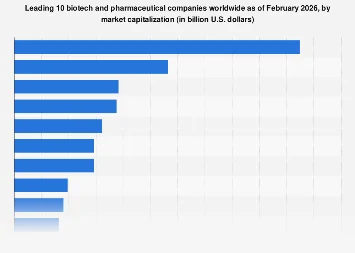
The global biopharmaceutical industry is on a trajectory of robust expansion, with leading companies expected to see substantial increases in their market capitalizations by 2026. This projected surge is fueled by a confluence of factors, including groundbreaking scientific advancements, an aging global population demanding novel therapeutics, and an escalating need for treatments addressing complex diseases. While precise, real-time market capitalization figures for specific future dates are inherently speculative and subject to market volatility, industry analysis and consensus forecasts indicate a strong upward trend for the sector’s major players.
The biopharmaceutical sector, a critical component of the healthcare ecosystem, has consistently demonstrated its resilience and capacity for innovation. Companies within this space are engaged in the research, development, manufacturing, and marketing of a wide array of pharmaceutical drugs and biological products. Their market value, a key indicator of investor confidence and future growth potential, is intrinsically linked to their pipeline strength, patent portfolios, regulatory approvals, and commercial success. Projections for 2026 suggest that established giants and agile innovators alike will benefit from a dynamic market landscape.
Several key drivers are underpinning this anticipated growth. Firstly, the relentless pace of scientific discovery, particularly in areas like gene editing, personalized medicine, immunology, and artificial intelligence-driven drug discovery, is unlocking unprecedented therapeutic possibilities. These innovations have the potential to create blockbuster drugs that address unmet medical needs, thereby generating significant revenue streams and enhancing market valuations. For instance, advancements in mRNA technology, showcased during the recent global health crisis, have opened new avenues for vaccine development and are now being explored for a range of other diseases, from cancer to rare genetic disorders.
Secondly, the demographic shift towards an aging global population is a powerful and sustained demand driver. As life expectancies increase, so does the prevalence of chronic and age-related diseases such as cardiovascular conditions, neurodegenerative disorders, and various forms of cancer. This demographic reality translates into a growing market for effective pharmaceuticals and biologics, providing a fertile ground for companies that can deliver innovative solutions. The World Health Organization projects that by 2050, the global population aged 60 and over is expected to more than double, presenting a substantial and growing patient pool.
Furthermore, the increasing burden of chronic diseases and the emergence of new health challenges continue to necessitate significant investment in healthcare infrastructure and pharmaceutical development worldwide. Governments and private healthcare systems are increasingly prioritizing the adoption of advanced therapies, creating favorable market access conditions for companies with compelling clinical data and demonstrable therapeutic benefits.
Looking at the competitive landscape, major biopharmaceutical corporations are characterized by their substantial R&D budgets, extensive clinical trial networks, and broad commercial reach. Companies like Pfizer, Johnson & Johnson, Roche, Novartis, and Merck, among others, are deeply invested in a diversified portfolio of therapeutic areas, ranging from oncology and immunology to infectious diseases and rare diseases. Their ability to navigate complex regulatory environments, secure intellectual property, and effectively bring new medicines to market will be paramount in determining their market capitalization growth.
For example, a company like Novartis, with its strategic focus on innovative medicines in areas such as cardiovascular, immunology, and neuroscience, is well-positioned to capitalize on these trends. Its commitment to R&D and its ability to successfully transition from older revenue streams to newer, high-growth products are critical factors influencing its future market value. Similarly, companies at the forefront of gene therapy, like Vertex Pharmaceuticals or Sarepta Therapeutics, could see dramatic increases in their valuations as their novel treatments gain wider adoption and regulatory approval for previously untreatable conditions.
The market for biologics, a segment of the pharmaceutical industry that uses living organisms or their components to produce medicines, is also experiencing exponential growth. These complex therapies, often used for chronic and severe conditions, command premium pricing and are a significant revenue driver for many leading firms. The ongoing research into biosimilars, while presenting a challenge to originator products, also stimulates innovation and competition within the broader biopharmaceutical market, ultimately benefiting patients and driving market expansion.
Economic analyses often point to the significant return on investment that the biopharmaceutical sector can generate, albeit with inherent risks associated with the lengthy and costly drug development process. Success in bringing a novel drug to market can result in billions of dollars in annual sales, a prospect that continues to attract substantial investment from venture capital firms, private equity, and public markets. The total market value of the global pharmaceutical industry, a figure encompassing generics, branded drugs, and biologics, is projected to reach well over a trillion dollars in the coming years, with the biopharmaceutical segment representing a rapidly growing portion of this total.
Moreover, strategic partnerships, mergers, and acquisitions play a crucial role in shaping the industry’s future. Larger companies often acquire smaller, innovative biotechs to bolster their pipelines and access cutting-edge technologies, a trend that can significantly alter market valuations and competitive dynamics. The pursuit of synergistic collaborations allows companies to share the risks and costs of R&D while accelerating the pace of innovation.
However, the biopharmaceutical sector is not without its challenges. Increasing regulatory scrutiny, pricing pressures from governments and payers, and the persistent threat of patent expirations necessitate continuous innovation and strategic adaptation. Companies must not only develop effective treatments but also demonstrate their value proposition in terms of cost-effectiveness and patient outcomes. The complex reimbursement landscape in major markets like the United States, Europe, and Japan requires sophisticated market access strategies.
The geopolitical landscape and global supply chain stability also present potential headwinds. Disruptions in manufacturing, raw material sourcing, or international trade can impact production and distribution, potentially affecting market access and revenue. Companies with diversified manufacturing footprints and robust supply chain management systems are better positioned to mitigate these risks.
In conclusion, the outlook for major biopharmaceutical companies’ market capitalization by 2026 appears exceptionally positive. Driven by scientific breakthroughs, demographic trends, and unmet medical needs, the industry is poised for significant growth. While precise valuations remain fluid, the underlying economic and scientific fundamentals suggest a robust expansionary phase for a sector that is central to global health and economic prosperity. Investors and stakeholders will be closely watching the progress of R&D pipelines, regulatory approvals, and commercial strategies as these companies navigate an increasingly complex yet opportunity-rich global market.