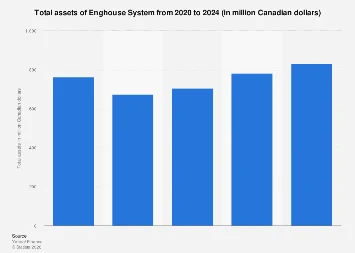
As the global technology sector continues its dynamic evolution, software and service providers are under constant scrutiny regarding their financial health and asset management. Enghouse Systems, a prominent player in the enterprise software space, is no exception. While precise, up-to-the-minute asset figures for privately held or subscription-based data platforms often require direct access, an analysis of publicly available financial indicators and industry trends provides a comprehensive view of the company’s standing as of 2024. Understanding the total assets of a company like Enghouse Systems offers critical insights into its operational capacity, investment strategies, and overall financial stability.
Total assets, a fundamental accounting metric, represent the sum of everything a company owns that has economic value. This includes tangible assets such as property, plant, and equipment, as well as intangible assets like goodwill, patents, and software licenses. For a technology firm, the composition of these assets is particularly telling. A significant portion might be tied up in research and development, intellectual property, and investments in digital infrastructure. The valuation and growth of these assets are direct indicators of a company’s ability to innovate, scale its operations, and maintain a competitive edge in a fast-paced market.
The broader economic environment in 2024 presents a complex backdrop for technology companies. While digital transformation initiatives continue to drive demand for software solutions, inflationary pressures, rising interest rates, and geopolitical uncertainties are influencing corporate spending and investment decisions. Companies like Enghouse Systems, which typically operate on long-term contracts and recurring revenue models, are often more resilient to short-term economic shocks than those reliant on project-based or discretionary spending. However, sustained economic headwinds can impact growth trajectories and the valuation of assets, particularly those related to future earnings potential.
Examining Enghouse Systems’ strategic focus provides further context for its asset base. The company specializes in providing mission-critical enterprise software solutions across various verticals, including public safety, transportation, and telecommunications. This strategic positioning implies a significant investment in the development and maintenance of specialized software platforms. The value of these platforms, both in terms of their current utility and their potential for future upgrades and extensions, forms a crucial component of Enghouse’s intangible assets. Furthermore, acquisitions have historically been a key growth strategy for Enghouse, meaning that goodwill, representing the premium paid over the fair value of net assets acquired, can be a substantial element of its total assets.
Globally, the enterprise software market is characterized by intense competition and rapid technological advancement. Companies are increasingly seeking integrated solutions that enhance operational efficiency, improve customer engagement, and provide robust data analytics. Enghouse Systems’ portfolio, which includes products for contact centers, asset management, and field service, aligns with these market demands. The company’s ability to successfully integrate acquired businesses and technologies into its existing offerings directly impacts the realization of value from its asset base, particularly its intangible assets. Investors and analysts closely monitor the accretion or dilution of shareholder value resulting from such integration efforts.
In terms of financial performance metrics often correlated with asset growth, Enghouse Systems has a history of demonstrating stable revenue streams driven by its subscription-based models. This recurring revenue is a significant indicator of financial predictability and provides a solid foundation for reinvestment in research and development, strategic acquisitions, and the enhancement of existing technological assets. The profitability derived from these operations directly influences the company’s retained earnings, which in turn contribute to the growth of its total assets over time.
To truly grasp the significance of Enghouse Systems’ total assets in 2024, it is essential to consider industry benchmarks and peer comparisons. The enterprise software sector is diverse, with companies ranging from hyper-growth startups to established giants. Companies with a strong focus on recurring revenue and a history of successful acquisitions, such as Enghouse, often exhibit a different asset composition compared to, for instance, hardware manufacturers or pure-play cloud service providers. The valuation of software intellectual property and customer relationships, often captured under intangible assets, is a key differentiator.
Moreover, the trend of digital transformation across industries continues to fuel demand for sophisticated software solutions. Enghouse Systems’ target markets, such as emergency services and public transportation, are undergoing significant modernization efforts, often driven by the need for greater efficiency, interoperability, and data-driven decision-making. These trends suggest a sustained demand for the types of solutions Enghouse provides, which should, in theory, support the ongoing valuation and growth of its relevant assets, including software development capabilities and intellectual property.
The economic impact of a company’s asset base extends beyond its own balance sheet. For Enghouse Systems, its investments in technology, research, and talent contribute to the broader economic ecosystem. By developing and deploying advanced software solutions, the company enables its clients to operate more efficiently, create new services, and foster innovation within their respective sectors. This ripple effect, while not directly quantifiable as a line item on Enghouse’s balance sheet, is a testament to the economic value generated by its assets.
While specific asset figures may be proprietary, the strategic direction and market positioning of Enghouse Systems in 2024 point towards a continued emphasis on software development, intellectual property, and potentially strategic acquisitions. The company’s success hinges on its ability to leverage these assets to meet the evolving needs of its global customer base, navigate economic uncertainties, and maintain its competitive standing in the dynamic enterprise software landscape. The growth and effective management of its asset base will remain a critical determinant of its long-term financial health and market influence.