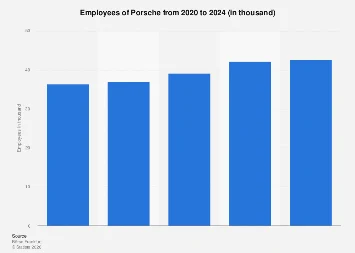
As the global automotive industry navigates a period of profound transformation, marked by the accelerating shift towards electrification and evolving consumer preferences, the operational scale and human capital of key players like Porsche are under increasing scrutiny. In 2024, the iconic German luxury sports car manufacturer continues to maintain a significant global workforce, a testament to its enduring appeal and complex manufacturing and distribution network. While precise, real-time employee figures can fluctuate, the general scale of Porsche’s employment reflects its position as a major industrial entity and a coveted employer within the premium automotive segment.
The company’s workforce is not merely a collection of individuals; it represents a diverse and highly skilled pool of talent essential for the design, engineering, production, marketing, and sales of its high-performance vehicles. From the meticulous craftsmanship on the assembly lines at its Zuffenhausen and Leipzig plants in Germany to the innovative research and development centers pushing the boundaries of automotive technology, and extending to its expansive network of dealerships and service centers worldwide, Porsche’s operational footprint demands a substantial human infrastructure. This workforce is a critical asset, underpinning the brand’s reputation for quality, innovation, and performance.
Recent industry analyses and company reports suggest that Porsche, like many established automakers, has been strategically managing its headcount amidst industry-wide challenges. The drive towards electric vehicles (EVs), for instance, necessitates retraining existing staff and hiring new talent with expertise in battery technology, software development, and electrical engineering. This transition, while demanding, is crucial for Porsche’s long-term competitiveness and its commitment to ambitious sustainability goals, including achieving carbon neutrality across its value chain. The company’s investment in future mobility solutions directly translates into evolving workforce requirements.
The economic impact of Porsche’s employment extends far beyond its immediate payroll. The company is a significant contributor to the economies in which it operates, particularly in its home region of Baden-Württemberg, Germany. Its operations support a vast ecosystem of suppliers, service providers, and ancillary businesses, creating a ripple effect of job creation and economic activity. Furthermore, as a global brand, Porsche’s presence in international markets fosters local employment and contributes to tax revenues, solidifying its role as a responsible corporate citizen.
Comparing Porsche’s workforce size to other luxury automotive manufacturers provides valuable context. While direct comparisons can be nuanced due to differing business models and product portfolios, brands like Ferrari, Lamborghini, and McLaren, while smaller in scale, often emphasize a highly specialized and artisanal approach to their production, which can influence their employee numbers. Conversely, larger premium manufacturers such as BMW and Mercedes-Benz, with broader product ranges encompassing sedans, SUVs, and a wider spectrum of vehicle types, typically employ significantly larger workforces to manage their extensive manufacturing capacities and global distribution. Porsche occupies a unique niche, balancing the exclusivity and performance focus of a boutique marque with the industrial scale required to meet global demand for its iconic models like the 911, Cayenne, and Taycan.
The composition of Porsche’s workforce is also undergoing a subtle but significant shift. While traditional manufacturing roles remain vital, there is a growing emphasis on roles within digitalization, software development, data analytics, and customer experience. The increasing integration of technology into vehicles, from advanced driver-assistance systems to sophisticated infotainment and connectivity features, requires a workforce adept at navigating the digital landscape. This evolution underscores Porsche’s commitment to not only building exceptional cars but also delivering seamless, connected experiences for its customers.
Furthermore, the global nature of Porsche’s operations means its workforce is culturally diverse, reflecting the international appeal of its brand. Managing this diverse talent pool effectively, fostering an inclusive work environment, and ensuring consistent brand values across different geographical locations are key strategic imperatives for the company’s human resources division. The company’s investment in employee training and development programs aims to equip its staff with the skills necessary to excel in a rapidly changing industry and to uphold the high standards associated with the Porsche name.
Market dynamics also play a crucial role in shaping Porsche’s employment strategy. Fluctuations in global demand, supply chain disruptions, and geopolitical uncertainties can all influence production volumes and, consequently, staffing levels. For instance, the semiconductor shortage that plagued the automotive industry in recent years necessitated careful production planning and, at times, adjustments to workforce allocation. Similarly, shifts in consumer preferences towards electric vehicles, while presenting opportunities, also require strategic workforce planning to ensure the necessary skill sets are available to meet the demands of EV production and development.
The pursuit of innovation is another key driver influencing Porsche’s workforce. The company’s commitment to pioneering new technologies, whether in powertrain development, chassis dynamics, or digital services, requires a continuous influx of creative minds and technical experts. This often involves collaboration with external research institutions, universities, and technology startups, further expanding the company’s network of expertise and potentially influencing its internal hiring strategies. The development of the Taycan, Porsche’s first all-electric sports car, serves as a prime example of the significant R&D and production workforce commitment required to bring such a groundbreaking vehicle to market.
Looking ahead, the automotive landscape is poised for continued disruption, driven by autonomous driving technologies, evolving mobility concepts, and increasingly stringent environmental regulations. Porsche’s ability to attract, retain, and develop the talent necessary to navigate these future trends will be paramount to its sustained success. The company’s workforce in 2024 represents not only its current operational strength but also its strategic investment in shaping the future of luxury performance mobility. The ongoing evolution of its global employment base is a clear indicator of its adaptability and forward-looking approach in a dynamic and competitive industry.