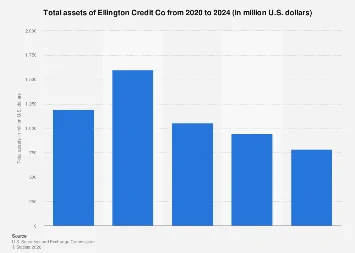
Ellington Credit Company, a notable player in the non-bank lending sector, is navigating a complex economic landscape in 2024, with its total asset figures offering a snapshot of its operational scale and strategic positioning. While specific, real-time asset valuations are typically proprietary and subject to frequent adjustments, the company’s presence and activities within the credit markets suggest a significant and evolving asset base. Understanding the forces shaping such asset portfolios is crucial for investors, competitors, and industry observers alike, particularly in an environment characterized by fluctuating interest rates, evolving regulatory frameworks, and a persistent demand for alternative financing solutions.
The broader context for companies like Ellington Credit involves a dynamic financial ecosystem. In 2024, the global economy continues to grapple with the aftermath of inflationary pressures, leading central banks to maintain or cautiously adjust monetary policy. This has a direct bearing on the cost of capital for lenders and the borrowing costs for businesses seeking credit. For a company focused on originating and managing credit assets, interest rate movements are a primary determinant of profitability and portfolio valuation. A rising interest rate environment can increase the yield on new loans but also potentially devalue existing fixed-rate assets and heighten the risk of borrower defaults. Conversely, a falling rate environment can boost asset valuations but compress net interest margins.
Ellington Credit, as a commercial entity, operates within this intricate web of macroeconomic variables. Its total assets would comprise a diversified portfolio, likely including commercial real estate loans, corporate debt, distressed debt, and potentially other forms of private credit. The precise composition and size of these holdings are influenced by the company’s investment strategy, its risk appetite, and the prevailing market opportunities. For instance, the robust demand for flexible financing options from small and medium-sized enterprises (SMEs) globally, a segment often underserved by traditional banking channels, presents a significant avenue for asset growth. In 2023, the global SME lending market was valued in the trillions of dollars, with a projected compound annual growth rate that underscores the enduring need for such financial intermediation. Ellington Credit’s ability to tap into this market effectively would directly translate into an expansion of its asset base.
Furthermore, the performance of the company’s assets is intrinsically linked to the health of the underlying borrowers and the sectors in which they operate. A diversified portfolio across various industries and geographies can mitigate sector-specific downturns. For example, if Ellington Credit has a substantial exposure to the technology sector, which experienced a period of rapid growth followed by a recalibration, its asset quality and valuation would be sensitive to the sector’s ongoing performance. Similarly, its exposure to real estate markets, whether commercial or residential, would be influenced by local economic conditions, rental demand, and property price trends. The U.S. commercial real estate market, for instance, has faced headwinds in recent years due to shifts towards remote work and rising cap rates, requiring lenders to be particularly judicious in their underwriting and portfolio management.
Statistics and market data surrounding asset management firms, while often aggregated, provide valuable benchmarks. The alternative investment sector, of which private credit is a significant component, has seen substantial inflows in recent years. Assets under management in private debt funds globally have grown exponentially, reaching hundreds of billions of dollars. This trend reflects investor confidence in the asset class’s ability to generate attractive risk-adjusted returns, often uncorrelated with public markets. Ellington Credit’s own asset figures would be a testament to its success in attracting capital and deploying it effectively within this growing market.
The company’s strategic decisions in 2024 are likely to be shaped by these market realities. This could involve a focus on originating higher-yield assets, deleveraging certain riskier positions, or expanding into new geographical markets or asset classes where it perceives superior risk-reward profiles. For example, in emerging markets, the demand for credit can be acute, offering opportunities for higher returns, albeit with commensurately higher risks that necessitate robust due diligence and risk management protocols. The total assets of Ellington Credit would therefore be a dynamic indicator of its responsiveness to these evolving market opportunities and its capacity to manage associated risks.
From a competitive standpoint, Ellington Credit operates in a landscape populated by a diverse range of players, including other non-bank lenders, private equity firms with credit arms, and increasingly, specialized fintech companies. The scale of its operations, as reflected in its total assets, positions it within this competitive hierarchy. A larger asset base can confer advantages such as greater borrowing capacity from senior lenders, the ability to undertake larger transactions, and potentially economies of scale in operational and administrative functions. Conversely, a smaller, more agile firm might focus on niche markets or specialized lending strategies where it can carve out a competitive edge.
Economic impact analysis of a firm like Ellington Credit extends beyond its balance sheet. The capital it provides fuels business expansion, job creation, and innovation across the industries it serves. When businesses can access reliable and appropriately priced financing, they are better equipped to invest in new equipment, research and development, and workforce training, all of which contribute to broader economic growth. The total assets of Ellington Credit, therefore, are not merely financial figures but represent the deployment of capital that has a tangible effect on the real economy.
In conclusion, while precise, publicly disclosed figures for Ellington Credit Company’s total assets in 2024 remain within the realm of private financial reporting, the company’s strategic operations are intrinsically tied to the macroeconomic conditions and market dynamics prevalent this year. Its asset base is a reflection of its investment strategy, its ability to access capital, and its effectiveness in originating and managing credit assets across a varied economic landscape. As the global financial environment continues to evolve, the trajectory of Ellington Credit’s assets will serve as a key indicator of its resilience, adaptability, and continued role in providing essential financing to businesses.