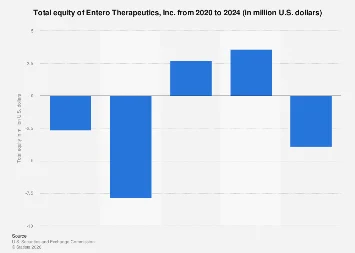
The financial health and valuation of biopharmaceutical companies like Entero Therapeutics, Inc. are perpetually under scrutiny, reflecting not only their current operational performance but also their future potential in a rapidly evolving global market. As of 2024, understanding the total equity of such entities offers a crucial lens through which investors, analysts, and industry observers can gauge their financial stability, growth trajectory, and overall market positioning. This figure, representing the residual interest in the assets of an entity after deducting liabilities, serves as a fundamental indicator of a company’s net worth and its capacity to fund future research, development, and expansion initiatives.
In the highly competitive and capital-intensive biopharmaceutical sector, equity levels are intrinsically linked to a company’s ability to innovate and bring novel therapies to market. Entero Therapeutics, a player in this space, operates within an environment characterized by significant R&D investments, stringent regulatory hurdles, and the constant pursuit of breakthroughs in areas such as gastroenterology, where the company has historically focused its efforts. The equity position of Entero Therapeutics is therefore not merely a static financial number; it is a dynamic reflection of its strategic investments, intellectual property portfolio, clinical trial progress, and ultimately, its perceived value by the investment community.
Global pharmaceutical markets have witnessed substantial shifts in recent years, driven by factors including advancements in biotechnology, the increasing prevalence of chronic diseases, and the growing demand for personalized medicine. Within this context, companies like Entero Therapeutics are tasked with navigating complex economic currents. Their equity valuation is influenced by a myriad of factors, from the success or failure of late-stage clinical trials to the competitive landscape and the potential for mergers and acquisitions. The ability to secure funding, whether through equity financing, debt, or strategic partnerships, directly impacts a company’s equity base and its capacity for sustained growth.
For a company like Entero Therapeutics, maintaining a robust equity position is paramount. It signals to potential investors a degree of financial resilience and the potential for substantial returns, particularly if its therapeutic candidates achieve regulatory approval and commercial success. The total equity figure can be broken down into components such as common stock, preferred stock, and retained earnings, each providing a nuanced insight into the company’s financial structure and historical profitability. A growing equity base often suggests that the company is successfully reinvesting its profits or has been effective in raising capital to fuel its growth strategies. Conversely, a declining equity may signal financial distress or a period of significant investment without commensurate returns.
The biopharmaceutical industry’s valuation methodologies are often forward-looking, heavily discounting future revenue streams and the probability of successful drug development. Consequently, a company’s equity is not solely determined by its current asset base but also by its intellectual property, the strength of its pipeline, and the perceived market need for its potential products. Entero Therapeutics’ equity will be closely watched by stakeholders as it advances its drug candidates through various stages of development. Positive clinical trial data, for instance, can significantly bolster investor confidence and, in turn, its equity valuation, potentially attracting further investment or leading to higher acquisition premiums.
Furthermore, the broader economic climate plays a significant role in shaping the equity markets for biopharmaceutical companies. Factors such as interest rates, inflation, and overall investor risk appetite can influence the cost of capital and the availability of funding. In periods of economic uncertainty, companies with stronger equity bases are often better positioned to weather downturns and continue their operations and R&D efforts. Conversely, companies with weaker financial foundations may find it more challenging to access the capital necessary for their ambitious research programs.
Global comparisons within the pharmaceutical sector can also provide valuable context for understanding Entero Therapeutics’ equity. Benchmarking its financial metrics against those of its peers, both established giants and emerging players, allows for a more informed assessment of its relative standing. Companies that demonstrate consistent equity growth and effective capital allocation often outperform their less financially robust competitors. This can be attributed to their enhanced ability to fund extensive clinical trials, scale manufacturing operations, and execute robust commercialization strategies.
The regulatory environment is another critical determinant of success and, by extension, equity value in the pharmaceutical industry. The U.S. Food and Drug Administration (FDA), the European Medicines Agency (EMA), and other global regulatory bodies impose rigorous standards for drug approval. Navigating these complex pathways requires substantial financial resources, and the successful or unsuccessful outcome of these regulatory processes can profoundly impact a company’s equity. Entero Therapeutics’ equity will undoubtedly reflect the perceived likelihood of its pipeline candidates achieving regulatory approval in key markets.
Moreover, the strategic decisions made by Entero Therapeutics’ management team regarding capital allocation, partnerships, and potential divestitures or acquisitions are central to its equity performance. A well-executed strategy that aligns with market needs and leverages the company’s core competencies can lead to significant value creation. Conversely, missteps in strategic planning or execution can erode shareholder value and negatively impact equity. The company’s ability to foster innovation, protect its intellectual property, and effectively commercialize its products will be key drivers of its long-term equity growth.
In conclusion, the total equity of Entero Therapeutics, Inc. in 2024 is a multifaceted financial indicator, deeply intertwined with the company’s operational performance, strategic direction, and the dynamic forces shaping the global biopharmaceutical landscape. It serves as a barometer of its financial strength, its capacity for innovation, and its potential to deliver value to shareholders in a sector characterized by both immense opportunity and significant risk. As the company continues its journey of therapeutic development and market engagement, its equity figures will remain a focal point for understanding its financial trajectory and its ultimate contribution to medical advancement.