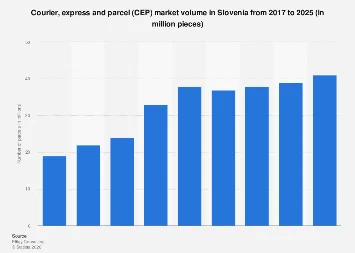
The parcel delivery market in Slovenia is on a trajectory of robust expansion, with projections indicating a substantial volume increase to approximately 125 million parcel items by the close of 2025. This forecast, which includes estimates for the final year, underscores a dynamic and evolving logistics landscape within the Central European nation. The figures encompass a broad spectrum of shipments, from domestic transit to international inbound and outbound parcels, all weighing up to 31.5 kilograms. Crucially, the methodology for calculating this volume places emphasis on the carrier holding commercial ownership of the customer relationship, a standard practice aimed at streamlining data and preventing the duplication of figures, particularly in instances of subcontracted services.
This comprehensive measurement framework ensures that sub-contracted volumes are meticulously identified and excluded to the greatest extent possible, thereby guaranteeing the accuracy of the overall market assessment. For imported parcels, the attribution of volume is specifically assigned to the operator responsible for the final leg of delivery – the last-mile segment – from the import gateway to the end recipient. This granular approach to volume allocation provides a clear and unclouded view of market share and operational dominance among the key players.
The market consolidation encompasses a diverse array of established logistics providers, signaling a competitive yet interconnected ecosystem. Prominent among these are global giants such as DHL Express, DPD, FedEx/TNT, and UPS, whose extensive international networks and established reputations contribute significantly to the overall parcel flow. Alongside these international heavyweights, national champions and significant regional players like Slovenian Post, Intereuropa, and GLS are integral to the market’s structure, catering to both domestic needs and contributing to international trade routes. The inclusion of "Global Express" and "Gold Express" alongside "others (rest of the market)" indicates a granular approach to capturing the full breadth of market activity, acknowledging both specialized express services and the cumulative impact of smaller, niche operators.
This projected growth in parcel volume is not an isolated phenomenon but rather a reflection of broader economic trends and evolving consumer behaviors that are reshaping the global logistics industry. The burgeoning e-commerce sector stands as a primary engine driving this expansion. As more consumers embrace online shopping for its convenience and wider product selection, the demand for efficient and reliable parcel delivery services escalates proportionally. Slovenia, with its increasing internet penetration and growing digital economy, is a prime beneficiary of this global e-commerce surge. Data from Eurostat consistently shows a rising trend in online purchases across the European Union, and Slovenia is aligning with this pattern. In 2023, for instance, an estimated 65% of Slovenian internet users reported having purchased goods or services online in the past three months, a figure that is expected to climb steadily towards 2025. This digital shift translates directly into a greater number of individual parcels needing to be transported from vendors to consumers.
Furthermore, the increasing sophistication of supply chains and the growing emphasis on just-in-time delivery models across various industries are also contributing factors. Businesses are increasingly relying on nimble and responsive logistics partners to manage their inventory and ensure timely distribution of goods. This includes the movement of components for manufacturing, finished products for retail, and essential supplies for service industries. The competitive landscape among the listed carriers, from the speed-focused DHL Express and FedEx/TNT to the more broadly focused DPD and UPS, suggests that businesses have a range of options to meet these varied demands. The presence of strong national players like Slovenian Post and Intereuropa is also critical, offering localized expertise and often serving as crucial partners for international carriers in navigating domestic complexities and reaching more remote areas.
The economic implications of this expanding parcel market are multifaceted. For the logistics companies themselves, the increased volume presents significant opportunities for revenue growth and operational scaling. This necessitates strategic investments in infrastructure, including warehousing, sorting facilities, and vehicle fleets, as well as in technology to optimize routing, tracking, and customer service. Companies that can effectively manage these investments and adapt to evolving market demands are likely to gain a competitive edge. For example, investments in automated sorting systems and advanced fleet management software can significantly reduce operational costs and improve delivery times, directly impacting profitability.
Beyond the direct impact on logistics providers, the growth in parcel volume has broader economic benefits for Slovenia. It supports employment within the sector, creating jobs in areas such as warehousing, transportation, customer service, and administrative roles. Moreover, efficient logistics are a critical enabler of trade and economic activity. A robust parcel delivery network facilitates both domestic commerce and international trade, making Slovenian businesses more competitive on the global stage and attracting foreign investment. The ability to reliably and cost-effectively move goods in and out of the country is a fundamental component of a modern, globally integrated economy.
The specific inclusion of metrics like parcel weight (up to 31.5kg) suggests a focus on the business-to-consumer (B2C) and small-to-medium enterprise (SME) segments, which typically involve parcels within this weight range. While larger freight volumes are handled by different logistics channels, the parcel market plays a vital role in the daily operations of countless businesses and the consumption patterns of individuals. The emphasis on removing sub-contracted volumes is a testament to the industry’s growing maturity and the need for transparent, verifiable data for strategic planning and competitive analysis. This meticulous approach helps to paint an accurate picture of direct operational capacity and market penetration for each listed entity.
Looking ahead, several factors could further influence the trajectory of Slovenia’s parcel delivery market. Continued innovation in last-mile delivery solutions, such as the adoption of electric vehicles, the use of drones for specialized deliveries, and the expansion of parcel lockers, could enhance efficiency and sustainability. Regulatory frameworks, both domestic and at the EU level, will also play a role in shaping the operational environment, particularly concerning labor practices, environmental standards, and data privacy. The ongoing digital transformation, coupled with potential shifts in global trade patterns, will necessitate ongoing adaptation and strategic foresight from all market participants.
The consolidation of major global players alongside strong national and regional operators highlights a balanced market structure. While global giants bring extensive resources and international reach, local providers often possess invaluable knowledge of domestic routes, customs procedures, and consumer preferences. This synergy is essential for a comprehensive and efficient parcel delivery network. The inclusion of "others (rest of the market)" is crucial, as it acknowledges the dynamic nature of the logistics industry, where smaller, agile companies can carve out profitable niches or offer specialized services that contribute to the overall market vibrancy. As Slovenia continues to integrate further into the European and global economic fabric, its parcel delivery sector is set to remain a critical indicator of its economic health and its capacity to facilitate commerce in an increasingly interconnected world. The projected figures for 2025 serve as a compelling indicator of the sector’s ongoing importance and its significant contribution to the nation’s economic dynamism.