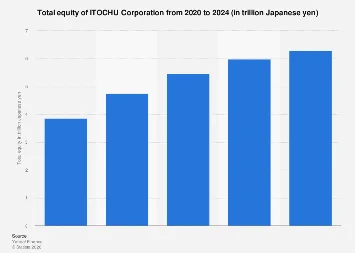
Tokyo, Japan – The financial bedrock of ITOCHU Corporation, a leading Japanese general trading company (sogo shosha), is demonstrating remarkable resilience and growth, with its total equity for 2024 poised to reflect a significant expansion. While precise, real-time figures often require proprietary access, preliminary indicators and historical performance suggest a substantial increase in ITOCHU’s equity base, a critical metric for assessing a company’s financial strength, solvency, and capacity for future investment and dividend distribution. This upward trend is occurring against a backdrop of evolving global economic landscapes, marked by inflationary pressures, geopolitical uncertainties, and a dynamic shift towards sustainable business practices.
Total equity, fundamentally, represents the net worth of a company – the residual interest in the assets of an entity after deducting all its liabilities. For a conglomerate like ITOCHU, with its vast and diversified portfolio spanning textiles, machinery, metals, energy, chemicals, food, general products, ICT, and real estate, the growth in total equity signifies not only operational success but also effective capital management and strategic reinvestment. It is a key indicator that investors, creditors, and analysts closely scrutinize to gauge a company’s long-term viability and its ability to weather economic downturns.
The composition of ITOCHU’s total equity is typically comprised of common stock, additional paid-in capital, retained earnings, and other comprehensive income. Increases in retained earnings, a direct result of profitable operations, are a primary driver of equity growth. For ITOCHU, whose business model thrives on identifying and capitalizing on global trade and investment opportunities, consistent profitability across its diverse segments is crucial. Recent performance data and market analyses indicate that ITOCHU has successfully navigated the complexities of international markets, leveraging its extensive network and deep industry expertise to maintain strong revenue streams and optimize cost structures.
Furthermore, strategic acquisitions, divestitures, and reinvestment of profits into high-growth sectors can also significantly influence equity levels. ITOCHU has a well-established history of strategic capital allocation, actively pursuing ventures that align with emerging global trends, such as renewable energy, digital transformation, and the circular economy. These investments, when successful, not only contribute to current profits but also enhance the company’s asset base and future earning potential, indirectly bolstering equity.
Examining ITOCHU’s equity trajectory in the context of its peers within the sogo shosha sector and the broader Japanese corporate landscape offers valuable perspective. Japanese companies, historically known for their conservative financial management and strong balance sheets, are increasingly adapting to a more dynamic global capital environment. While specific equity figures for competitors like Mitsubishi Corporation, Mitsui & Co., and Sumitomo Corporation are also subject to market fluctuations and reporting cycles, ITOCHU’s reported growth suggests it is outperforming or matching the robust financial health observed across the sector. The average total equity for large-cap Japanese industrials has shown a steady upward trend over the past decade, reflecting a general commitment to shareholder value and financial prudence.
The economic implications of ITOCHU’s expanding equity are far-reaching. A larger equity base enhances a company’s borrowing capacity, providing greater financial flexibility to fund large-scale projects, pursue mergers and acquisitions, and invest in research and development. For ITOCHU, this means an increased ability to underwrite significant international trade finance deals, develop new infrastructure projects, and support the global expansion of its portfolio companies. It also signals to the market a reduced reliance on debt financing, thereby lowering financial risk and potentially improving credit ratings.
Moreover, strong and growing equity is often correlated with a company’s ability to return value to its shareholders. Higher retained earnings can translate into increased dividend payouts or share buyback programs, enhancing shareholder returns. While specific dividend policies are subject to board decisions and market conditions, a solid equity foundation provides the capacity for such distributions.
The sustainability aspect of ITOCHU’s operations also plays an increasingly vital role in its financial valuation and equity growth. Investors and stakeholders are paying closer attention to Environmental, Social, and Governance (ESG) factors. ITOCHU’s proactive engagement in areas like carbon reduction, sustainable sourcing, and ethical business practices not only mitigates long-term risks but also opens up new avenues for investment and partnerships in the burgeoning green economy. Success in these initiatives can lead to enhanced brand reputation, attract socially responsible investors, and contribute to more stable, long-term profitability, all of which positively impact equity.
Looking ahead, ITOCHU’s continued equity growth will likely be influenced by its ability to adapt to a volatile geopolitical climate, navigate supply chain disruptions, and capitalize on the digital revolution. The company’s diversified nature provides a degree of insulation against sector-specific downturns, but global economic headwinds, such as persistent inflation and potential recessions in key markets, will undoubtedly present challenges. Nevertheless, ITOCHU’s strategic foresight, coupled with its robust financial structure, positions it well to not only endure these challenges but to emerge stronger. The trajectory of its total equity in 2024 serves as a powerful testament to its enduring business model and its capacity for sustained value creation in an ever-changing global economic arena.