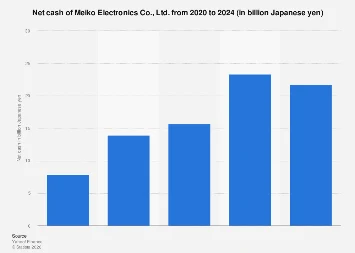
Meiko Electronics Co., Ltd., a key player in the global electronics manufacturing sector, is meticulously managing its financial resources as it navigates the complex economic currents of 2024. While specific, granular figures for net cash often reside within proprietary financial reports and require subscription access, understanding the company’s net cash position is paramount for investors, analysts, and industry observers seeking to gauge its financial health, operational capacity, and strategic flexibility. This metric, representing the liquid assets a company possesses after deducting its short-term liabilities, serves as a critical barometer of its immediate financial stability and its ability to fund operations, invest in growth, and weather potential economic downturns.
The electronics manufacturing industry, characterized by its capital intensity, rapid technological evolution, and global supply chain interdependencies, places a significant premium on robust cash management. Companies like Meiko Electronics, which likely operates within segments such as printed circuit board (PCB) manufacturing or assembly, face constant pressures to innovate, scale production, and maintain competitive pricing. A healthy net cash position provides the essential buffer needed to absorb fluctuations in raw material costs, manage inventory levels effectively, and respond swiftly to emerging market opportunities or unexpected disruptions. In 2024, as global inflation persists and geopolitical uncertainties continue to influence supply chains, the importance of a strong liquidity profile for companies like Meiko cannot be overstated.
Analyzing Meiko Electronics’ net cash position in 2024 requires a broader contextual understanding of its operational footprint and market dynamics. The company’s primary markets, geographical presence, and the specific sub-sectors of electronics it serves all play a crucial role in shaping its cash flow generation and expenditure patterns. For instance, a company heavily involved in high-volume consumer electronics might experience more volatile cash flows compared to one focused on more stable industrial or automotive electronics. Similarly, Meiko’s investment in research and development, its capital expenditure plans for new facilities or equipment upgrades, and its dividend policies are all significant determinants of its net cash balance.
While precise 2024 net cash figures are not publicly disseminated in real-time for all companies, financial statements typically provide this information quarterly and annually. Industry analysts often project these figures based on historical trends, management guidance, and macroeconomic forecasts. For Meiko Electronics, a positive and growing net cash balance would generally signal financial strength, indicating that the company has more cash coming in than it is spending on short-term obligations. This surplus can then be strategically deployed. Potential uses include reinvesting in the business through capital expenditures (CapEx) for advanced manufacturing technologies, funding research and development (R&D) to stay ahead of technological curves, pursuing mergers and acquisitions (M&A) to expand market share or diversify offerings, or returning value to shareholders through dividends or share buybacks.
Conversely, a declining or negative net cash position, while not always an immediate cause for alarm if managed strategically, warrants closer scrutiny. It could suggest that the company is facing cash flow challenges, perhaps due to increased operational costs, slower sales, or significant upfront investments. In such scenarios, companies might need to seek external financing, such as loans or equity issuance, which can dilute existing ownership or increase debt burdens. The cost of capital in the current economic environment also plays a role; higher interest rates make borrowing more expensive, thus increasing the pressure to maintain strong internal cash generation.
Globally, the electronics industry is experiencing diverse trends. Asia, particularly China, remains a dominant manufacturing hub, but countries like Vietnam, India, and Mexico are increasingly attracting investment due to diversification strategies and evolving trade dynamics. Meiko Electronics’ competitive positioning within this global landscape would be influenced by its manufacturing locations, labor costs, access to raw materials, and its ability to navigate international trade regulations and tariffs. The company’s net cash position directly impacts its agility in adapting to these shifts, whether it involves relocating production, securing new supply chains, or investing in localized R&D.
The semiconductor shortage, which has had a profound impact on the electronics sector in recent years, continues to be a factor influencing cash flows. Companies with robust cash reserves are better positioned to secure critical components by potentially placing larger orders or entering into longer-term supply agreements, thereby mitigating production disruptions and maintaining customer commitments. Meiko Electronics’ ability to manage its supply chain effectively, supported by a strong cash position, is a critical determinant of its revenue and profitability.
Furthermore, the increasing emphasis on Environmental, Social, and Governance (ESG) factors within the investment community also indirectly affects financial management. Companies demonstrating strong financial discipline and transparency in their cash management are often viewed more favorably by investors who prioritize sustainable and responsible business practices. Investments in greener manufacturing processes or improved labor conditions, while potentially requiring upfront capital, can lead to long-term cost savings and enhanced brand reputation, ultimately supporting sustained cash flow generation.
For Meiko Electronics, understanding its net cash position in 2024 is not merely an accounting exercise; it is a strategic imperative. It dictates the company’s capacity for innovation, its resilience in the face of market volatility, and its ability to capitalize on future growth opportunities. As the company continues to operate in a dynamic and competitive global marketplace, its financial stewardship, as reflected in its net cash management, will be a key indicator of its ongoing success and its long-term value creation for stakeholders. Analysts will continue to monitor its financial reports for insights into its liquidity, solvency, and the strategic deployment of its cash resources, all of which are critical for assessing its trajectory in the evolving electronics industry.