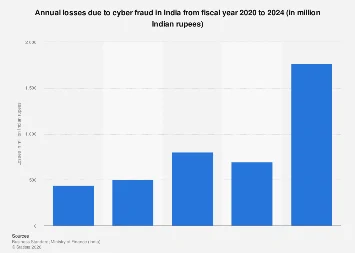
The burgeoning digital economy in India is increasingly becoming a double-edged sword, fueling unprecedented growth while simultaneously exposing it to a relentless surge in cyber fraud. As the nation races towards digital transformation, the financial toll exacted by malicious actors is escalating, presenting a significant challenge to individuals, businesses, and the government alike. While precise, up-to-the-minute figures for the entirety of 2024 remain under proprietary analysis, industry trends and preliminary data paint a stark picture of a nation under siege from sophisticated online criminal networks.
The sheer scale of India’s internet user base, projected to surpass one billion in the coming years, combined with a rapidly expanding e-commerce sector and increasing adoption of digital payment systems, creates a vast and fertile ground for cybercriminals. Reports from various cybersecurity agencies and financial institutions indicate a consistent upward trajectory in reported cyber fraud incidents, with losses running into billions of dollars annually. These losses encompass a wide spectrum of illicit activities, including phishing, ransomware attacks, business email compromise (BEC), identity theft, and various forms of financial scams targeting both consumers and corporations.
The modus operandi of these cybercriminals is becoming increasingly sophisticated. Gone are the days of rudimentary scams; today’s attackers leverage artificial intelligence, machine learning, and advanced social engineering techniques to bypass traditional security measures. They exploit human vulnerabilities, such as a lack of cybersecurity awareness, and the inherent complexities of digital systems. The rapid adoption of mobile banking and instant payment platforms, while immensely convenient, has also inadvertently created new avenues for exploitation. For instance, unauthorized transactions and SIM-swap fraud, where criminals gain control of a victim’s mobile number to intercept one-time passwords (OTPs), have become alarmingly common.
The economic impact of this escalating cyber fraud is multifaceted. For individuals, it can lead to the complete depletion of savings, severe financial distress, and long-lasting psychological trauma. For businesses, the consequences extend beyond direct financial losses. Reputational damage, loss of customer trust, operational disruptions, and the cost of remediation and recovery can be devastating, particularly for small and medium-sized enterprises (SMEs) that may lack robust cybersecurity infrastructure. The aggregate effect on the national economy can hinder investment, stifle innovation, and impede the smooth functioning of critical sectors.
Globally, India is not an isolated case. The United Nations Office on Drugs and Crime (UNODC) has consistently highlighted the growing threat of cybercrime worldwide, with estimates of global losses running into trillions of dollars. However, India’s rapid digitalization, coupled with its large and diverse population, makes it a particularly attractive target. Countries with similar demographic profiles and rapid digital adoption, such as other emerging economies in Asia and Africa, are facing comparable challenges, underscoring the need for a concerted global effort to combat this transnational menace.
Several factors contribute to the vulnerability of the Indian digital landscape. Firstly, while cybersecurity awareness is improving, a significant portion of the population, particularly in rural areas and among older demographics, remains susceptible to social engineering tactics. Educational campaigns, while vital, often struggle to keep pace with the evolving tactics of cybercriminals. Secondly, the sheer volume of transactions and the interconnectedness of digital systems create complex attack surfaces. A single vulnerability in one platform can potentially have cascading effects across multiple services. Thirdly, the enforcement and prosecution of cybercrimes present significant challenges. Investigating cross-border cyberattacks, gathering digital evidence, and ensuring swift justice can be a protracted and resource-intensive process.
In response to this escalating threat, the Indian government has been actively implementing various measures. The National Cyber Security Coordinator (NCSC) plays a pivotal role in coordinating efforts across different government agencies and the private sector. Initiatives like the CERT-In (Indian Computer Emergency Response Team) provide crucial guidance and incident response capabilities. The Reserve Bank of India (RBI) has also been proactive in issuing guidelines and advisories to financial institutions to enhance transaction security and customer protection. Legislation such as the Information Technology Act, 2000, and its subsequent amendments, aims to provide a legal framework for addressing cybercrimes, although continuous updates are necessary to keep pace with technological advancements.
However, the current measures, while commendable, often appear to be playing catch-up with the dynamic nature of cyber threats. Experts in the cybersecurity domain emphasize the need for a more proactive and multi-pronged approach. This includes fostering a stronger culture of cybersecurity from the grassroots level, promoting advanced cybersecurity education and training programs, and encouraging greater collaboration between government agencies, private sector cybersecurity firms, and international law enforcement bodies. The development of more sophisticated threat intelligence sharing platforms and the deployment of advanced AI-powered defense mechanisms are also crucial.
The financial sector, in particular, is under immense pressure to bolster its defenses. Banks and fintech companies are investing heavily in technologies such as multi-factor authentication, behavioral analytics, and real-time fraud detection systems. However, the cost of implementing and maintaining these advanced security protocols can be substantial, particularly for smaller players. The ongoing debate revolves around how to balance robust security with user convenience and affordability, ensuring that legitimate users are not unduly burdened by stringent security measures.
Looking ahead, the trajectory of cyber fraud losses in India will largely depend on the effectiveness of these ongoing efforts and the ability of stakeholders to adapt to the ever-evolving threat landscape. The continued growth of the digital economy is inevitable and desirable for India’s economic progress. However, this growth must be underpinned by a robust and resilient cybersecurity ecosystem. A collective commitment from individuals, businesses, technology providers, and policymakers is essential to mitigate the risks and ensure that the digital revolution benefits all citizens without falling prey to the pervasive threat of cyber fraud. The challenges are significant, but the stakes—the integrity of India’s digital future and its economic prosperity—are far too high to ignore.