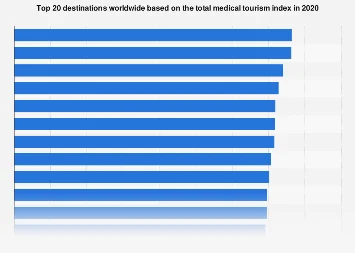
Canada has emerged as the leading destination in the global medical tourism sector, according to a comprehensive 2020-2021 ranking that assessed 30 countries. The nation secured the top spot with a total index score, a nuanced metric reflecting the overall attractiveness and viability of a country as a medical travel destination. This index is meticulously constructed from evaluations of a nation’s healthcare infrastructure, the maturity and organization of its medical tourism industry, and the quality of its medical facilities and patient services. The findings highlight Canada’s robust performance across these critical domains, setting a benchmark for other nations vying for a significant share of this burgeoning international healthcare market.
The 2020 Medical Tourism Index (MTI) provides a granular view of the competitive landscape, with the top 20 countries meticulously ranked. While specific numerical scores for each country beyond the top performer are not publicly detailed in this particular analysis, the methodology underscores a multi-faceted approach to evaluation. The index is not merely about the cost of procedures, but rather a holistic assessment of the patient experience and the destination’s capacity to deliver high-quality care efficiently and effectively. This comprehensive evaluation framework is crucial in understanding the diverse factors that contribute to a country’s success in attracting international patients seeking medical treatments abroad.
The MTI’s methodology, as outlined by its developers, is rooted in a substantial survey of American consumers, providing insights into the preferences and perceptions of a key demographic in the medical tourism market. A survey of 3,030 Americans, representing a broad spectrum of age, gender, education, and socioeconomic backgrounds, forms a cornerstone of the index’s data. This approach ensures that the rankings are not just based on governmental or industry reports, but are also informed by the actual or potential experiences and expectations of travelers. The index considers three primary pillars: the destination environment, the medical tourism industry, and the quality of facilities and services. Each of these pillars is further broken down into specific sub-items, enabling a detailed comparison of each destination’s appeal and brand recognition.
Canada’s leading position is particularly noteworthy, signaling a potential shift in perceptions and realities within the global medical tourism arena. While often associated with its publicly funded universal healthcare system, Canada also possesses a sophisticated private healthcare sector capable of catering to complex medical needs. The country’s strengths likely lie in its high standards of medical training, stringent regulatory oversight, and advanced technological infrastructure. Furthermore, its reputation for safety, political stability, and a welcoming environment for international visitors would undoubtedly contribute to its high MTI score. This suggests that beyond just cost-effectiveness, factors like patient safety, perceived quality of care, and the overall travel experience are increasingly influencing medical travel decisions.
The global medical tourism market is a dynamic and rapidly expanding sector, driven by a confluence of factors including rising healthcare costs in developed nations, the desire for faster access to treatments, the availability of specialized procedures not offered domestically, and the pursuit of medical care combined with tourism. The COVID-19 pandemic, which significantly impacted travel and healthcare systems globally in 2020, also presented unique challenges and opportunities for the medical tourism industry. Countries that were able to maintain high standards of infection control, ensure continuity of care, and adapt to new travel protocols would have been better positioned to attract international patients.
While the specific list of the top 20 countries and their individual scores from the 2020 MTI is proprietary, the general understanding of leading medical tourism destinations offers context. Historically, countries like Thailand, Singapore, South Korea, India, Mexico, and Turkey have been prominent players, each offering distinct advantages. Thailand has long been a leader, renowned for its medical tourism infrastructure, affordable procedures, and hospitality. Singapore and South Korea are recognized for their cutting-edge technology and highly specialized medical expertise, particularly in areas like oncology and cosmetic surgery. India has emerged as a major destination for a wide range of treatments, leveraging its vast pool of skilled medical professionals and cost-competitiveness. Mexico and Turkey have also gained traction, particularly for specific procedures and their proximity to major markets like the United States.
Canada’s ascent to the top of this particular index, however, suggests a potential evolution in what constitutes a leading medical tourism destination. It may indicate a greater emphasis on the "destination environment" component of the index – factors like safety, accessibility, cultural appeal, and the overall patient experience beyond the hospital walls. It could also reflect an increased focus on the "quality of facilities and services," where Canada’s advanced healthcare systems and rigorous quality control mechanisms shine. This is particularly relevant in an era where patient safety and the assurance of receiving world-class care are paramount.
The economic implications of medical tourism are substantial for any nation that successfully attracts international patients. It generates significant revenue through healthcare services, accommodation, transportation, and ancillary spending. Furthermore, it fosters job creation within the healthcare sector and related industries, contributes to foreign exchange earnings, and can stimulate investment in advanced medical technologies and infrastructure. For Canada, a strong performance in medical tourism could translate into a boost for its economy, particularly in regions with well-developed healthcare hubs.
However, the medical tourism industry also faces its share of challenges. These include ensuring ethical medical practices, managing potential disparities between domestic and international patient access, navigating complex international regulations and accreditation standards, and addressing the potential for medical “brain drain” if healthcare professionals are disproportionately drawn to serving international patients. The reputational impact of any adverse medical event or public health crisis can also be significant.
Looking ahead, the landscape of medical tourism is likely to continue evolving. Advances in telemedicine and remote consultations may play an increasingly important role in the pre-travel assessment and post-treatment follow-up phases. The demand for personalized medicine and cutting-edge treatments, such as gene therapy and advanced cancer care, will likely drive growth in specialized medical tourism niches. Countries that can demonstrate a commitment to innovation, patient-centric care, and a seamless international patient experience will be best positioned for sustained success. Canada’s top ranking in the 2020 MTI suggests it has successfully integrated these critical elements, setting a high standard for the future of global medical travel. The detailed breakdown of its performance across the index’s various components would offer invaluable insights for other nations seeking to enhance their own medical tourism offerings and capture a greater share of this vital global market.