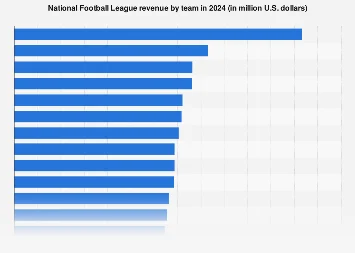
The National Football League continues its ascent as a titan of global entertainment and commerce, with its 32 franchises collectively generating a record-breaking sum in 2024. Leading this financial charge is the Dallas Cowboys, a perennial powerhouse not only on the field historically but also as a formidable economic entity. In 2024, the Cowboys became the sole NFL franchise to surpass the significant financial milestone of $1 billion in revenue, a testament to their enduring brand appeal and multifaceted business operations. "America’s Team," as they are colloquially known, reported a staggering revenue figure of $1.15 billion for the year, solidifying their position at the apex of the league’s financial hierarchy. This figure dwarfs that of many of their competitors, with the Jacksonville Jaguars, for instance, generating less than a quarter of the Cowboys’ income, highlighting the vast disparities within the league’s economic distribution.
The immense financial success of the Dallas Cowboys is intrinsically linked to their status as the league’s most valuable franchise. As of August 2025, their valuation stood at an impressive $10 billion, a valuation that reflects not only their current revenue generation but also their long-term growth potential, brand equity, and the robust market for NFL assets. This off-field financial dominance, however, stands in contrast to more recent on-field achievements. While the Cowboys boast an impressive history with five Super Bowl titles, their last championship victory dates back to 1996. Despite reaching the playoffs in the 2022 season, their campaign was cut short by a divisional round defeat to the San Francisco 49ers, underscoring the perpetual challenge of translating commercial success into ultimate gridiron glory.
The NFL’s overall financial health is a complex ecosystem driven by a diverse array of revenue streams. Sponsorships, media rights, strategic partnerships, and the perennial demand for tickets and concessions form the bedrock of the league’s economic engine. In 2024, the aggregate revenue generated by all 32 NFL teams reached an unprecedented $22.5 billion, a new benchmark for professional sports leagues globally. This figure signifies not only the league’s sustained popularity but also its ability to adapt and capitalize on evolving consumer behaviors and media consumption patterns.
Sponsorships, in particular, represent a critical and growing segment of NFL revenue. In 2024, league and team sponsorship deals collectively generated nearly $2.2 billion. This substantial inflow of capital is facilitated by the league’s broad demographic appeal and its ability to offer sponsors access to a highly engaged and expansive audience. Major global brands such as Verizon, PepsiCo, and Nike have long-standing and lucrative partnerships with the NFL, leveraging the league’s platform to enhance brand visibility and connect with consumers. The economic impact of these partnerships extends beyond the financial transactions, influencing consumer purchasing decisions and shaping brand perceptions across various sectors.
The media rights landscape is arguably the most significant driver of NFL revenue, with lucrative broadcasting deals providing the financial backbone for the league and its franchises. The current agreements with major networks like CBS, NBC, Fox, and ESPN, along with the streaming presence of Amazon Prime Video, are worth billions of dollars annually. These deals are structured over multi-year periods, offering a degree of financial predictability and allowing teams to invest in infrastructure, player development, and fan engagement initiatives. The ability of the NFL to consistently command premium prices for its media rights is a direct reflection of the sport’s unparalleled viewership numbers and its cultural resonance in the United States and increasingly, in international markets.
Beyond national media deals, local broadcast agreements and digital content creation further augment team revenues. Each team benefits from regional television partnerships, while the league actively invests in digital platforms and social media to engage a younger demographic and explore new monetization opportunities. The rise of sports betting also presents a nascent but rapidly growing revenue stream, with official league partnerships with sportsbooks generating additional income and providing valuable fan engagement tools.
Ticket sales and game-day revenue, while perhaps less dominant than media rights, remain a vital component of a team’s financial performance. The demand for NFL tickets, particularly for marquee matchups and playoff games, often outstrips supply, allowing teams to implement dynamic pricing strategies and premium seating options. Concessions, merchandise, and in-stadium advertising further contribute to the significant revenue generated on game days, transforming stadiums into vibrant commercial hubs. The fan experience is carefully curated to maximize both enjoyment and spending, with teams investing in amenities, entertainment, and customer service to ensure a memorable and profitable visit.
The economic model of the NFL is also characterized by a degree of revenue sharing among its franchises. While individual team revenues can vary significantly, a portion of the league’s collective income, particularly from national media deals and sponsorships, is distributed among all 32 teams. This mechanism, while not eliminating disparities, helps to ensure a baseline level of financial stability across the league, allowing even smaller market teams to remain competitive and invest in their operations. This shared revenue model is a crucial element in maintaining the parity and overall health of the league, preventing a situation where only a few wealthy franchises can dominate.
Looking ahead, the economic trajectory of the NFL appears robust. The league is actively exploring international expansion, with regular-season games now being played in markets like London, Munich, and Mexico City. These ventures not only tap into new fan bases and revenue streams but also enhance the global brand of the NFL. The increasing popularity of American football in these regions suggests a significant long-term growth potential for the league’s international revenue. Furthermore, the league’s continuous innovation in fan engagement, including the adoption of new technologies and the exploration of emerging media formats, positions it well to adapt to future market shifts and maintain its position as a dominant force in the global sports and entertainment industry. The sustained financial success of franchises like the Dallas Cowboys serves as a powerful indicator of the league’s enduring appeal and its capacity to generate substantial economic value for its stakeholders.