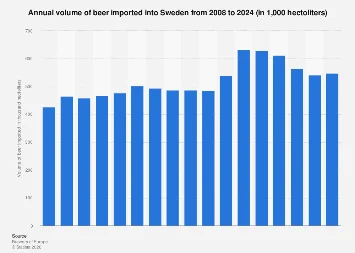
The volume of beer imported into Sweden has undergone significant fluctuations and shifts between 2008 and the projected figures for 2024, reflecting a dynamic interplay of consumer preferences, global trade policies, and the economic health of both Sweden and its key trading partners. This period, spanning over a decade and a half, offers a compelling case study in how a mature beverage market adapts to evolving demands and external economic forces. Analyzing these import trends provides crucial insights for brewers, distributors, policymakers, and market analysts looking to understand the intricate dynamics of Sweden’s alcoholic beverage sector.
From the initial years of the analyzed period, 2008-2009, the global economic downturn, triggered by the subprime mortgage crisis, likely cast a shadow over import volumes. While specific data for these initial years isn’t detailed here, the broader economic contraction across Europe and North America would have undoubtedly impacted discretionary spending, including on imported goods like premium beers. As economies began to recover in the subsequent years, a gradual uptick in beer imports would have been expected, driven by renewed consumer confidence and an increasing appetite for variety.
A notable trend observed throughout this period is the growing diversification of Sweden’s beer import portfolio. Historically, Sweden has had a strong domestic brewing tradition, but the liberalization of the market and increasing consumer exposure to international flavors has paved the way for a wider array of imported lagers, ales, stouts, and craft beers. This expansion is not merely about volume but also about the sophistication of consumer taste. Swedish consumers, particularly younger demographics, have become more adventurous, seeking out niche products and brands that may not be readily available from domestic producers. This demand for novelty and authenticity has been a significant driver for import growth, particularly from countries renowned for their craft beer scenes, such as the United States, the United Kingdom, and Belgium.
The period leading up to and immediately following 2015 likely saw a sustained rise in imports, fueled by a burgeoning craft beer movement that gained momentum globally. Sweden was not immune to this phenomenon. The proliferation of craft breweries internationally provided a rich source of innovative and often higher-priced beers, which found a receptive audience in Sweden. This often translated into an increase in the value of imports, even if the volume growth was more modest, as consumers were willing to pay a premium for unique and high-quality products.
However, the landscape is not without its challenges and potential headwinds. Changes in trade agreements, tariff structures, and regulatory frameworks can significantly influence import volumes. For instance, shifts in the European Union’s Common Agricultural Policy or bilateral trade discussions between Sweden and non-EU countries could impact the cost-effectiveness of importing certain types of beer. Furthermore, fluctuations in currency exchange rates play a critical role. A stronger Swedish Krona can make imported beers more affordable for consumers, potentially boosting import volumes. Conversely, a weaker Krona can make imports more expensive, potentially leading consumers to opt for more budget-friendly domestic alternatives.
The COVID-19 pandemic, starting in early 2020, presented an unprecedented disruption to global supply chains and consumer behavior. Lockdowns, restrictions on hospitality venues, and shifts in purchasing patterns had a profound impact. While on-premise sales of imported beers likely plummeted due to bar and restaurant closures, off-premise sales, particularly through supermarkets and Systembolaget (Sweden’s state-owned alcohol retailer), may have seen a partial offset as consumers shifted to at-home consumption. The pandemic also highlighted the fragility of global logistics, leading to increased shipping costs and potential delays, which could have temporarily suppressed import volumes or increased their cost.
Looking towards the projected figures for 2024, several factors will continue to shape Sweden’s beer import market. The ongoing economic climate, including inflation rates and consumer purchasing power, will be a primary determinant. If inflation remains elevated and disposable incomes are squeezed, consumers might reduce their spending on premium imported beverages, favoring more affordable options. Conversely, a robust economic recovery and increased consumer confidence could reignite demand for a diverse range of imported beers.
Sustainability and ethical sourcing are also increasingly important considerations for Swedish consumers. Brands that can demonstrate a commitment to environmentally friendly production, fair labor practices, and responsible sourcing may find a competitive edge. This is particularly relevant in a market like Sweden, which often ranks highly in global indices for environmental awareness and social responsibility.
Moreover, the evolving retail landscape, including the role of e-commerce and direct-to-consumer sales, could also influence import patterns. While Systembolaget maintains a strong monopoly on alcohol sales in Sweden, online platforms and specialized retailers can offer niche imported products, potentially expanding the reach and availability of international beers.
The competitive dynamics between domestic and imported beers will remain a constant factor. Swedish craft breweries have matured significantly, offering high-quality and innovative products that compete directly with imports. The ability of imported brands to differentiate themselves through unique flavor profiles, heritage, brand story, or perceived premium quality will be crucial for maintaining and growing their market share.
In conclusion, Sweden’s beer import volume from 2008 to 2024 represents a complex narrative of evolving consumer tastes, economic resilience, and global trade influences. From navigating economic downturns and embracing the craft beer revolution to adapting to pandemic-induced disruptions and emerging sustainability concerns, the Swedish market continues to offer a fascinating glimpse into the global beverage industry. The future trajectory of beer imports will undoubtedly be shaped by continued economic performance, regulatory shifts, and the ever-discerning palate of the Swedish consumer.