Global technology companies are navigating a significant period of workforce recalibration, with 2025 marked by widespread and impactful layoffs. These reductions are not isolated incidents but rather a complex response to evolving market dynamics, post-pandemic economic adjustments, and the accelerating influence of artificial intelligence. The scale of these layoffs, affecting established giants and emerging players alike, underscores a fundamental shift in how the tech industry is managing its human capital and operational strategies. One of the most prominent recent instances saw Amazon announce significant workforce cuts on October 27, 2025, impacting an undisclosed but substantial number of employees, adding to a growing trend that has reshaped the global tech employment landscape.
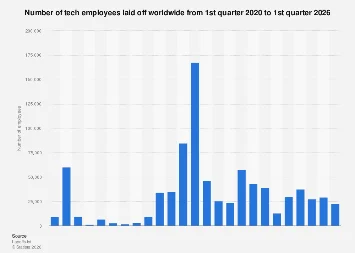
The wave of job eliminations gained considerable momentum in the first quarter of 2023, a period that witnessed an unprecedented surge in tech sector redundancies. In those initial months, an estimated hundreds of thousands of employees worldwide lost their positions, setting a grim record for the industry. This widespread impact was not confined to smaller firms; major technology titans such as Google, Microsoft, Meta, and IBM were all participants in this significant workforce contraction. Amazon, in particular, stood out by implementing multiple rounds of layoffs, contributing a substantial portion to the total number of affected employees across the global tech giants. The ripple effects extended across various sub-sectors, with consumer technology, hardware development, food delivery services, and healthcare technology industries experiencing some of the most pronounced workforce reductions. Beyond the largest corporations, companies like Flink, Booking.com, Uber, PayPal, LinkedIn, and Peloton also made headlines for implementing significant staff reductions, highlighting the pervasive nature of this retrenchment.
The genesis of this widespread layoff trend can be largely attributed to a period of aggressive overhiring that characterized the technology sector during the COVID-19 pandemic. In response to a surge in demand for digital services, e-commerce, and remote work solutions driven by global lockdowns, tech companies embarked on ambitious hiring sprees to scale their operations and meet customer needs. However, as pandemic restrictions eased and the global economy entered a more uncertain phase, marked by rising inflation and tighter monetary policies, many companies found themselves with bloated workforces that no longer aligned with their revised growth projections or profitability targets. This strategic reevaluation, coupled with persistent economic headwinds, made workforce reductions an unavoidable consequence for many organizations. By the end of 2022, the global tech sector had already seen an estimated hundreds of thousands of employees laid off, signaling the end of an era of unchecked expansion.
Looking ahead, the trajectory of future tech layoffs is increasingly intertwined with the rapid advancements and integration of artificial intelligence (AI). While the initial wave of redundancies was primarily a correction for pandemic-era overexpansion and a response to macroeconomic pressures, AI-driven automation presents a new and potentially sustained catalyst for workforce restructuring. AI technologies are becoming increasingly sophisticated at performing tasks that were once the exclusive domain of human workers. From customer service chatbots adept at handling complex inquiries to predictive algorithms that can optimize supply chains with unparalleled efficiency, the pursuit of operational streamlining and cost savings through AI adoption is undeniable. This technological evolution raises significant questions about the long-term demand for certain roles within the tech industry. As AI capabilities expand, companies may find it more cost-effective and efficient to automate a wider range of functions, potentially leading to further, more structural, workforce redundancies. The precise impact remains a subject of intense debate and ongoing observation within the economic and technology spheres.
The economic ramifications of these widespread layoffs are multifaceted and extend beyond the immediate impact on affected individuals. For the tech industry itself, these reductions can lead to a temporary slowdown in innovation as companies focus on optimizing existing operations rather than investing heavily in new projects or research. However, in the longer term, a leaner and more strategically focused workforce could foster greater agility and efficiency. For the broader economy, mass layoffs in a dominant sector like technology can contribute to a cooling of the labor market, potentially impacting consumer spending and overall economic growth. Governments and policymakers are closely monitoring these trends, with discussions increasingly turning towards strategies for reskilling and upskilling the workforce to adapt to the changing demands of the digital economy, particularly in light of AI’s growing influence. The global nature of these tech layoffs means that national economies heavily reliant on the tech sector, such as the United States, China, and various European nations, are all experiencing the repercussions.
Market analysis suggests that the current period of adjustment is unlikely to be a brief anomaly. While the pace of layoffs may fluctuate based on quarterly earnings reports and macroeconomic forecasts, the underlying drivers – including the need for operational efficiency, the ongoing integration of AI, and the lingering effects of a period of unsustainable growth – point towards a continued recalibration of tech workforces. Investors are keenly observing how companies manage this transition, seeking those that can demonstrate resilience, adaptability, and a clear strategy for leveraging new technologies while maintaining a competitive edge. The ability of tech companies to navigate this complex landscape, balancing the imperative for cost control with the need for continued innovation and talent acquisition in critical areas, will define their success in the coming years. The era of rapid, often unbridled, expansion in the tech sector has given way to a more pragmatic and efficiency-driven approach, with significant implications for the global employment landscape.