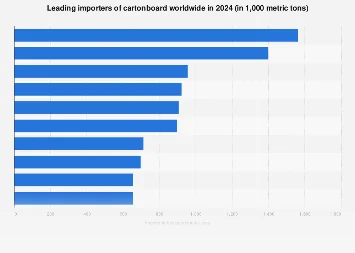
The international market for boxboard, a fundamental material in packaging across numerous consumer and industrial sectors, is characterized by intricate trade flows and evolving demand patterns. As of 2024, analyses of global import data reveal significant shifts and concentrations, underscoring the material’s critical role in supply chains worldwide. While precise, granular data often resides behind premium access, the broader trends indicate robust activity, driven by e-commerce growth, sustainability mandates, and regional manufacturing capabilities.
Boxboard, encompassing materials like paperboard, cardboard, and cartonboard, serves as the backbone for packaging everything from pharmaceuticals and cosmetics to food and electronics. Its versatility, recyclability, and cost-effectiveness make it an indispensable component of modern commerce. The global demand for boxboard is intrinsically linked to consumer spending, industrial output, and, increasingly, the environmental consciousness of both producers and consumers. In 2024, these factors are converging to shape a dynamic import landscape, where certain nations emerge as dominant importers, reflecting their consumption levels and manufacturing dependencies.
The United States, with its vast consumer market and sophisticated manufacturing base, consistently ranks among the top importers of boxboard. The sheer volume of goods packaged for domestic consumption, coupled with a significant export sector that also relies on robust packaging, fuels this demand. The growth of e-commerce, which necessitates secure and often multi-layered packaging, has further amplified the need for boxboard. Companies are increasingly seeking packaging solutions that are not only protective but also visually appealing and aligned with brand messaging, leading to a demand for specialized and high-quality boxboard grades. This sustained demand necessitates substantial import volumes to supplement domestic production, which, while significant, may not always meet the diverse specifications or peak demand periods.
Similarly, European Union member states, collectively representing a major economic bloc, exhibit substantial boxboard import figures. Countries like Germany, France, and the United Kingdom are key players, driven by mature economies, extensive retail networks, and a strong emphasis on sustainable packaging solutions. The EU’s ambitious environmental policies, including targets for recycling and the reduction of single-use plastics, have inadvertently boosted the demand for paper-based packaging, including boxboard. Manufacturers within the EU often import specific grades of boxboard to meet stringent product requirements, aesthetic standards, or to manage production capacities. The intricate supply chains within the EU also contribute to inter-country trade, but global imports remain crucial for sourcing materials not readily available or cost-competitive domestically.
Asia, particularly China, plays a dual role in the global boxboard market, acting as both a major producer and a significant importer. While China possesses immense domestic production capacity, its sheer scale of manufacturing and consumption means it also requires substantial imports to fulfill its needs. The country’s export-oriented manufacturing sector relies heavily on packaging, and the burgeoning domestic market for consumer goods further fuels this demand. Imports into China often comprise specialized grades of boxboard that may not be produced domestically or are needed to meet the exacting standards of international clients. The increasing focus on higher-value consumer goods within China also translates to a demand for premium packaging materials.
Other significant importers include countries with rapidly growing economies and expanding consumer bases, such as India and various nations in Southeast Asia. As these economies mature, their domestic manufacturing sectors grow, and consumer spending rises, leading to an increased need for packaging materials. While domestic production capacity may be expanding, it often lags behind the pace of demand growth, necessitating imports to bridge the gap. These emerging markets represent crucial growth areas for boxboard suppliers, offering opportunities for increased trade volumes in the coming years.
The global boxboard trade is not merely about volume; it is also influenced by factors such as the type of boxboard, its specifications, and the logistical costs associated with its transport. Different applications require distinct types of boxboard, such as folding boxboard (FBB), solid bleached sulfate (SBS), or coated unbleached kraft (CUK). The demand for coated boxboard, for instance, is often driven by the premium food and cosmetics sectors, where high-quality printing and visual appeal are paramount. Conversely, less processed or unbleached varieties might be favored for industrial packaging where durability and cost are primary considerations.
Statistics on global boxboard imports are vital for market intelligence, strategic planning, and investment decisions within the paper and packaging industries. Understanding which countries are importing what quantities of boxboard allows manufacturers to identify potential markets, anticipate demand shifts, and optimize their production and distribution strategies. For packaging converters, these import trends inform raw material sourcing and pricing negotiations. For end-users, it highlights the globalized nature of their supply chains and the dependencies on international trade for essential packaging materials.
The economic impact of these import flows is substantial. The boxboard industry is a significant employer globally, and international trade in this commodity supports jobs in manufacturing, logistics, shipping, and related services. Fluctuations in import volumes can have ripple effects on national economies, influencing trade balances, currency exchange rates, and the competitiveness of domestic industries. Furthermore, the sustainability of boxboard production and its recyclability are increasingly becoming economic differentiators, influencing trade patterns as companies seek materials that align with environmental, social, and governance (ESG) goals.
Looking ahead, several factors are poised to continue shaping global boxboard import trends. The ongoing expansion of e-commerce, both in developed and emerging markets, will likely sustain and potentially increase demand for robust and adaptable packaging solutions. The persistent drive towards sustainability will push for greater use of recycled content and the development of more eco-friendly boxboard alternatives, potentially altering import requirements based on material composition and certifications. Geopolitical factors, trade policies, and raw material availability (such as pulp and recycled fiber) will also play a crucial role in determining the flow and cost of boxboard across borders. As the world navigates these complex dynamics, the global boxboard import market in 2024 and beyond will remain a critical indicator of broader economic activity and the evolving landscape of global commerce.