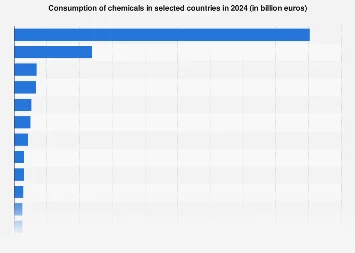
The chemical industry, a foundational pillar of the global economy, is characterized by intricate supply chains and diverse consumption patterns that vary significantly by nation. As of 2024, understanding these consumption trends is crucial for businesses, policymakers, and investors seeking to navigate the complexities of this multi-trillion-dollar sector. While precise, granular data on chemical consumption per country is often proprietary and subject to market intelligence subscriptions, broad economic indicators and industry reports provide a clear picture of the leading players and emerging trends.
At the forefront of global chemical consumption are economies with large industrial bases, significant manufacturing output, and robust domestic demand. China continues to dominate this landscape, driven by its unparalleled manufacturing prowess across sectors like textiles, electronics, automotive, and construction. The sheer scale of its production necessitates a vast intake of raw materials and intermediate chemicals. This consumption is not monolithic; it spans a wide spectrum from basic petrochemicals and polymers to highly specialized fine chemicals and active pharmaceutical ingredients. The Chinese government’s focus on self-sufficiency and upgrading its industrial capabilities further fuels domestic chemical production and, consequently, consumption.
The United States, with its advanced industrial infrastructure, substantial agricultural sector, and leading position in pharmaceuticals and advanced materials, remains a powerhouse in chemical consumption. The U.S. chemical industry benefits from access to abundant natural resources, particularly shale gas, which provides a cost advantage for petrochemical production. Consumption is driven by a diverse range of end-use markets, including automotive, aerospace, consumer goods, and healthcare. Innovation in areas such as specialty chemicals and sustainable materials also contributes to a dynamic consumption profile.
Europe, historically a stronghold of chemical manufacturing and innovation, presents a more nuanced picture. Countries like Germany, France, and the Netherlands are significant consumers, underpinned by strong automotive, pharmaceutical, and industrial sectors. However, the region faces unique challenges, including stringent environmental regulations, the ongoing energy transition, and geopolitical shifts that can impact raw material availability and cost. European chemical consumption is increasingly oriented towards higher-value, sustainable, and circular economy solutions, reflecting a strategic pivot towards specialty chemicals and bio-based alternatives.
Japan and South Korea, both highly industrialized East Asian nations, are substantial consumers of chemicals, particularly for their advanced electronics, automotive, and semiconductor industries. Their consumption patterns are characterized by a high demand for specialty chemicals, high-performance materials, and sophisticated intermediates that enable cutting-edge technological advancements. Both nations are also actively investing in research and development for next-generation materials and sustainable chemical processes.
Emerging economies, particularly in Southeast Asia and India, are exhibiting rapid growth in chemical consumption. India’s burgeoning population, expanding manufacturing sector, and increasing disposable incomes are driving demand across a wide array of chemical products, from basic chemicals for infrastructure development to specialty chemicals for consumer goods and agriculture. Similarly, countries like Vietnam, Indonesia, and Thailand are becoming increasingly important markets as they attract manufacturing investment and develop their domestic industrial capabilities. This growth, however, is often accompanied by a rising need for investment in production capacity, infrastructure, and environmental management.
The global chemical market is not merely about volume; it is also about the type and value of chemicals consumed. While bulk commodity chemicals form the bedrock of industrial production, the growth trajectory is increasingly dictated by specialty chemicals. These are often performance-enhancing products tailored for specific applications, such as coatings, adhesives, catalysts, electronic chemicals, and water treatment chemicals. The demand for specialty chemicals is closely linked to technological innovation, sustainability initiatives, and the evolving needs of downstream industries. For instance, the electrification of transportation is boosting demand for battery materials and lightweight composites, while the focus on sustainable packaging is driving innovation in biodegradable polymers and advanced barrier coatings.
Statistics on chemical consumption are often presented in terms of market value, production volume, or import/export data, rather than direct consumption figures. However, proxy indicators such as Gross Domestic Product (GDP) growth, industrial production indices, and the output of key manufacturing sectors offer reliable insights. For example, a strong correlation typically exists between a nation’s GDP per capita and its chemical consumption, reflecting higher levels of industrial activity and consumer spending on goods that rely on chemicals.
The economic impact of chemical consumption is profound and far-reaching. The chemical industry is a significant employer, both directly and indirectly, through its extensive value chains. It provides essential inputs for nearly every other sector of the economy, from agriculture and healthcare to construction and technology. Disruptions in chemical supply chains, whether due to geopolitical events, natural disasters, or trade disputes, can have cascading effects, leading to price volatility, production delays, and inflationary pressures across multiple industries.
Moreover, the environmental footprint of chemical production and consumption is a critical consideration. Increasingly, governments and consumers are demanding more sustainable chemical products and processes. This is leading to a shift in consumption patterns towards bio-based chemicals, recycled materials, and products manufactured with lower greenhouse gas emissions. The "green chemistry" movement and the principles of a circular economy are not just aspirational goals; they are becoming tangible drivers of market demand and innovation.
Looking ahead, the dynamics of global chemical consumption will continue to be shaped by several key megatrends. The ongoing digital transformation is enabling more sophisticated supply chain management and demand forecasting, potentially leading to more efficient resource allocation. The global push towards decarbonization will accelerate the demand for chemicals used in renewable energy technologies, carbon capture, and energy storage. Furthermore, demographic shifts, including urbanization and a growing middle class in developing nations, will continue to fuel demand for a wide range of consumer products that rely heavily on chemical inputs.
Navigating this complex landscape requires a deep understanding of regional economic conditions, technological advancements, regulatory environments, and evolving consumer preferences. While specific consumption figures remain a closely guarded aspect of market intelligence, the overarching trends highlight the continued centrality of the chemical industry to global economic prosperity and the increasing importance of sustainability and innovation in shaping its future.