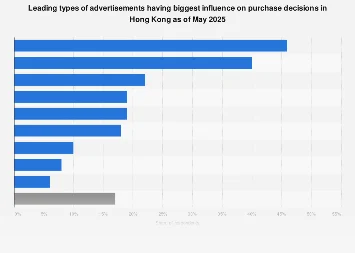
Hong Kong’s advertising landscape in mid-2025 continues to be shaped by a dynamic interplay of established and emerging media, with consumers demonstrating a notable inclination towards both television commercials and digitally-driven sponsored content on social media platforms. A comprehensive survey conducted by Rakuten Insight during May 2025, encompassing 1,815 respondents aged 16 and older, reveals that a significant proportion of media consumers in the Special Administrative Region still find television advertisements influential in their purchasing decisions. While the precise percentage remains proprietary data, industry observers anticipate this figure to be substantial, underscoring the enduring reach and impact of broadcast media in a highly developed market.
Simultaneously, the digital sphere asserts its formidable presence. Sponsored advertisements disseminated across social media platforms were identified as influential by a considerable segment of the surveyed population. This indicates that while traditional channels retain their sway, the targeted and often interactive nature of social media advertising resonates deeply with Hong Kong’s digitally-savvy populace. The ability of these platforms to foster engagement and facilitate direct consumer interaction appears to be a key driver of their effectiveness.
The survey, which allowed respondents to select up to three of the most relevant advertisement types influencing their buying habits, provides a granular view of consumer perceptions. While specific ranking data requires access to premium statistics, the dual prominence of TV and social media sponsored ads suggests a bifurcated media consumption pattern. This implies that advertisers must adopt a multi-channel strategy to effectively capture the attention and influence the decisions of Hong Kong consumers. A purely digital or traditional approach would likely leave significant market segments untapped.
The sustained influence of television advertising in a market as technologically advanced as Hong Kong can be attributed to several factors. Firstly, television maintains a broad demographic reach, effectively capturing older generations and households where traditional media consumption habits are deeply ingrained. Secondly, the visual and auditory nature of TV ads allows for powerful storytelling and emotional connection, which can be particularly effective in building brand awareness and recall. In a competitive retail environment, a strong brand presence cultivated through television can translate directly into sales. Furthermore, the perceived credibility and authority often associated with established broadcast networks can lend weight to advertising messages.
On the other hand, the ascendance of sponsored content on social media is a testament to the evolving digital ecosystem. Platforms such as Facebook, Instagram, X (formerly Twitter), and increasingly TikTok, have become integral to daily life for many Hong Kong residents. Advertisers leverage these platforms to deliver highly personalized and contextually relevant messages, utilizing sophisticated targeting algorithms to reach specific consumer segments based on demographics, interests, and online behavior. The interactive features of social media, such as likes, shares, comments, and direct messaging, enable a two-way dialogue between brands and consumers, fostering a sense of community and brand loyalty. Influencer marketing, a subset of sponsored social media content, also plays a significant role, as consumers often place trust in recommendations from individuals they follow and admire online.
The methodology of the Rakuten Insight survey, conducted online between May 8th and May 30th, 2025, with a sample size of 1,815 respondents aged 16 and above, provides a robust foundation for these findings. The allowance of up to three responses per participant reflects the reality that consumers are exposed to and influenced by multiple advertising formats. This complexity necessitates a nuanced understanding of how different channels work in concert to shape consumer journeys.
From an economic perspective, the advertising industry in Hong Kong is a critical component of the broader consumer economy. The substantial investment in advertising by businesses, both local and international, fuels media outlets, creative agencies, and digital marketing firms. The efficacy of these advertising efforts directly impacts consumer spending, which in turn drives economic growth. The continued influence of TV ads suggests ongoing investment in this traditional medium, while the strong performance of social media ads signals a significant allocation of resources towards digital marketing. This dual investment pattern highlights the maturity of Hong Kong’s advertising market, where innovation and tradition coexist.
Global comparisons offer further context. In many developed economies, a similar trend of television advertising retaining influence alongside the rapid growth of digital channels is observed. However, the specific balance can vary based on cultural nuances, internet penetration rates, and the regulatory environment. For instance, in markets with exceptionally high mobile penetration and a younger demographic, digital advertising might show an even more pronounced dominance. Hong Kong, with its high internet and smartphone adoption rates, is well-positioned to see digital channels exert significant pressure on traditional media, yet the resilience of television indicates unique market dynamics at play.
The economic impact of this advertising mix is multifaceted. For businesses, understanding these consumer preferences is paramount for optimizing marketing budgets and maximizing return on investment. A misplaced allocation of resources can lead to missed opportunities and reduced market share. For consumers, the influence of advertising shapes their awareness of products and services, potentially impacting their financial decisions and lifestyle choices. The ethical considerations surrounding advertising, particularly in the digital space with its potential for persuasive techniques and data privacy concerns, remain an important discussion point for policymakers and industry bodies.
The detailed breakdown of advertisement types and their influence, though not fully disclosed in the publicly available data, would likely reveal further insights into consumer behavior. For example, the influence of search engine marketing, display advertising, video-on-demand ads, and even out-of-home advertising (billboards, transit ads) would provide a more complete picture of the Hong Kong advertising ecosystem. The fact that respondents could choose up to three options suggests that consumers integrate information from various sources when making purchasing decisions, reinforcing the need for integrated marketing campaigns.
In conclusion, the 2025 survey data from Hong Kong paints a picture of a sophisticated advertising market where traditional media like television continue to hold sway, while digital channels, particularly sponsored social media content, have cemented their position as powerful drivers of consumer behavior. This dual influence necessitates a strategic and adaptable approach from advertisers aiming to connect with Hong Kong consumers effectively. The ongoing evolution of media consumption habits suggests that this dynamic interplay will continue to shape the advertising landscape for years to come, presenting both challenges and opportunities for businesses operating in this vibrant global hub.