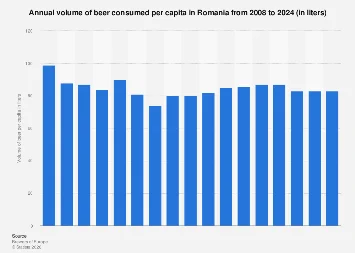
Romania stands as a significant player in the European beer market, with its citizens demonstrating a consistent and robust appetite for the brewed beverage. As of 2024, the nation’s per capita beer consumption paints a compelling picture of established drinking habits, economic influences, and evolving consumer preferences. While precise, up-to-the-minute figures are subject to ongoing data collection and analysis, available trends and projections indicate a per capita consumption rate that places Romania among the higher-ranking nations within the European Union, often hovering around or exceeding 90 liters per person annually. This sustained level of consumption underscores the cultural embeddedness of beer in Romania, a trend that has persisted for decades and shows little sign of abating.
The Romanian beer market is characterized by a dynamic interplay of domestic giants and international players, each vying for market share. Major domestic breweries, such as Ursus Breweries (part of Asahi Breweries) and Timișoreana (part of Heineken Romania), have long held significant sway, leveraging strong brand recognition and extensive distribution networks. These established brands often form the bedrock of household purchasing decisions, particularly for traditional lager styles that dominate the Romanian palate. However, the landscape is also shaped by the strategic presence of global brewing conglomerates, whose investment and innovation bring a wider array of products and marketing strategies to the fore. The competitive intensity within the market necessitates continuous adaptation, with companies investing heavily in product development, marketing campaigns, and supply chain optimization to maintain their standing.
Several macroeconomic factors significantly influence Romania’s beer consumption patterns. Disposable income is a primary driver; as the Romanian economy has grown and living standards have risen, so too has the capacity for consumers to allocate more resources to discretionary spending, including beverages like beer. Economic stability, employment rates, and inflation all play a crucial role in shaping consumer confidence and purchasing power. During periods of economic expansion, per capita consumption tends to remain stable or even see marginal increases. Conversely, economic downturns or periods of high inflation can lead to a slight contraction in volume, as consumers may opt for more budget-friendly alternatives or reduce overall spending. The ongoing integration of Romania into the broader European economic framework also means that global economic trends and trade policies can have ripple effects on the domestic beer industry.
Beyond macroeconomic forces, evolving consumer preferences are subtly reshaping the market. While the traditional lager remains the undisputed king, there’s a growing segment of Romanian consumers, particularly among younger demographics and in urban centers, showing increased interest in craft beers and imported specialty brews. This trend, mirroring global patterns, reflects a desire for greater variety, unique flavor profiles, and a more nuanced appreciation for brewing artistry. Craft beer breweries, though still a nascent segment compared to the mainstream market, are gaining traction, offering a diverse range of styles from IPAs and stouts to sour beers. This burgeoning craft scene, supported by specialized bars, online retailers, and artisanal producers, indicates a maturation of the Romanian beer consumer, who is becoming more adventurous and discerning.
The distribution network for beer in Romania is extensive, encompassing supermarkets, hypermarkets, smaller convenience stores, bars, restaurants, and hotels. Supermarkets and hypermarkets are the primary channels for off-premise consumption, offering a wide selection and often competitive pricing. The hospitality sector, including traditional pubs and modern gastropubs, caters to on-premise consumption and plays a vital role in shaping the social experience associated with drinking beer. Online sales channels are also experiencing a steady rise, offering convenience and access to a broader range of products, particularly for niche or craft offerings. The efficiency and reach of these distribution channels are critical for brewers seeking to maximize their market penetration.
Looking at Romania’s per capita consumption in a global and European context provides further insight. While Romania’s consumption is substantial, it typically ranks below some of the more traditional beer-drinking nations in Central and Eastern Europe, such as the Czech Republic, Poland, and Germany, where per capita figures can often exceed 100 liters. However, Romania consistently outpaces many Western European countries and the EU average. This regional positioning highlights the enduring popularity of beer as a social lubricant and a staple beverage across a significant portion of the continent, with distinct cultural nuances dictating the specific levels of consumption. The similarity in consumption levels across several neighboring countries also suggests shared cultural traditions and perhaps similar economic development trajectories that favor beer as an accessible and widely enjoyed alcoholic beverage.
The taxation of alcoholic beverages, including beer, is another crucial element influencing market dynamics. Excise duties and Value Added Tax (VAT) applied to beer directly impact its final retail price. Government policies regarding alcohol taxation can therefore have a direct bearing on consumption volumes. While governments often seek to balance revenue generation with public health concerns, changes in tax rates can lead to shifts in consumer behavior, potentially driving consumers towards cheaper alternatives or impacting the profitability of breweries. The Romanian government, like its European counterparts, regularly reviews its fiscal policies, and any adjustments to alcohol duties would be closely watched by the industry.
Sustainability and ethical sourcing are also becoming increasingly important considerations for Romanian consumers and breweries alike. As awareness of environmental issues grows, consumers are more likely to favor brands that demonstrate a commitment to sustainable practices, from ingredient sourcing and water usage to packaging and carbon footprint reduction. Breweries are responding by investing in greener technologies, reducing waste, and exploring more eco-friendly packaging options, such as lighter glass bottles or increased use of recycled materials. This trend, while perhaps still in its early stages of widespread adoption in Romania compared to some Western markets, is expected to gain momentum as consumer awareness and regulatory pressures increase.
The future trajectory of Romania’s per capita beer consumption will likely be shaped by a confluence of these factors. Continued economic growth would likely support stable or slightly increasing consumption levels. The ongoing diversification of consumer tastes, particularly the rise of craft and specialty beers, will present both opportunities and challenges for established players, potentially leading to a more segmented and dynamic market. Furthermore, the industry’s ability to adapt to evolving consumer expectations regarding sustainability and responsible consumption will be key to its long-term success. While precise figures for 2024 are subject to the completion of annual reporting, the underlying trends suggest a resilient Romanian beer market, deeply integrated into the nation’s social fabric and responsive to both economic realities and shifting consumer desires. The continued popularity of beer, coupled with the industry’s capacity for innovation and adaptation, points towards a sustained and vibrant market for the foreseeable future.