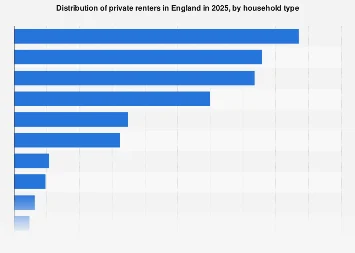
England’s private rental market is a dynamic and evolving landscape, reflecting broader societal shifts in household composition and economic circumstances. As of the survey period spanning April 2024 to March 2025, a significant portion of the UK population, approximately 80% in 2024, were already residing in rental homes, underscoring the centrality of renting as a tenure option. Within England’s private rental sector, the profile of the typical renter is not monolithic, with diverse household types contributing to the aggregate figures. Understanding these distinctions is crucial for policymakers, housing providers, and economic analysts seeking to address the multifaceted challenges and opportunities within the sector.
While precise figures for specific household types within the private rental market for 2025 are contingent on accessing detailed, proprietary data, available insights from broader surveys provide a directional understanding of renter demographics. Historically, and likely continuing into the projected period, couples without dependent children have represented a substantial segment of social renters. This demographic, characterized by established partnerships but without the immediate financial or logistical demands of raising children, often seeks the flexibility and stability offered by rental accommodation. Their presence in the rental market can be driven by various factors, including career mobility, a preference for urban living, or the current unaffordability of homeownership.
However, the private rental sector encompasses a far wider array of household structures. Single individuals, whether young professionals establishing their careers or older individuals whose children have left home, constitute another significant demographic. Their rental needs may differ, ranging from studio apartments in city centers to shared housing arrangements that offer cost-effectiveness and social interaction. The economic circumstances of single renters can vary widely, influencing their housing choices and the types of properties they can afford.
Families with dependent children also play a vital role in the private rental market. These households often require larger properties with more bedrooms and access to amenities such as gardens or proximity to schools. The financial strain of raising children, coupled with the high cost of entry into homeownership, can make private renting a necessity for many families, even if it is not their long-term aspiration. The availability of suitable family-sized rental properties, and the associated rental costs, are critical factors for this group.
The composition of England’s private rental market is also influenced by the increasing diversity of household types. This includes single-parent families, couples living together without being married, and multi-generational households. Each of these groups has unique housing requirements and financial capacities that shape their engagement with the rental sector. For instance, single-parent households may prioritize safety, community, and affordability, while multi-generational families might seek larger properties that can accommodate several adults and potentially children, often with a focus on shared living costs.
Furthermore, the economic climate plays a pivotal role in shaping who rents and why. Periods of economic uncertainty, rising interest rates, and stagnant wage growth can push potential first-time buyers into the rental market, increasing demand and potentially driving up rents. Conversely, periods of strong economic growth and high employment can empower more individuals to save for deposits and enter homeownership, potentially easing pressure on the rental market. The current economic environment, characterized by persistent inflation and concerns about recession, is likely to maintain a significant cohort of renters, as the dream of homeownership recedes further for many.
Globally, England’s private rental market shares common characteristics with those in other developed economies. Cities like London, Berlin, and New York, for example, all grapple with high rental costs, limited supply, and diverse renter demographics. However, the regulatory frameworks and social housing provisions differ significantly, impacting the overall balance of the rental market. Countries with robust social housing programs, for instance, may see a different distribution of household types within the private rental sector compared to those with more market-driven approaches.
The implications of these demographic shifts for the private rental sector are far-reaching. An increased proportion of families with children renting, for example, places greater demand on larger, more affordable properties. A rising number of single individuals may fuel demand for smaller, more flexible living spaces. The aging population, with an increasing number of older renters, presents a need for accessible and secure housing options within the private rental market.
The economic impact of this demographic distribution is also considerable. The rental sector represents a significant component of the UK’s housing economy, influencing consumer spending, construction, and investment. High rental costs can reduce disposable income for renters, impacting other sectors of the economy. Conversely, a stable and accessible rental market can support labor mobility and economic dynamism by allowing individuals to live closer to employment opportunities.
Data from the survey, though requiring access to specific figures for precise quantification, is derived from a substantial sample size, with 16,438 respondents aged 16 and older interviewed face-to-face between April 2024 and March 2025. This methodology, combining interviews and physical surveys, aims to provide a comprehensive snapshot of housing tenure. The survey’s reliance on original data from the Department for Levelling Up, Housing and Communities, licensed under the Open Government License v3.0, ensures a degree of official backing and accessibility for public use, though detailed breakdowns often remain behind proprietary paywalls.
In conclusion, the private rental sector in England is a complex ecosystem shaped by a variety of household types, each with distinct needs and financial realities. As societal trends continue to evolve, so too will the demographics of renters, presenting ongoing challenges and opportunities for policymakers and the industry alike to ensure a sustainable, equitable, and accessible housing market for all. Understanding the nuanced composition of this sector is not merely an academic exercise but a critical imperative for fostering economic stability and social well-being across England.