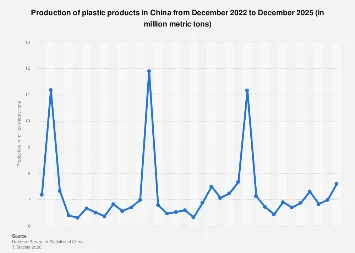
China’s formidable plastic products manufacturing sector is on track for sustained expansion through 2025, a trend that will continue to reshape global supply chains and influence international market dynamics. While precise monthly production figures remain proprietary, projections and industry analyses point towards a consistent upward trajectory for this vital segment of the Chinese economy. This ongoing growth underscores China’s central role as the world’s preeminent producer and exporter of a vast array of plastic goods, impacting industries from consumer electronics and automotive to packaging and construction on a worldwide scale.
The sheer scale of China’s plastic industry is staggering. It accounts for a significant portion of global plastic production, driven by a combination of robust domestic demand, an extensive manufacturing infrastructure, and competitive labor costs. This has allowed the nation to become the primary supplier for many international markets, influencing pricing, innovation, and the availability of plastic components and finished products across the globe. As the world navigates evolving economic landscapes and increasing sustainability concerns, China’s output in this sector will remain a critical barometer for global industrial health and consumer trends.
Factors underpinning this projected growth are multifaceted. The continued urbanization of China fuels demand for construction materials, home goods, and infrastructure components, all heavily reliant on plastic. Furthermore, the nation’s burgeoning middle class represents a significant consumer base for products ranging from electronics and appliances to personal care items and durable goods, many of which incorporate plastic as a key material. The manufacturing prowess of China extends beyond its borders; it serves as the assembly hub for countless global brands, ensuring a perpetual demand for plastic inputs to support this intricate web of production.
Beyond domestic consumption, China’s role as an export powerhouse in the plastic products arena is undeniable. Its producers are adept at meeting diverse international specifications and volume requirements, making them indispensable partners for businesses worldwide. This export orientation means that fluctuations in Chinese plastic production can have ripple effects on global inventories, lead times, and ultimately, the cost of goods for consumers and businesses internationally. For instance, disruptions in China’s manufacturing capacity, whether due to regulatory changes, energy constraints, or geopolitical events, can quickly translate into shortages and price hikes for plastic-dependent goods in markets across North America, Europe, and beyond.
The industry is not without its challenges and evolving dynamics. Growing global awareness and stringent regulations surrounding plastic waste and environmental impact are beginning to influence production methods and material choices. While China has made strides in promoting recycling and developing more sustainable plastic alternatives, the sheer volume of production means that environmental considerations will increasingly shape the sector’s future. This could lead to a greater emphasis on bioplastics, recycled content, and more efficient manufacturing processes. Industry analysts suggest that while these shifts may introduce new costs and complexities, they also present opportunities for innovation and for Chinese manufacturers to lead in the development of greener plastic solutions.
Market data, while not publicly detailed for monthly projections, indicates a strong historical growth trend. For example, in recent years, China’s output of various plastic resins and finished goods has consistently outpaced global averages. This growth is often correlated with broader economic indicators, such as GDP expansion and industrial output. Projections for 2025, even without specific figures, are built upon this established trajectory and the expectation that underlying drivers of demand will persist. The International Monetary Fund’s (IMF) forecasts for China’s economic growth, for instance, often serve as a proxy for the potential health of its manufacturing sectors, including plastics.
Global comparisons further highlight China’s dominance. While other regions, such as Southeast Asia and parts of Europe, also possess significant plastic manufacturing capabilities, China’s scale of operations, comprehensive supply chain integration, and export efficiency remain largely unmatched. The nation’s ability to produce a vast spectrum of plastic products, from intricate electronic components to large-scale industrial sheeting, at competitive price points is a testament to its industrial ecosystem. This has led to a situation where many global markets are heavily reliant on Chinese plastic inputs, making them vulnerable to any significant shifts in production or export policies from Beijing.
The economic impact of China’s plastic production extends far beyond the immediate industry. It supports employment for millions of workers, contributes significantly to the nation’s export revenues, and underpins the competitiveness of numerous downstream industries. For sectors like automotive manufacturing, where plastics are used for everything from interior components to lightweight body panels, China’s production capacity is a critical factor in vehicle pricing and availability. Similarly, the packaging industry, a major consumer of plastics, relies heavily on Chinese suppliers for everything from flexible films to rigid containers, impacting the cost and logistics of food, beverages, and consumer goods globally.
Looking ahead to 2025, several key trends are likely to shape China’s plastic production landscape. Continued investment in advanced manufacturing technologies, automation, and research and development will be crucial for maintaining competitiveness and addressing quality demands. The ongoing push for higher value-added products, moving beyond basic commodity plastics to specialized polymers and engineered materials, is also expected to intensify. Furthermore, the geopolitical environment and evolving trade relationships will undoubtedly play a role, potentially influencing export markets and sourcing strategies for international buyers.
In conclusion, while specific monthly data points for China’s plastic product production in 2025 are not publicly disclosed, the overarching trend points towards continued and robust growth. This expansion is driven by a powerful combination of domestic demand, export strength, and a deeply entrenched manufacturing ecosystem. As global industries continue to depend on the efficient and large-scale output of plastic goods, China’s role as the world’s plastic powerhouse is set to endure, with its production figures remaining a critical indicator of global economic activity and industrial trends. The sector’s evolution will also be increasingly influenced by sustainability imperatives and technological advancements, promising a dynamic and strategically important period for China’s plastic industry on the world stage.