The landscape of career longevity is undergoing a profound transformation, with younger generations exhibiting markedly different patterns of job tenure compared to their predecessors. While historical norms often painted a picture of long-term commitment to a single employer, contemporary data suggests that Millennials and Generation Z are embracing a more fluid approach to their professional lives, impacting workforce dynamics and economic forecasting. This evolving trend raises critical questions about employee loyalty, career progression, and the very definition of a successful career in the 21st century.
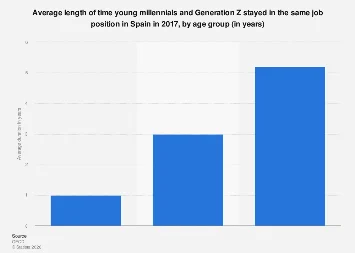
The concept of "job for life" has largely become an anachronism for many in the current workforce. While specific averages can fluctuate based on the year of data collection and methodology, analyses from recent years, including those examining figures around 2017, have consistently pointed to shorter average tenures for younger cohorts. This is not necessarily indicative of a lack of ambition or commitment, but rather a reflection of shifting societal values, economic realities, and the evolving nature of work itself. For instance, data from sources like Statista, which meticulously track employment statistics, have highlighted that individuals born in the latter decades of the 20th century and early 21st century are less likely to remain in a single role for extended periods.
Several intertwined factors contribute to this phenomenon. Firstly, economic volatility has played a significant role. Recessions and periods of economic uncertainty, such as the aftermath of the 2008 financial crisis, have led many younger workers to seek more stable or better-paying opportunities as they emerge from education or enter the workforce. This has fostered a mindset of continuous evaluation and adaptation, where a perceived better prospect elsewhere can lead to a swift career move. The gig economy and the rise of freelance work further contribute to this fluidity, offering flexibility and diverse experiences that may not be achievable in traditional employment structures.
Secondly, the pursuit of skill development and career growth has become a primary driver. Millennials and Gen Z are often characterized by a strong desire for continuous learning and advancement. If a current role does not offer opportunities for acquiring new skills, taking on more responsibility, or moving up the corporate ladder, individuals are more inclined to explore external avenues. This proactive approach to career management contrasts with earlier generations who might have prioritized seniority and longevity within a single organization. The availability of online learning platforms and a more transparent job market, facilitated by digital tools, empowers younger workers to readily identify and pursue roles that align with their evolving professional aspirations.
Furthermore, the generational shift in priorities cannot be overlooked. While financial security remains important, younger generations often place a higher value on work-life balance, purpose-driven work, and organizational culture. Companies that fail to foster an inclusive, supportive, and flexible environment may find themselves struggling to retain talent from these demographics. The rise of remote work, a trend significantly accelerated by recent global events, has further blurred traditional boundaries and increased expectations for flexibility, making geographical limitations less of a barrier to job mobility.
The economic implications of this trend are multifaceted. On one hand, increased job mobility can lead to a more dynamic labor market, with talent flowing to where it is most valued and productive. This can foster innovation and efficiency as companies compete for skilled workers. Employees moving between roles can also bring fresh perspectives and new ideas to different organizations, potentially boosting productivity and competitiveness. The broader economy can benefit from a workforce that is adaptable and responsive to changing industry demands.
However, there are also potential drawbacks. High employee turnover can impose significant costs on businesses, including recruitment expenses, training investments, and the loss of institutional knowledge. Frequent transitions can disrupt team cohesion and project continuity, potentially impacting productivity and long-term strategic goals. For employers, it necessitates a constant focus on talent acquisition and retention strategies, demanding a deeper understanding of what motivates and engages the modern workforce. This includes investing in robust onboarding processes, continuous professional development programs, and competitive compensation and benefits packages that extend beyond mere salary.
Global comparisons reveal that this trend is not confined to specific regions. While the pace and intensity may vary, similar patterns of evolving job tenure are observable across developed economies in North America, Europe, and parts of Asia. Countries with strong educational systems and developed labor markets often see these generational shifts manifest more prominently. For instance, in countries with highly competitive job markets, the emphasis on acquiring diverse experiences and skills through multiple roles can be a strategic imperative for career advancement.
The data underscores a critical imperative for businesses to adapt their HR strategies. Simply expecting loyalty based on past norms is no longer a viable approach. Instead, organizations must actively cultivate an environment that fosters engagement, growth, and a sense of purpose. This involves transparent communication about career paths, offering opportunities for upskilling and reskilling, and embracing flexible work arrangements where feasible. Leaders need to understand that retaining talent today requires a more sophisticated and employee-centric approach.
Looking ahead, it is likely that job tenure will continue to be a dynamic metric. As Millennials move further into their prime working years and Generation Z becomes a larger segment of the workforce, their influence on employment trends will only grow. The focus may shift from the sheer duration of employment to the quality and impact of an individual’s contributions across various roles and organizations. The ability to demonstrate a track record of adaptability, continuous learning, and value creation will likely become more significant than a lengthy tenure at a single company. This evolution in the labor market demands foresight and strategic agility from both individuals navigating their careers and organizations seeking to build and sustain successful workforces.