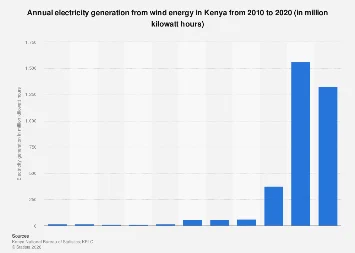
Kenya’s electricity generation from wind energy has experienced a significant and sustained upward trajectory, establishing the nation as a frontrunner in East Africa’s renewable energy landscape and a compelling case study for developing economies seeking to decarbonize their power sectors. This growth is not merely a statistical uptick; it represents a strategic pivot towards cleaner, more sustainable energy sources, driven by a confluence of supportive government policies, substantial international investment, and the country’s exceptional wind resources. The increasing contribution of wind power is crucial for meeting Kenya’s burgeoning energy demand, enhancing energy security, and achieving its climate change mitigation commitments.
The visual representation of Kenya’s wind energy output, typically presented through charts and statistical data, underscores a consistent and accelerating trend over the past decade. While specific figures fluctuate based on annual wind patterns, capacity additions, and grid integration, the overarching narrative is one of robust expansion. This expansion is largely attributable to the development of large-scale wind farms, most notably the Lake Turkana Wind Power Project, which, upon its commissioning, became one of the largest wind power stations in Africa. Its 310 MW capacity significantly boosted Kenya’s installed wind power generation capabilities, demonstrating the viability and scale of wind energy deployment in the region. Beyond this flagship project, numerous smaller and medium-sized wind energy initiatives have been developed, collectively contributing to the diversification of Kenya’s energy mix.
This surge in wind energy capacity is not an isolated phenomenon but is deeply intertwined with Kenya’s broader energy strategy. The government’s "Vision 2030" economic blueprint, which aims to transform Kenya into a newly industrializing, middle-income country, places a strong emphasis on energy as a key enabler of development. Recognizing the volatility of fossil fuel prices and the imperative to reduce carbon emissions, policymakers have actively pursued a strategy of diversifying the energy portfolio, with a particular focus on renewable sources like geothermal, solar, and wind. The Wind Energy Development and Investment Promotion Act, along with favorable feed-in tariffs and tax incentives, have played a pivotal role in attracting both domestic and international capital into the sector.
Globally, Kenya’s progress in wind energy mirrors a broader trend of increasing reliance on renewable sources to power economies. Countries like Denmark, Germany, and China have already established themselves as global leaders in wind power, with significant installed capacities and advanced technological integration. However, Kenya’s achievement is particularly noteworthy given its status as a developing nation. It demonstrates that with the right policy framework and investment climate, emerging economies can leapfrog traditional fossil fuel-dependent development pathways and embrace a cleaner energy future. The success of Kenya’s wind sector provides valuable lessons for other African nations seeking to harness their own renewable energy potential, offering a replicable model for sustainable development.
The economic impact of this wind energy expansion extends far beyond mere electricity generation. The construction and operation of wind farms create direct and indirect employment opportunities, from skilled engineers and technicians to local labor for infrastructure development. Furthermore, the increased availability of reliable and competitively priced electricity from wind sources is a critical factor in attracting foreign direct investment and fostering industrial growth. Businesses benefit from lower and more predictable energy costs, enhancing their competitiveness in both domestic and international markets. The reduction in reliance on imported fossil fuels also leads to significant foreign exchange savings, bolstering the national economy and improving the balance of payments.
Market data indicates a strong investor appetite for Kenya’s renewable energy sector. International financial institutions, development banks, and private equity firms have channeled substantial funding into wind energy projects, recognizing the country’s favorable investment environment and the immense potential of its wind resources. This influx of capital not only finances project development but also facilitates the transfer of technology and expertise, further strengthening the local renewable energy ecosystem. The competitive bidding processes for new projects are increasingly driving down the levelized cost of electricity (LCOE) from wind, making it an economically attractive alternative to conventional power sources.
Challenges, however, remain. Integrating variable renewable energy sources like wind into the national grid requires significant investment in grid infrastructure, including transmission lines and energy storage solutions, to ensure stability and reliability. Policy consistency and continued government support are crucial to maintain investor confidence. Furthermore, ensuring equitable benefit sharing with local communities in areas where wind farms are established is vital for long-term social acceptance and sustainable development. Addressing these challenges proactively will be key to fully realizing the potential of Kenya’s wind energy sector.
The ongoing development of wind energy in Kenya is a testament to the nation’s commitment to a sustainable and prosperous future. As technology advances and costs continue to decline, wind power is poised to play an even more significant role in powering Kenya and the wider East African region. The country’s success story serves as an inspiration, demonstrating that a bold vision, strategic policy, and robust investment can unlock the transformative power of renewable energy, paving the way for a cleaner, more secure, and economically vibrant future. The statistics charting this growth are not just numbers; they are indicators of a nation actively shaping its energy destiny and contributing to the global fight against climate change.