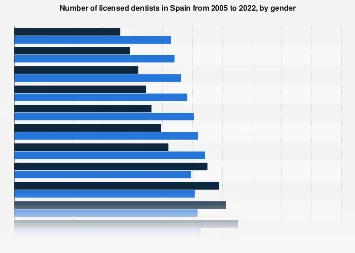
The landscape of dental healthcare in Spain, as of 2022, presented a nuanced picture of professional demographics, with registered dentists exhibiting a clear gender distribution that aligns with broader international trends in healthcare professions. While specific figures from that year indicate a substantial number of practitioners, a deeper analysis reveals evolving patterns in gender representation within this vital medical field. Understanding this demographic breakdown is crucial for policymakers, educational institutions, and industry stakeholders aiming to ensure equitable access to dental services and to forecast future workforce needs.
In 2022, Spain’s registry of licensed dental professionals showcased a significant number of individuals dedicated to oral health. The precise total number of registered dentists is a critical metric for assessing the capacity of the national healthcare system to meet public demand for preventative, restorative, and cosmetic dental care. This figure, when viewed in conjunction with population size, provides a baseline understanding of dentist-to-patient ratios, a key indicator of healthcare accessibility and potential strain on services. For instance, a higher number of dentists per capita generally suggests a more robust and accessible dental care infrastructure. While detailed breakdowns of the total figure are not universally published in real-time for every nation, available data points to a considerable professional body in Spain.
Examining the gender composition of this professional cohort in 2022 reveals a dynamic that has been observed across many developed economies. Historically, medicine and dentistry were male-dominated fields. However, over the past few decades, there has been a significant and consistent shift towards greater female participation. Spain’s dental sector is no exception to this global phenomenon. The data for 2022 suggests that while men still constituted a significant portion of registered dentists, women have increasingly entered and established themselves within the profession. This trend is often attributed to a confluence of factors, including greater access to higher education for women, evolving societal expectations regarding women’s professional roles, and a perceived attractiveness of dentistry as a profession that can offer a reasonable work-life balance, particularly when compared to some other medical specialties.
The increasing feminization of the dental workforce has profound implications. From an economic perspective, it signals a diversification of skills and perspectives entering the field. It also has implications for practice ownership and management, potentially influencing business models and patient-provider interactions. Furthermore, the growing number of female dentists may impact the demand for flexible working arrangements and specialized training pathways. As more women enter the profession, the need for maternity leave policies, part-time work options, and leadership development programs tailored to support their career progression becomes more pronounced.
Globally, this trend of increasing female representation in dentistry is widespread. Countries such as the United States, Canada, the United Kingdom, and Australia have all reported similar patterns, with dental schools in these nations often seeing a majority of female students enrolled. This global convergence suggests that the underlying drivers – educational opportunities, societal shifts, and the nature of the profession itself – are operating on a consistent international scale. Spain’s experience, therefore, is not an isolated case but rather a reflection of a broader transformation in the global oral healthcare landscape.
The economic impact of this demographic shift is multifaceted. A larger and more diverse dental workforce can lead to increased competition, potentially driving innovation and improving the quality and affordability of services for consumers. It can also contribute to the expansion of dental tourism, as countries with a strong and accessible dental sector may attract international patients seeking treatment. Moreover, the economic activity generated by the dental profession extends beyond direct patient care, encompassing the manufacturing and distribution of dental equipment and supplies, as well as related support services.
However, this demographic evolution also presents challenges. As the number of dentists grows, ensuring adequate postgraduate training opportunities and addressing potential issues of oversupply in certain regions or specialties become important considerations. The aging demographics of some established male practitioners, coupled with the influx of younger, often female, professionals, may necessitate strategic workforce planning to ensure continuity of care and knowledge transfer. Furthermore, the differing career trajectories and preferences between genders could influence practice ownership rates and the distribution of dentists across various practice types (e.g., private practice, public health, academia).
Statistics on gender distribution within professions are not merely academic data points; they are critical indicators of societal progress and can inform proactive policy interventions. For example, understanding the proportion of male and female dentists can help in designing targeted initiatives to support women in leadership roles within dental associations or to encourage men to enter fields where they might be underrepresented, if such a trend were to emerge in specific sub-specialties. In Spain, as in many other countries, the continued integration of women into dentistry is likely to shape the future of oral healthcare delivery, making it more inclusive, accessible, and responsive to the diverse needs of the population. The 2022 figures serve as a snapshot, but the ongoing trajectory indicates a profession that is increasingly reflecting the society it serves.