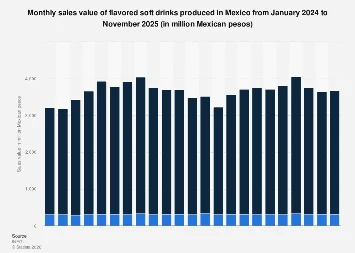
In November 2025, the Mexican market for flavored soft drinks experienced a significant valuation, reaching an estimated total sales value of approximately 7.5 billion Mexican pesos. This figure underscores the enduring popularity and economic contribution of this segment within the broader beverage industry. A substantial portion of this revenue was driven by non-returnable bottled beverages, which commanded an estimated 7.3 billion Mexican pesos. Returnable bottled drinks, while representing a smaller share, still contributed a notable sum of nearly 200 million Mexican pesos to the overall market value. These preliminary figures, gathered from January 2024 through November 2025, offer a snapshot of consumer purchasing trends and the operational dynamics of soft drink producers in the country.
The distinction between returnable and non-returnable packaging is a crucial element in understanding the Mexican soft drink landscape. Non-returnable formats, often characterized by single-use plastic bottles and aluminum cans, cater to convenience and impulse purchases, aligning with modern consumer lifestyles and retail distribution models. Their dominance in sales value suggests a strong preference for immediate consumption and ease of disposal. Conversely, returnable bottles, a more traditional packaging method, often involve a deposit system, encouraging reuse and reflecting a consumer segment that prioritizes value and environmental consciousness, or simply benefits from the cost savings associated with returning empties. The sustained presence of returnable options indicates a dual market approach, where producers cater to diverse consumer preferences and operational efficiencies.
Mexico’s soft drink market is one of the largest globally, with per capita consumption rates that consistently rank among the highest. This high demand is fueled by several factors, including a young demographic, a strong cultural affinity for sweetened beverages, and extensive distribution networks that reach even remote areas. The flavored segment, encompassing a wide array of fruit-based, cola, and other specialty profiles, represents a significant sub-sector within this expansive market. The sales figures for November 2025 suggest a market that, despite potential economic fluctuations, maintains a resilient demand for flavored soft drinks, indicating a stable consumer base and effective market penetration by manufacturers.
Analyzing the breakdown of sales value, the substantial lead of non-returnable bottles (approximately 97.3% of the total flavored soft drink sales value in November 2025) highlights key market dynamics. This preference for non-returnable packaging can be attributed to several strategic advantages for both consumers and producers. For consumers, it offers immediate convenience without the obligation to return containers, aligning with busy schedules and on-the-go consumption habits. Retailers benefit from lighter inventory management and reduced logistical complexities associated with collection and return systems. From a production standpoint, while the initial cost of non-returnable packaging might be higher, the streamlined supply chain, reduced handling, and potential for higher sales volumes often offset these costs. Furthermore, advancements in materials science have led to lighter and more sustainable non-returnable options, mitigating some of the environmental concerns historically associated with single-use plastics.
The contribution of returnable bottles, though smaller in absolute value, remains economically significant and strategically important. This segment often targets consumers who are more price-sensitive or environmentally aware. The cost-effectiveness of refillable bottles, when amortized over multiple uses, can translate into lower per-unit prices for consumers, fostering brand loyalty and capturing a segment of the market that might otherwise be deterred by higher price points. For producers, returnable systems can offer long-term cost savings on packaging materials and contribute to a circular economy model, aligning with growing global sustainability mandates and corporate social responsibility initiatives. The continued presence of this segment suggests that Mexican consumers, despite a strong inclination towards convenience, also value and participate in more traditional, resource-efficient consumption patterns.
The economic impact of the flavored soft drink industry in Mexico extends beyond direct sales. It encompasses job creation across manufacturing, distribution, marketing, and retail sectors. The industry also contributes significantly to government revenues through taxes. Moreover, the sector is a major player in the agricultural supply chain, sourcing ingredients such as sugar, flavorings, and water, thereby supporting rural economies. The sustained sales performance observed in November 2025 suggests continued economic activity and employment within these interconnected sectors.
Globally, the soft drink market is highly competitive, with evolving consumer preferences shifting towards healthier options and increased scrutiny on sugar content. However, in many emerging markets like Mexico, the demand for traditional, flavored soft drinks remains robust, driven by cultural habits and affordability. Countries in Latin America, Southeast Asia, and parts of Africa often exhibit similar consumption patterns, where the value proposition of sweetened beverages is strong. Mexico’s market trends, therefore, provide valuable insights into the dynamics of large, established soft drink markets that are balancing traditional demand with emerging global health and sustainability considerations.
Looking ahead, the trajectory of Mexico’s flavored soft drink market will likely be influenced by a confluence of factors. Regulatory changes concerning sugar content, taxation, and packaging, along with evolving consumer health consciousness, will undoubtedly play a role. The industry’s ability to innovate, whether through product reformulation, the introduction of lower-sugar variants, or the adoption of more sustainable packaging solutions, will be critical in maintaining its market position. The preliminary data from November 2025, however, paints a picture of a resilient and substantial market segment that continues to be a vital component of Mexico’s consumer goods economy. The ongoing interplay between consumer convenience, affordability, and emerging lifestyle trends will shape the future sales values and packaging preferences within this dynamic sector. The sustained strength of both returnable and non-returnable formats indicates a mature market capable of accommodating diverse consumer needs and operational strategies.