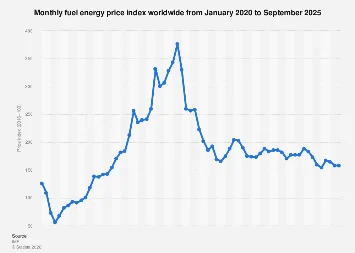
The global energy price index registered 157.89 points in September 2025, a notable increase from the baseline of 100 established in 2016. This figure represents a contraction from previous months, primarily driven by a decline in natural gas prices, which form a significant component of the comprehensive fuel energy index that also tracks crude oil, coal, and propane. While the headline figure indicates a moderation, it masks the underlying volatility and persistent supply-side pressures that have characterized energy markets over the past few years, creating a challenging environment for businesses and consumers worldwide.
The period between the summer of 2020 and the summer of 2022 witnessed an unprecedented surge in key energy commodities. The global natural gas price index experienced a dramatic escalation, climbing by nearly eleven-fold its 2016 value. Concurrently, the global coal price index saw a comparable, albeit slightly less pronounced, rise of almost seven-fold. This dramatic ascent was largely a consequence of geopolitical realignments and disruptions, with the conflict between Russia and Ukraine acting as a significant catalyst. The war’s impact rippled through global supply chains, constricting the availability of critical energy resources and driving up costs across the board. European nations, heavily reliant on Russian gas, scrambled to secure alternative supplies, leading to fierce competition and inflated prices in international markets. This period underscored the interconnectedness of global energy security and the profound economic consequences that arise from geopolitical instability.
Beyond the immediate impact of the Russia-Ukraine conflict, a new layer of economic uncertainty began to manifest in 2025, stemming from escalating trade tensions and the imposition of tariffs. Specifically, tariffs introduced by the Trump administration introduced significant headwinds for global commerce. The potential for widespread implementation of these tariffs threatened to disrupt bilateral trade flows, particularly between the world’s two largest economies. By April 2025, import tariffs levied on goods exchanged between China and the United States had surpassed 130 percent on both sides, while tariffs imposed by each nation on imports from the rest of the world hovered around 10 percent. The sheer scale of these bilateral tariffs—with the U.S. reaching a high of 134.7 percent on Chinese imports and China retaliating with a 147.6 percent tariff on U.S. goods—signaled a significant departure from previous trade norms.
Early economic analyses projected a tangible impact on the U.S. economy. Estimates suggested that the proposed tariffs could lead to a reduction in GDP growth by approximately 0.4 percent. This projected slowdown was primarily attributed to the anticipated contraction in trade volumes with key partners, including Mexico, Canada, and China. The ripple effects of such trade friction extend beyond direct import-export costs, influencing investment decisions, consumer prices, and overall business confidence. Industries heavily reliant on imported components or with significant export markets faced increased operational costs and reduced competitiveness, potentially leading to job losses and slower economic expansion. The imposition of tariffs can also trigger retaliatory measures, initiating a cycle of escalating trade barriers that can further destabilize global economic relations.
The complex interplay of supply constraints, geopolitical events, and trade policy has created a challenging landscape for energy markets. While the September 2025 energy price index shows a slight abatement, the underlying factors driving volatility remain. The world continues to grapple with the long-term implications of shifting energy sources, the transition to cleaner alternatives, and the persistent influence of geopolitical considerations on the availability and cost of vital commodities. For businesses, navigating this environment requires robust risk management strategies, diversification of supply chains, and a keen understanding of the evolving global economic and political currents. Consumers, in turn, face the ongoing challenge of adapting to fluctuating energy costs, which can impact household budgets and influence broader inflationary pressures. The energy sector’s trajectory in the coming years will undoubtedly be shaped by the resolution of these multifaceted challenges, with significant implications for global economic stability and growth. The trend toward energy independence and the pursuit of diversified energy portfolios are likely to accelerate as nations seek to mitigate the risks associated with concentrated supply sources and geopolitical vulnerabilities. Furthermore, the ongoing investment in renewable energy technologies, while offering a long-term solution to price volatility and environmental concerns, presents its own set of transitional challenges, including infrastructure development, grid integration, and the need for consistent policy support. The global energy market in 2025 stands as a microcosm of the broader economic challenges, demanding adaptability, foresight, and a willingness to embrace transformative change.