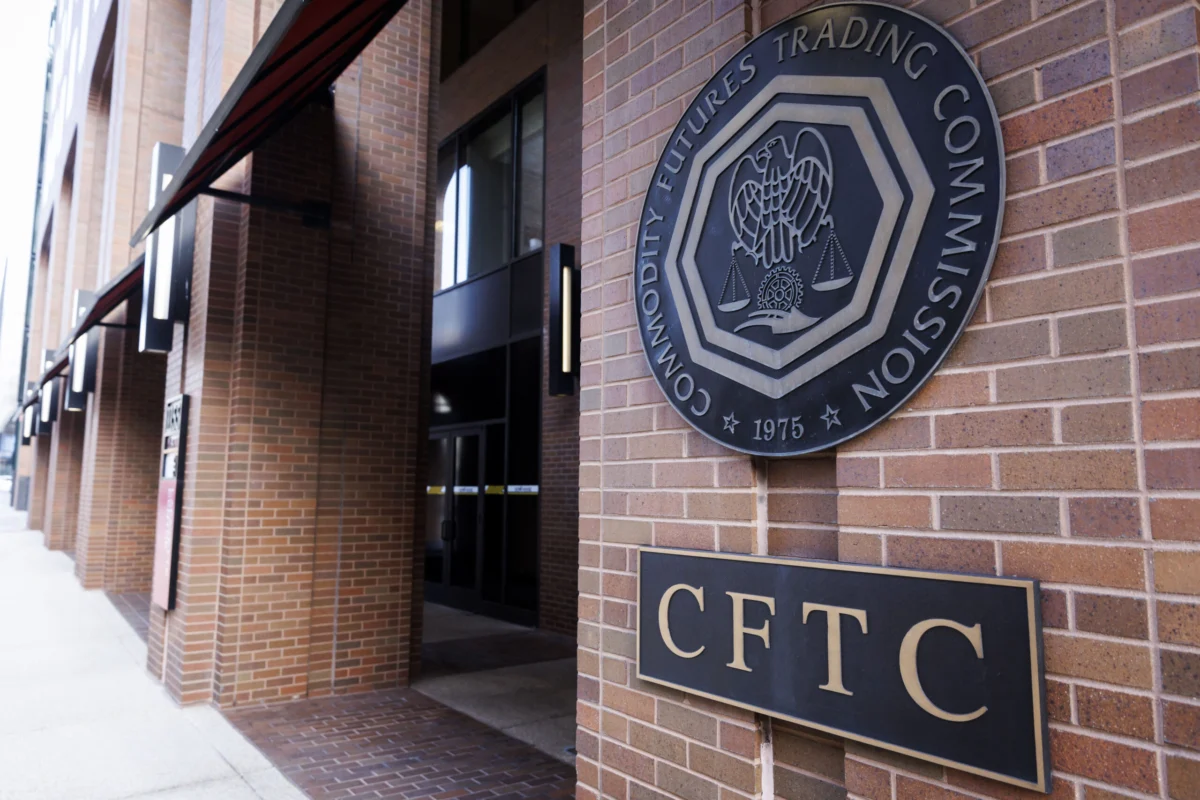
The legal landscape governing the intersection of financial derivatives and sports gambling has reached a critical flashpoint, as a massive coalition of 44 state attorneys general formally challenged the federal government’s authority to regulate sports-related event contracts. In a scathing letter addressed to the Commodity Futures Trading Commission (CFTC), the bipartisan group of top state legal officials argued that the federal agency is attempting to overstep its statutory boundaries by asserting control over what they categorize as gambling—a domain traditionally and constitutionally reserved for state-level oversight. This pushback marks a significant escalation in a jurisdictional war that could ultimately reshape the trillion-dollar landscape of American wagering and financial speculation.
The conflict centers on the burgeoning industry of prediction markets—platforms where participants trade contracts based on the outcomes of real-world events, ranging from political elections to the results of professional sporting matches. While these platforms have existed in various forms for years, their popularity and trading volumes have exploded recently, fueled by high-profile global events such as the 2026 FIFA World Cup. This surge in activity has forced a confrontation between the CFTC, which views these contracts as financial derivatives known as "swaps," and state governments, which see them as a digital evolution of the sports betting industry they already regulate and tax.
Led by Ohio Attorney General Andy Wilson, the coalition’s letter was timed to coincide with the expiration of the public comment period for the CFTC’s first major proposed rule regarding prediction market regulation. The proposed measure specifically targets exchanges’ sports offerings, seeking to establish a federal framework for what can and cannot be traded. However, the 44 attorneys general—representing a near-unanimous front across the political spectrum, with the notable exceptions of Florida, Georgia, New Hampshire, Missouri, and Texas—contend that the agency’s proposal is "arbitrary and capricious" and lacks a firm basis in the U.S. Constitution.
The core of the legal argument rests on the definition of "gaming" and the scope of the Commodity Exchange Act (CEA). The CFTC’s proposed rule attempts to craft a federal definition of gaming as an activity performed for recreation or entertainment, governed by specific rules, and determined by measurable outcomes of skilled activity. By classifying sports-related event contracts under this umbrella, the CFTC asserts it has the exclusive jurisdiction to oversee them as regulated swaps. The states, conversely, argue that once a contract is tied to the outcome of a sporting event, it ceases to be a traditional financial instrument and becomes a bet, falling squarely under the purview of state gambling commissions.
This semantic and legal distinction has massive economic implications. Since the Supreme Court’s 2018 decision to strike down the Professional and Amateur Sports Protection Act (PASPA), more than 35 states have legalized some form of sports betting, generating billions of dollars in tax revenue and creating a complex web of local licensing requirements. If the CFTC successfully asserts federal preemption, it could potentially bypass these state frameworks, depriving states of revenue and regulatory control while creating a secondary, federally-sanctioned market for sports wagering that operates under different rules than local sportsbooks.
Industry giants have also waded into the fray, reflecting the fractured nature of the market’s interests. CME Group, one of the world’s largest derivatives marketplaces, expressed strong opposition to the CFTC’s proposed definition of gaming. In its own correspondence, CME’s general counsel, Jonathan Marcus, argued that by defining "gaming" based on the underlying sport rather than the financial nature of the wager, the CFTC is effectively attempting to preempt state laws in a way that constitutes "striking overreach." The irony of this position is not lost on market observers; while CME opposes the CFTC’s specific rulemaking, it simultaneously serves as the regulated exchange for FanDuel’s prediction markets, illustrating the deeply intertwined relationship between traditional finance and modern sports betting.

In contrast, newer entrants like Rothera, a prediction market platform that launched in mid-2026, have supported the CFTC’s approach. Rothera’s leadership argues that a definition centered on the activity itself is preferable to one centered on "wagering" or "risking something of value." The company’s perspective is that if the definition were based solely on the act of wagering, it would capture nearly every event contract in existence, potentially stifling the growth of markets tied to non-sporting events like economic indicators, weather patterns, or corporate earnings.
The economic pressure to resolve this dispute is mounting as prediction markets transition from niche intellectual curiosities to mainstream financial tools. During the 2026 FIFA World Cup, platforms saw unprecedented liquidity, with hundreds of millions of dollars flowing through contracts predicting everything from match winners to individual player statistics. Proponents of these markets argue they provide valuable "price discovery" and reflect the "wisdom of crowds" more accurately than traditional polling or expert analysis. However, regulators and state officials worry that without clear boundaries, these platforms could facilitate unchecked gambling under the guise of financial innovation, potentially leading to market manipulation or consumer protection failures.
The battle is already playing out in a patchwork of contradictory court rulings across the United States. In Michigan, a judge recently dealt a blow to the industry by blocking the platform Kalshi from offering sports-related bets, siding with state regulators who argued the offerings violated local gambling laws. Just days later, however, a federal judge in Minnesota issued a temporary injunction against a statewide ban on prediction markets, allowing them to continue operating while the legal merits are debated. These diverging outcomes have created a regulatory "gray zone" that leaves both platforms and participants in a state of perpetual uncertainty.
The CFTC has not backed down, engaging in active litigation with at least nine states to defend its claim of exclusive jurisdiction. The commission’s stance is rooted in the belief that the modern financial system requires a unified federal hand to oversee complex derivatives, regardless of whether the underlying event is the price of oil or the outcome of the Super Bowl. They argue that federal preemption is necessary to prevent a fragmented market where different rules apply in every state, which could hinder the efficiency of national exchanges.
The coalition of attorneys general, however, remains steadfast in the belief that the federal government is attempting to seize power that was never granted by Congress. Their letter suggests that the CFTC should "start afresh" and explicitly clarify that sports bets are subject to state law rather than being traded on designated contract markets (DCMs). This "states’ rights" argument carries significant weight in the current judicial climate, where the federal courts have shown an increasing willingness to limit the "administrative state" and curb the power of executive agencies to interpret their own statutory authority.
As the public comment period closes and the CFTC moves toward a final rule, the inevitability of a Supreme Court showdown looms large. Legal experts suggest that the high court will eventually be forced to decide whether the Commodity Exchange Act can be stretched to cover the multi-billion-dollar sports wagering industry. Until then, the industry remains at a crossroads. The outcome will determine whether prediction markets will be integrated into the regulated financial architecture of the United States or if they will be siloed as a state-regulated form of entertainment.
For the 44 states involved, the fight is about more than just sports; it is about the principle of federalism and the right of local governments to oversee the social and economic activities within their borders. For the CFTC and the platforms it seeks to regulate, it is a quest for a modernized financial framework that reflects the digital realities of the 21st century. As billions of dollars continue to move through these markets, the resolution of this jurisdictional tug-of-war will have lasting consequences for investors, sports fans, and the very definition of what constitutes a "market" in the American economy.