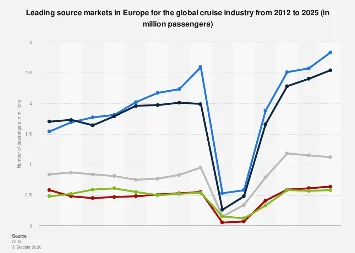
The European cruise industry is poised for continued growth in 2025, with key source markets demonstrating robust demand and contributing significantly to the sector’s overall passenger volume. Projections indicate a consistent upward trend, solidifying the continent’s position as a vital engine for global cruising. While specific passenger figures for 2025 remain under proprietary analysis, historical data and market trends strongly suggest that Germany, the United Kingdom and Ireland, Italy, Spain, and France will continue to dominate the European passenger landscape. These nations, collectively representing a substantial portion of the cruise-going population, are expected to collectively drive millions of passengers to embark on voyages annually.
Germany has consistently held the top spot among European source markets, a testament to its affluent population, strong travel culture, and a growing appreciation for the comprehensive holiday experience offered by cruises. In 2025, it is anticipated that Germany will once again lead the pack, likely accounting for the largest single share of European cruise passengers. The German market is characterized by a discerning traveler base that values high-quality service, diverse itineraries, and a strong emphasis on sustainability – factors that cruise lines are increasingly prioritizing to capture and retain this lucrative demographic. The proximity of major German ports to popular cruising grounds in the Baltic Sea and Northern Europe also plays a crucial role in its sustained dominance.
Following closely behind, the United Kingdom and Ireland combined represent another powerhouse for European cruise passenger generation. This region boasts a long-standing affinity for sea travel, with a well-established cruise culture that spans generations. The UK market is known for its diverse preferences, ranging from short, accessible breaks to extensive world voyages. The presence of numerous cruise lines with strong operational bases in the UK, coupled with the country’s extensive coastline and accessible ports, further bolsters passenger numbers. The economic resilience of this market, despite global economic fluctuations, underscores its importance to cruise operators.
Italy, a nation steeped in maritime history and with a deep-seated love for the sea, continues to be a cornerstone of the European cruise market. Italian passengers are often drawn to the cultural immersion and historical exploration that cruise itineraries, particularly those in the Mediterranean, offer. The strong presence of Italian cruise lines and a robust domestic tourism infrastructure contribute to a steady flow of passengers. Furthermore, Italy’s strategic geographical location makes it an ideal departure point for a multitude of popular Mediterranean routes, enhancing its appeal to both domestic and international cruise enthusiasts.
Spain, with its vibrant culture, extensive coastline, and popular holiday destinations, also remains a critical source market for European cruises. Spanish travelers are increasingly embracing the cruise product, attracted by its all-inclusive nature, diverse entertainment options, and the ability to visit multiple destinations without the hassle of frequent packing and unpacking. The growth of cruise terminals in major Spanish ports, such as Barcelona and Palma de Mallorca, has facilitated easier access and encouraged more domestic embarkations, further solidifying Spain’s position as a leading passenger generator.
France, though perhaps historically trailing slightly behind the top contenders, is a market with significant untapped potential and is projected to see continued growth in cruise passenger numbers. French travelers are increasingly recognizing the value and variety offered by cruise holidays, with a growing interest in expedition cruises, luxury voyages, and longer itineraries. The French government and tourism bodies have also been actively promoting maritime tourism, which is expected to further stimulate demand. The burgeoning popularity of river cruising within France also suggests a broader openness to waterborne travel, which can serve as a gateway to ocean cruising.
The economic impact of these leading European cruise passenger markets extends far beyond the direct revenue generated by ticket sales. The cruise industry is a significant contributor to employment, both directly within cruise lines and associated businesses, and indirectly through the supply chains that support ship operations and port services. Furthermore, cruise passengers inject substantial sums into local economies through shore excursions, onboard spending, and pre- and post-cruise stays. For many European coastal communities, cruise tourism represents a vital source of income and employment, particularly in regions that may have fewer traditional economic drivers.
Statistics from the Cruise Lines International Association (CLIA) have historically highlighted the substantial economic contribution of the cruise industry in Europe. For instance, prior to recent global disruptions, the industry supported hundreds of thousands of jobs and generated billions of euros in economic activity across the continent. The recovery and projected growth for 2025 suggest a return to, and potentially surpassing, these figures. The continued investment by cruise lines in new, more sustainable ships also signals a long-term commitment to the European market, further underpinning its economic significance.
Globally, Europe stands as a primary passenger sourcing region, second only to North America. The unique blend of cultural heritage, diverse landscapes, and sophisticated travel infrastructure makes European consumers a prime target for cruise operators worldwide. The increasing diversification of cruise products, catering to a wider range of interests and budgets, from ultra-luxury to adventure and family-focused holidays, is crucial in sustaining and expanding passenger numbers from these key European markets. As cruise lines continue to innovate and adapt to evolving consumer preferences, the outlook for Europe’s leading cruise passenger markets in 2025 remains exceptionally strong, promising a vibrant and economically significant year for the sector.