The traditional trajectory of the American success story—moving from a garage startup to a venture-backed scale-up and finally to a triumphant bell-ringing on the floor of the New York Stock Exchange—is undergoing a fundamental structural shift. Five years after the historic initial public offering (IPO) frenzy of 2021, the landscape of global finance has been rewritten. Where the public markets were once the undisputed "graduation" for any maturing consumer brand, they are increasingly viewed today as a burdensome, high-risk environment to be avoided for as long as possible. The cooling of the IPO engine is not merely a cyclical downturn but a reflection of a deeper evolution in how capital is raised, how liquidity is managed, and how corporate governance is perceived in the 21st century.
The peak of the previous cycle in 2021 remains a high-water mark for equity markets. During that year, the Nasdaq alone welcomed 743 new listings, while the New York Stock Exchange (NYSE) added over $1 trillion in new market capitalization. It was a period of irrational exuberance fueled by low interest rates and a post-pandemic surge in retail trading. High-profile names across the industrial and digital spectrum, including electric vehicle maker Rivian, gaming platform Roblox, cryptocurrency exchange Coinbase, and direct-to-consumer pioneer Warby Parker, all rushed to the public square. According to data from Morningstar, companies going public in 2021 raised nearly $500 billion, effectively doubling the capital raised in the previous year.
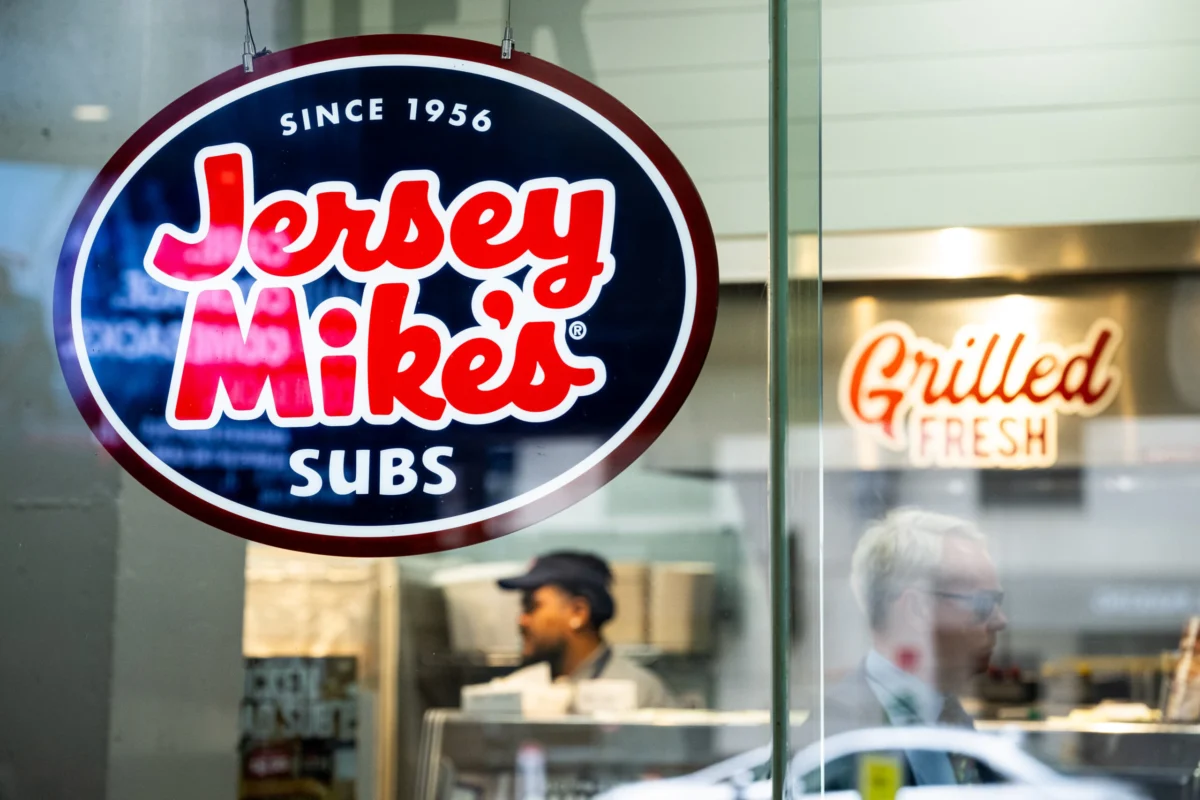
However, the hangover from that era has been long and painful. Many of the "Class of 2021" have seen their valuations slashed as the reality of high interest rates and rigorous public scrutiny set in. This cautionary tale has transformed the boardroom strategies of today’s private titans. In the current climate, even household names are finding the public markets remarkably inhospitable. Recent market entries by sandwich giant Jersey Mike’s and the sustainable fashion retailer Reformation serve as potent examples of this new reality. Despite their strong brand recognition, their debuts were met with a collective shrug from Wall Street. Reformation’s stock remained virtually flat on its first day of trading, while Jersey Mike’s opened below its pricing and ended its first session down nearly 6%. These lackluster performances highlight a growing disconnect between private valuation expectations and public market appetite.
The statistical decline of the public company is stark. Thirty years ago, the U.S. boasted nearly 8,000 publicly traded companies; today, that number has dwindled to fewer than 4,000. This contraction is driven by two primary forces: the unprecedented availability of private capital and the escalating "operational burden" of being public. In previous decades, a company reached a certain size where it simply required more capital than private banks or venture capitalists could provide. Today, that ceiling has vanished. The emergence of "megafunds"—private equity vehicles and venture firms with tens of billions of dollars at their disposal—has allowed companies to raise "IPO-sized" rounds while remaining behind closed doors.
Furthermore, the rise of the family office has fundamentally altered the investment ecosystem. As the ultra-wealthy increasingly professionalize their wealth management, they have shifted away from traditional mutual funds toward direct investments in private companies. These investors often have longer time horizons and less sensitivity to short-term volatility than institutional public market investors. For a CEO, the choice is clear: raise $500 million from a handful of sophisticated private partners who understand the long-term vision, or raise it from the public and deal with the daily fluctuations of a stock price and the demands of thousands of retail shareholders.
This shift has been facilitated by the maturation of secondary markets. Historically, one of the main reasons to go public was to provide "liquidity"—a way for early employees and investors to sell their shares for cash. Today, platforms like Forge Global and EquityZen, along with structured secondary tender offers, act as a pressure-release valve. As Sunaina Sinha Haldea, global head of Private Capital Advisory at Raymond James, notes, the depth of the private secondary market means that the "artificial clock" of the IPO has been dismantled. Investors and employees can now find exits without the company ever having to file an S-1 or host an earnings call.
The reluctance to go public is also a reaction to the perceived "short-termism" of the public markets. Public companies are beholden to the quarterly earnings cycle, a relentless three-month drumbeat that forces management to focus on immediate results at the expense of long-term strategic investment. For a founder-led company, the loss of control and the requirement for total transparency can be a deal-breaker. In the private sphere, a company can miss a quarterly target to invest in a new product line without seeing 20% of its market value evaporate overnight.
Regulatory headwinds have further complicated the path to the NYSE or Nasdaq. The cost of compliance, rooted in frameworks like the Sarbanes-Oxley Act, imposes a significant financial and administrative tax on public entities. This has led to a growing chorus of voices calling for reform. Earlier this year, the Securities and Exchange Commission (SEC) signaled a willingness to reconsider mandatory quarterly reporting, a move supported by SEC Chairman Paul Atkins, who argued that current rules lack the flexibility required by modern businesses. President Donald Trump has also advocated for a shift toward semi-annual reporting, aiming to reduce the "rigidity" that discourages companies from listing.
Despite these hurdles, the IPO is not dead; it has simply become more selective. Blockbuster exceptions like Elon Musk’s SpaceX, which raised tens of billions in its public debut, prove that the public markets still possess a unique capacity for massive capital formation. However, the bar for entry has been raised. Investors are no longer willing to subsidize growth at any cost; they are demanding proven profitability, robust cash flow, and a clear path to dominance.
The global context reflects this American trend. In the United Kingdom, the London Stock Exchange has struggled with a "de-equitization" crisis as companies opt for private equity buyouts or migrate to U.S. exchanges in search of higher valuations. In Asia, while IPO activity remains more robust in markets like China and India, the underlying tension between private control and public transparency remains a universal theme for the modern entrepreneur.
For consumer-facing companies, the risks of going public are particularly acute. Retail and food service brands are highly sensitive to shifts in consumer sentiment and macroeconomic data, such as inflation and unemployment rates. In a volatile economy, these companies become "proxies" for the health of the consumer, often leading to exaggerated stock price swings that may not reflect the company’s actual operational health. Staying private allows these brands to weather economic storms away from the prying eyes of activist investors and short-sellers.
Looking forward, the "why" behind the decision to go public is being redefined in every boardroom. The IPO is no longer a milestone of success, but a specific financial tool to be used only when the benefits of public capital outweigh the significant costs of public life. For the trend to reverse and for the public markets to regain their former density, the "operational burden" must be addressed. Until regulation evolves to reduce the friction of being a public entity, or until private capital markets face a significant liquidity crunch, the era of the "forever private" unicorn is likely to persist.
In this new economic order, the public market is becoming a place for the finished product—the mature, stabilized corporation—rather than the high-growth, experimental brand. As private equity continues to swell and secondary markets become more sophisticated, the traditional "road to the IPO" is becoming the road less traveled. The result is a bifurcated economy: a public sphere of established giants and a private sphere where the real innovation, and the real risk, is increasingly contained.