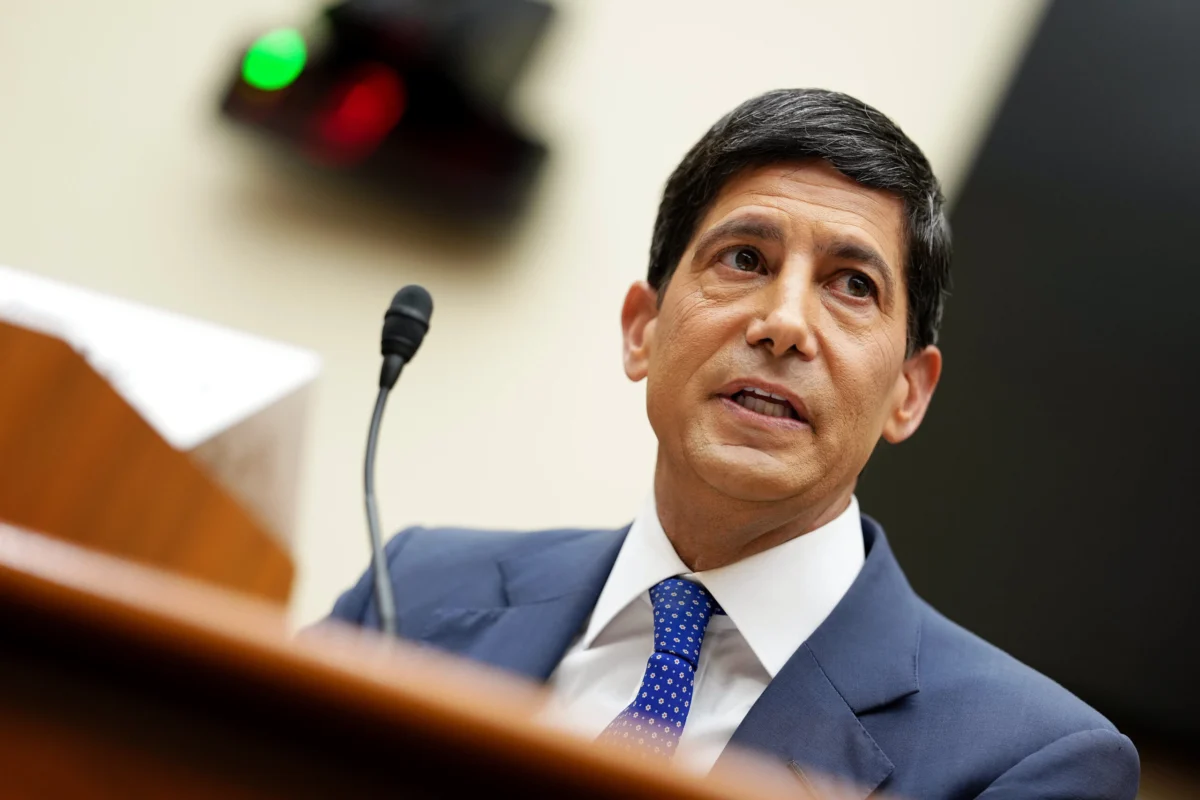
The endorsement of a Federal Reserve Chair by Warren Buffett, the Chairman and CEO of Berkshire Hathaway, carries a weight that transcends typical market commentary. When the "Oracle of Omaha" describes a presidential appointment to the world’s most powerful central bank as a "good choice," the financial world takes note. Buffett’s recent public support for Kevin Warsh, the newly minted head of the Federal Reserve, comes at a critical juncture for the United States economy, which is currently navigating a complex transition defined by technological disruption, shifting labor dynamics, and a renewed commitment to price stability. Buffett’s vote of confidence, delivered during a period of significant institutional transition, underscores a belief in Warsh’s temperament and his capacity to handle the immense pressures of the dual mandate: maintaining maximum employment while anchoring inflation at the 2% target.
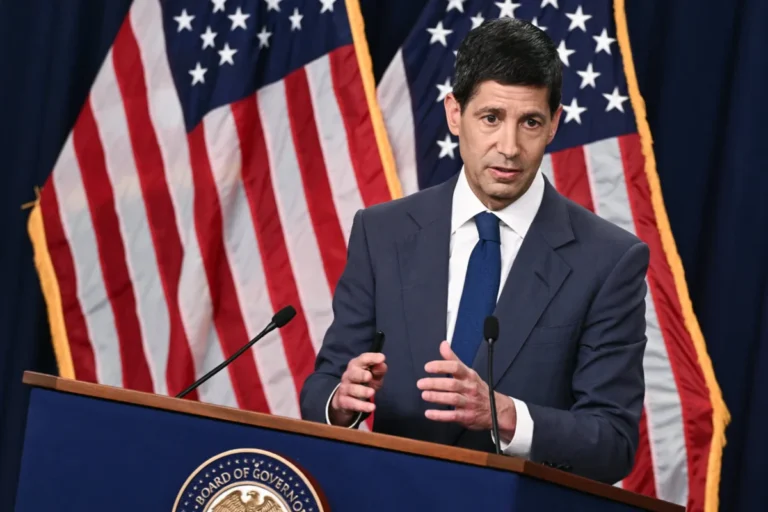
Kevin Warsh took the helm of the Federal Reserve in May, following his nomination by President Donald Trump and a subsequent confirmation process that highlighted a growing appetite in Washington for a fresh perspective on monetary policy. Warsh, a former member of the Federal Reserve Board of Governors who served during the tumultuous years of the 2008 financial crisis, is no stranger to the inner workings of the Eccles Building. However, his return as Chair marks a distinct departure from the strategies of his predecessors. During his first Federal Open Market Committee (FOMC) meeting in June, Warsh chose to hold interest rates steady, a move that served as a tactical pause while he began outlining a comprehensive overhaul of the central bank’s operational framework. This "regime change," as Warsh termed it during his recent Congressional testimony, suggests a pivot away from the heavy reliance on forward guidance and toward a more reactive, data-dependent, and market-aware approach.
Buffett’s perspective on the appointment is rooted in a pragmatic understanding of the limits of economic management. Speaking on the complexities of the role, Buffett noted that while he believes Warsh will do his utmost to achieve the Fed’s objectives, the pursuit of perfection in such a role is an impossibility. In a characteristic display of humility, Buffett compared the challenges of central banking to his own decades-long career in capital allocation, suggesting that just as no investor can achieve "super returns" with perfect consistency, no central banker can navigate the global economy without occasional missteps. This acknowledgement of the inherent difficulty of the job highlights the "tough decisions" that define the tenure of any Fed Chair—decisions that often involve choosing between the lesser of two economic evils.
The "regime change" promised by Warsh is not merely a change in rhetoric but a fundamental shift in how the Federal Reserve perceives its role in a modern economy. A primary pillar of this new era is the integration of the "AI investment boom" into monetary calculations. Warsh has frequently cited the potential for artificial intelligence to drive a massive surge in productivity, which could theoretically allow the economy to grow at a faster clip without triggering the kind of wage-push inflation that plagued the previous decade. By focusing on the supply-side benefits of technological advancement, the Warsh-led Fed appears willing to tolerate different growth profiles than those seen in the post-2008 era. This stance has been met with cautious optimism by Wall Street, where analysts are eager to see if the central bank can successfully thread the needle between fostering innovation and preventing the economy from overheating.
The economic backdrop against which Warsh is operating is one of significant global transition. While the United States continues to show resilience, other major economies are grappling with stagnation or demographic declines. The divergence between the Federal Reserve’s hawkish commitment to a 2% inflation target and the more accommodative stances of the European Central Bank (ECB) or the Bank of Japan creates a "strong dollar" environment that has far-reaching implications for international trade and emerging market debt. Buffett’s endorsement of Warsh suggests a belief that the new Chair possesses the international credibility and the "care for the country" necessary to navigate these geopolitical waters. For Buffett, the character of the individual leading the Fed is often as important as their specific policy leanings; he prizes a commitment to the national interest above partisan or ideological purity.

Warsh’s return to the Capitol to testify before the Senate Banking Committee is expected to be a rigorous examination of his "regime change" philosophy. Lawmakers on both sides of the aisle are keen to understand how the Fed will handle the delicate balance of high interest rates in an era of massive federal deficits. Critics of the "regime change" approach worry that a move away from clear forward guidance could lead to increased market volatility, as investors struggle to predict the Fed’s next move. However, proponents argue that the previous era of "lower for longer" rates and explicit signaling created asset bubbles and left the Fed with few tools to combat inflation when it finally arrived. Warsh’s preference for a more flexible, discretionary policy is seen by many—including, it seems, Buffett—as a necessary correction to an overly rigid institutional culture.
The data supporting Warsh’s outlook is a mix of traditional metrics and forward-looking indicators. Inflation, while cooling from its post-pandemic peaks, remains a persistent concern in the services sector. Meanwhile, the labor market has shown signs of softening, though it remains historically tight. The Fed’s decision to hold rates in June was interpreted by many as a "wait-and-see" approach, allowing the effects of previous hikes to fully permeate the economy. Warsh’s testimony emphasized that "inflation will be a thing of the past" if the Fed remains disciplined, a bold promise that sets a high bar for his tenure. To achieve this, the Fed must manage the "neutral rate"—the interest rate that neither stimulates nor restrains the economy—which many economists believe has shifted higher in recent years due to increased government spending and the capital requirements of the energy transition and AI.
From an investment standpoint, Buffett’s approval of Warsh aligns with Berkshire Hathaway’s long-term interest in a stable, predictable American economy. As a conglomerate with massive holdings in insurance, railroads, utilities, and consumer goods, Berkshire is sensitive to both interest rate fluctuations and the purchasing power of the American consumer. A Fed Chair who prioritizes long-term price stability over short-term political wins is exactly what a long-term investor like Buffett desires. His comment that Warsh "cares about the country" reflects a traditionalist view of the Federal Reserve as an independent technocratic institution, even when its leadership is appointed by a politically polarizing figure.
As the Senate Banking Committee prepares for further rounds of questioning, the focus will likely remain on the "Warsh Doctrine." This doctrine appears to be built on three pillars: a firm 2% inflation target, a skeptical view of "fine-tuning" the economy through frequent small adjustments, and an optimistic view of American productivity. The success of this regime will depend on whether the AI-driven productivity gains Warsh anticipates actually materialize. If productivity does not rise to meet the increased demand, the Fed may be forced to keep rates higher for longer than the markets currently anticipate, a scenario that would test the resolve of both the central bank and the political establishment.
In the global arena, the "Warsh Fed" represents a return to American monetary leadership that is less concerned with global synchronization and more focused on domestic stability as a prerequisite for global health. This "America-first" monetary policy, while perhaps unsettling to some international partners, reflects a reality where the U.S. dollar’s role as the world’s reserve currency requires a bedrock of domestic fiscal and monetary discipline. Buffett’s endorsement serves as a signal to global markets that, despite the change in leadership and the shift in policy "regime," the fundamental goals of the Federal Reserve remain in capable hands.
Ultimately, the transition to Kevin Warsh’s leadership marks the beginning of a new chapter in American economic history. The era of ultra-low rates and quantitative easing appears to be firmly in the rearview mirror, replaced by a more traditional, yet technologically-aware, approach to central banking. With the backing of figures like Warren Buffett, Warsh enters his full term with a degree of institutional and market credibility that will be essential as he navigates the inevitable challenges of the coming years. Whether his "regime change" will result in the era of stability and growth he envisions remains to be seen, but for now, the Oracle of Omaha is betting on the man at the wheel.